
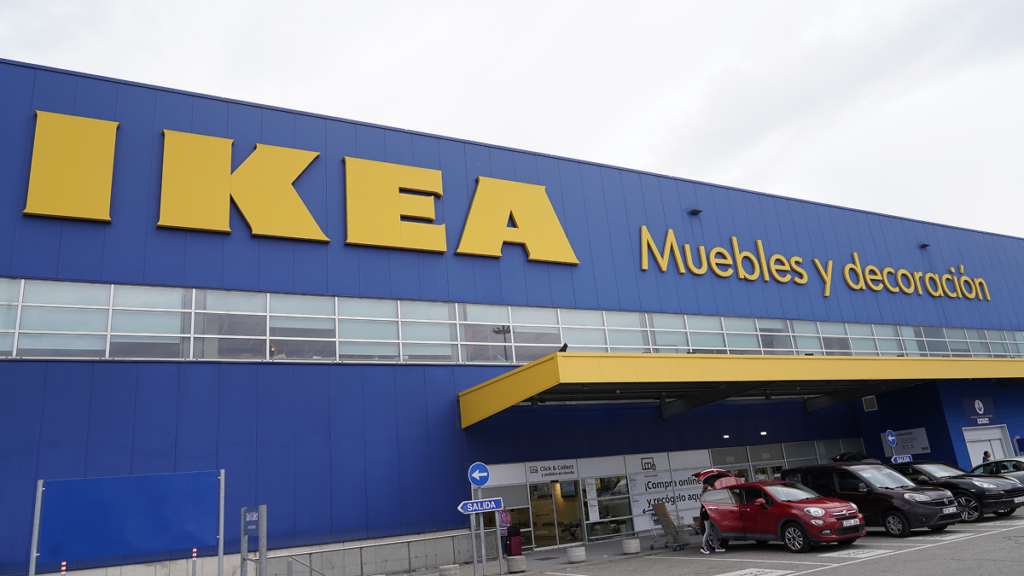
IKEA stores could double as shelters when disaster strikes. Credit: J.ParedesPhotos / Shutterstock
An IKEA store could become somewhere to seek safety when disaster strikes. In Denmark, the furniture retailer’s stores could provide beds, meals and even space for temporary hospitals during floods, blackouts or attacks on vital infrastructure. Spain has already seen how this can work, with an IKEA store sheltering more than 600 people during the devastating Valencia floods.
Flat-pack beds, store canteens and back-up generators
Shoppers who usually wander through IKEA’s showrooms looking for a new sofa could one day be bedding down in them if disaster strikes. IKEA Denmark’s security chief, Torben Mortensen, has said the country’s largest store could be used as an emergency shelter or even a temporary hospital if a blackout, flood or attack on critical infrastructure hit.
The plan would put the store’s everyday strengths to work, with the restaurant serving meals, generators keeping the building running and extra beds put together straight from the flat packs on the shelves. “We want to be the good neighbour. We want to be the company that can support society in case of a crisis,” Mortensen told Reuters.
Most Read on Euro Weekly News
Danish shoppers have already slept in the display beds
It wouldn’t be the first time either that IKEA has been used for sheltering purposes. In December 2021, a heavy snowstorm left six customers and around two dozen staff stuck overnight at IKEA’s store in Aalborg, in northern Denmark, and they ended up sleeping in the showroom’s display beds.
Now that one-off is being turned into something far more organised. IKEA is one of more than 200 firms, employing more than 300,000 people between them, in Denmark’s Corporate Coalition for Crisis Preparedness, a voluntary network that lists what private companies could offer the country in an emergency.
“An IKEA store has space, goods, food facilities, and generators,” said the coalition’s chief executive, Maja Broloes, who added that a state-backed compensation scheme is being set up, with companies reimbursed case by case.
The network has taken part in preparedness exercises with the authorities, though it hasn’t yet been tested by a major real emergency. Supermarket giant Salling Group, Denmark’s largest, is going further still and opening the first of 51 stores designed to keep running for up to 48 hours without electricity or internet.
Europe is asking businesses to step in
Denmark isn’t acting alone. Governments across Europe are increasingly looking beyond the armed forces and emergency services to keep everyday life going when things go wrong, as officials link a wave of suspected sabotage and cyberattacks to Russian hybrid warfare. Moscow denies any involvement.
The EU’s Preparedness Union Strategy, launched in March 2025, encourages member states to work more closely with businesses. Estonia already requires 300 companies by law to keep critical services running during emergencies, while Poland requires some firms by law to let the armed forces use their vehicles, machinery and property in a crisis.
The night an IKEA in Valencia took in hundreds of flood victims
For readers in Spain, the idea is far from theoretical. When the DANA struck Valencia on Tuesday October 29, 2024, killing more than 220 people, IKEA’s store in Alfafar became an unplanned refuge. According to the retail employers’ association Anged, Guardia Civil officers brought around 650 people caught up in the floods to the store, where they were given water, food, beds and even dry clothes, with many spending the night there.
However, IKEA has said it has no global preparedness programme and handles any such arrangements country by country, so there’s no word yet on whether its stores in Spain could take on a formal role like the one planned in Denmark.
What the EU wants households to do
Anyone who sat through Spain’s nationwide blackout on Monday April 28, 2025, will remember wondering what they would have to do or where they’d have to go if it ended up lasting for days. For now, the EU’s advice to households in Spain and across the bloc is still to keep enough water, food, medicines and essentials at home to get through at least 72 hours on their own, with a torch and a battery-powered radio among the items worth having ready.