
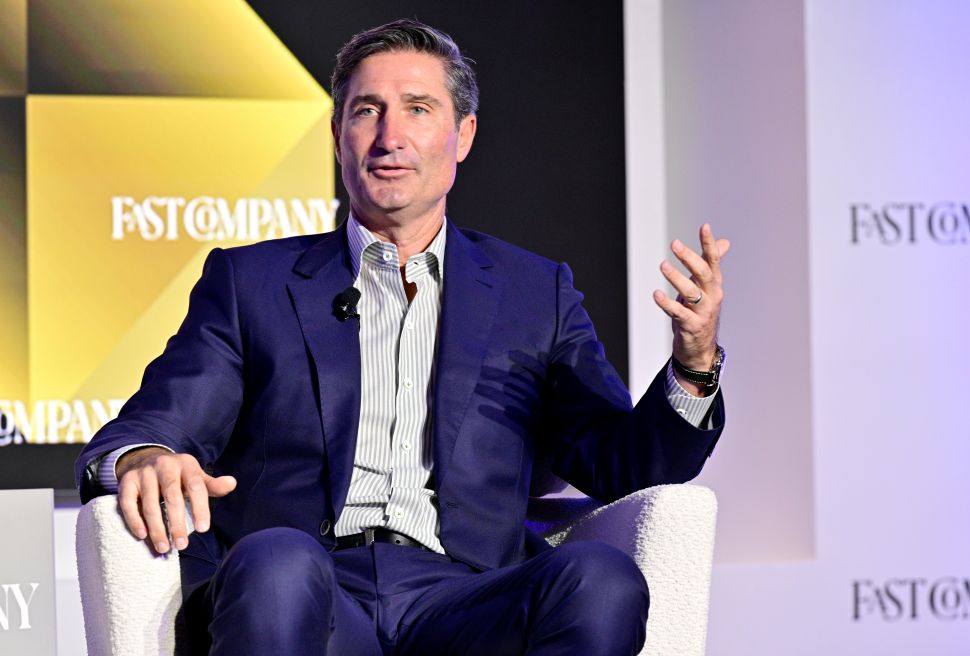
Brian Niccol speaks onstage during the Fast Company Innovation Festival 2025 on September 16, 2025 in New York City. (Photo by Eugene Gologursky/Getty Images for Fast Company)” width=”970″ height=”656″ data-caption=’Starbucks CEO Brian Niccol. <span class=”lazyload media-credit”>Getty Images for Fast Company</span>’>
As pumpkin spice latte season reaches its peak, Chipotle’s former boss Brian Niccol—who became CEO of Starbucks just over two years ago—said the global coffee chain has successfully returned to its roots. “We’ve figured out how to get back to connecting with customers,” Niccol said in a press release on Sept. 10, citing “tremendous progress” in the Back to Starbucks campaign he launched at the start of his tenure. But Starbucks’ peak season, which begins with the fall PSL and extends into winter with Red Cup Day and its holiday beverage line, will serve as the ultimate stress test for his operational vision.
Niccol’s core goal of reestablishing Starbucks as the community coffeehouse it once was isn’t out of reach. “People love a good turnaround story,” Chris Ribeiro, founder of retail analytics firm Starlight Analytics and assistant professor at Rutgers Business School, told Observer. But “it needs to be genuine.”
In an effort to delicately balance mobile orders with in-cafe experiences, target sub-four-minute order completion times, and promote ultra-friendly barista experiences, Niccol’s efforts have contributed to four consecutive quarters of positive sales growth, with the latest quarter hitting 7.9 percent, largely driven by transaction volume.
“They’ve shown they can win back traffic, but next year will be about whether they can return to previous profitability,” said Ribeiro. In Niccol’s first year, Starbucks funneled $500 million into labor investments, temporarily squeezing margins. By mid-2026, quarterly net income had soared 87 percent year over year to $1.04 billion, suggesting a partial comeback that still must prove longevity.
With obstacles like labor demands, consumer shifts and pressure on profit margins, Niccol continues to fight for Starbucks’ future. In late September, the company announced the closure of roughly 250 storefronts, a move that would put the chain on “a path to acceptable financial performance,” Starbucks chief operating officer Mike Grams wrote in a press release. This operational slimming, he said, gives the company wiggle room to complete the renovation of 1,500 coffeehouses nationwide by the end of 2026 (Grams said they already completed more than 1,000 of those redesigns).
The undercurrent of Niccol’s comeback plan
The efforts to get to this point, however, have come at a cost. In January, Starbucks tightened its belt on loyalty benefits, capping redemptions at $6–$10, depending on customer tier. “Given how customized some of the drinks can be, some of their bigger spenders are saying they now have to pay the difference,” said Ribeiro.
On the employee side, despite an increased focus on treating workers better (switching to weekly payouts and adding bonuses, for example), more than 700 U.S. locations have voted to unionize since 2021. Even with operational improvements, workers remain frustrated. Health insurance premium hikes took effect for many employees beginning Oct. 1. While understaffing conversations have died down this year, Starbucks Workers United is still fighting for all locations to have at least three workers scheduled on the floor at all times.
Financially, Niccol’s restructuring plan continues to place pressure on the company’s bottom line. Tactics like adding handwritten notes on cups, serving beverages to dine-in customers in ceramic mugs and implementing technology and staffing solutions to simplify and improve service all swell operating costs and squeeze margins—a fact the company is relying on metrics like increased sales volume to combat.
“I do think Starbucks’ concept of the third place is strong,” Chris Retallick, co-owner of independent New Jersey coffee roastery Boxwood Coffee Roasters, told Observer. “They’re just having a hard time bringing that concept to life. It’s easier said than done for a large, commercial, global entity to implement hospitality solutions to build connections with consumers.”
In the undercurrent of Starbucks’ struggles lies a truth about consumers: more than 4 in 5 Americans are watching their spending more closely due to cost-of-living increases in 2026, and more than two-thirds avoid spending on a product or service if it doesn’t offer a strong value (namely, quality). In an effort to get back to its roots, Starbucks’ biggest competition—the independent cafe—may hold the edge here. “Starbucks is banking on the idea that consumers still value their concept of the community coffeehouse,” said Retallick. “I think that’s where independents have an edge in speed, price, product and customer connection.”
Not back yet
As Niccol operates within the tension between high-touch nuances and operational efficiencies, his next-phase strategy will focus on establishing permanent operating standards—and letting the financials catch up. With closing underperforming locations, reallocating capital toward upleveled coffeehouses, maximizing the power of seasonal hits and easing barista woes, his goals are undoubtedly ambitious. Still, the chain holds a discipline unique to the Niccol era.
“Brands are looking back to what made them unique and loved in the first place,” said Ribeiro. Despite Niccol claiming a complete turnaround, it’s far from complete. But, Ribeiro added, it is feasible. “He and his team need to be methodical to avoid losing their most loyal customers, test relentlessly before scaling broadly and not lose sight of the execution reality on the people working in stores.”