
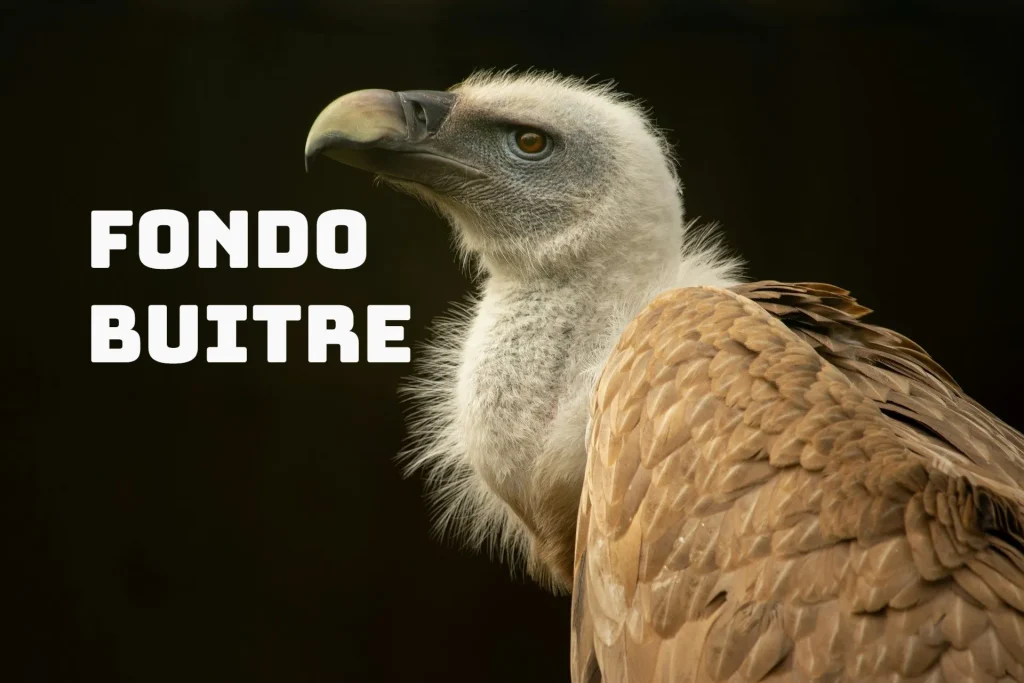
‘Los fondos buitre’ are very unpopular in Spain currently. But what exactly do these words mean and why do they have a negative connotation in Spanish?
Fondos buitre is the equivalent of saying vulture funds in English, a colloquial way of referring to investment firms which buy up depreciated assets to later make a big profit from them.
Un buitre is a vulture in Spanish. It can also be used as an adjective to describe a person who is a scavenger or a scrounger.
Un fondo is the word for a fund, such as un fondo de inversión (investment fund), but it has several other meanings.
Fondo can refer to the bottom of something in terms of depth, el fondo del mar (the seabed) or el fondo de una caja (the bottom of a box), or the background or backdrop of an image, such as el fondo de una foto (a photo’s background).
And if you do something a fondo, you do it in depth, such as investigar a fondo, you investigate in depth.
But back to los fondos buitre, which are two words included in many news headlines currently following the eviction by a vulture fund of an 87-year-old woman from her lifelong flat in Madrid, and the protests that have erupted since then.
It’s estimated that los fondos buitre own over a million properties in Spain, but the country doesn’t have any legislation at present which regulates these investment companies.
Some of the biggest ones, such as the US’s Blackstone, manage assets of over $1 trillion globally, and in Spain they own at least 20,000 properties which they rent out.
They’ll often buy up entire blocks in lower-income but up-and-coming neighbourhoods in Spanish cities, and raise rents even if that means kicking out tenants.
The metaphor behind fondo buitre is the same as in English – it compares these investment firms to scavenger birds that prey on the dying or dead.
So logically fondo buitre carries a fairly negative connotation, which explains why the company that took Maricarmen to court in order to evict her keeps insisting that they’re not buitres (vultures or scavengers), as they claim their profits and company size are not big enough to carry that label.
Note that when you speak of fondos buitre in the plural, buitre remains in the singular without an extra ‘s’, just as vulture funds isn’t ‘vultures funds’ in English.
Expect to hear plenty more about los fondos buitres in Spain in the weeks to come.
Examples:
Los fondos buitre están desahuciando a cientos de personas en España.
Vulture funds are evicting hundreds of people in Spain.
Un fondo buitre ha comprado mi edificio y me han subido el alquiler.
A vulture fund bought my building and has put up my rent.