
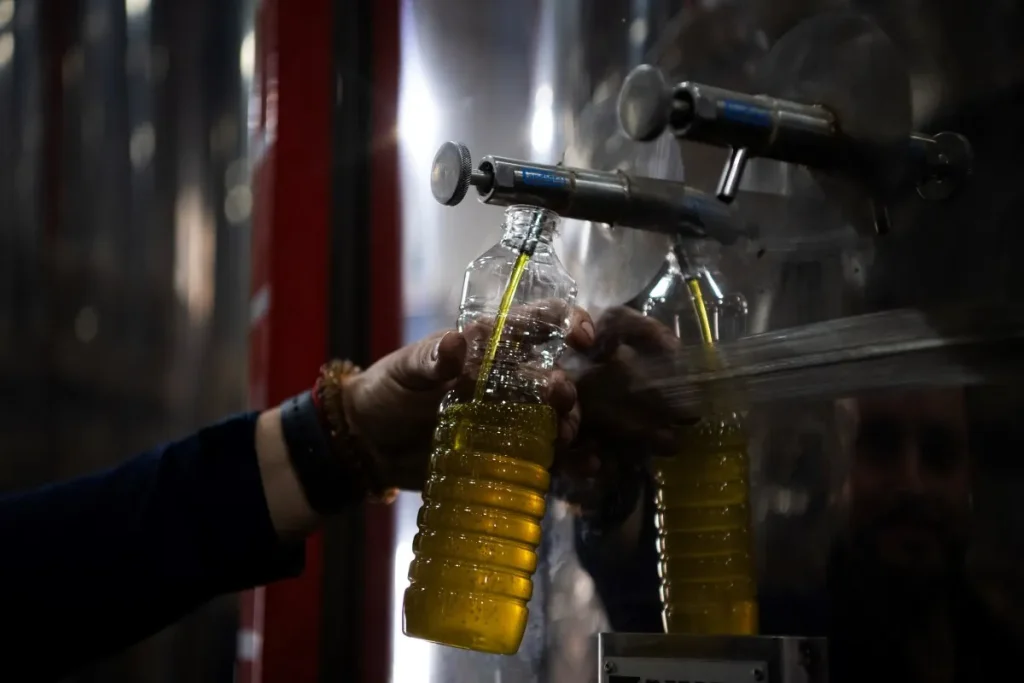
Spain has ordered olive oil producers to withdraw 12 percent of their output from the market and store it till September 2027 to prevent a bumper harvest from driving down prices.
This will remove around 188,000 tonnes of olive oil from the market, the agriculture ministry said in a statement on Friday.
“The aim is to regulate supply in order to improve and stabilise the functioning of the market and the sector,” it said.
Spain is the world’s largest olive oil producer, accounting for around 40 percent of global output, according to the International Olive Council.
Mild temperatures and abundant rainfall during the spring have created favourable conditions for what Spain expects to be its fourth-largest harvest on record.
The agriculture ministry forecasts Spanish olive oil production of 1.6 million tonnes in the 2026-27 season, up 23 percent from the previous season.
The 12-percent requirement will apply to each mill’s cumulative monthly production, regardless of the category of olive oil, with producers free to choose which type to store and whether to use their own or external facilities.
The government said the measure, which farming associations have lobbied for, could be modified from December 31 depending on how production develops.
During a visit to an olive oil cooperative in Andalusia on Friday, Spain’s main olive oil-producing region, Agriculture Minister Luis Planas said the traditional olive grove was “vital” to the country.
“It has high production costs, and if prices fall below a certain threshold, there can indeed be problems with profitability,” he told reporters, adding that the measure had never previously been applied.
The Spanish olive oil market has recovered from a period of low production caused by drought and heatwaves during the 2022-23 and 2023-24 seasons, when prices soared to record levels.
The sharp increase in the price of olive oil prompted many Spanish households to switch to cheaper alternatives such as sunflower oil.