
Nine EU countries including France, Portugal and Italy have asked to delay the full implementation of EES border checks at busy airports, but Spain is sticking to its guns and maintaining the new biometric controls for non-EU travellers.
Spain has become an outlier among European nations with high volumes of tourism and travel, standing out as the only one of these countries that’s fully on board with the new Entry-Exit border system, while others ask for more time to implement it.
France, Greece, Portugal, Italy, Germany, Malta, the Netherlands, Switzerland and Belgium have delayed the full EES rollout scheduled for September 6th and pleaded with Brussels for extra time.
The EU’s Entry-Exit System was first rolled out in October 2025, but countries initially had until April 10th 2026 for it to become fully operational, a deadline that was pushed back several months over fears of travel chaos and delays over the busy summer period.
EES is meant to replace passport stamping for non-EU, non-resident travellers entering the Schengen Area with an automated digital check that records their entry, exit, and biometric data when crossing in and out of the border-free travel zone encompassing 29 European countries.
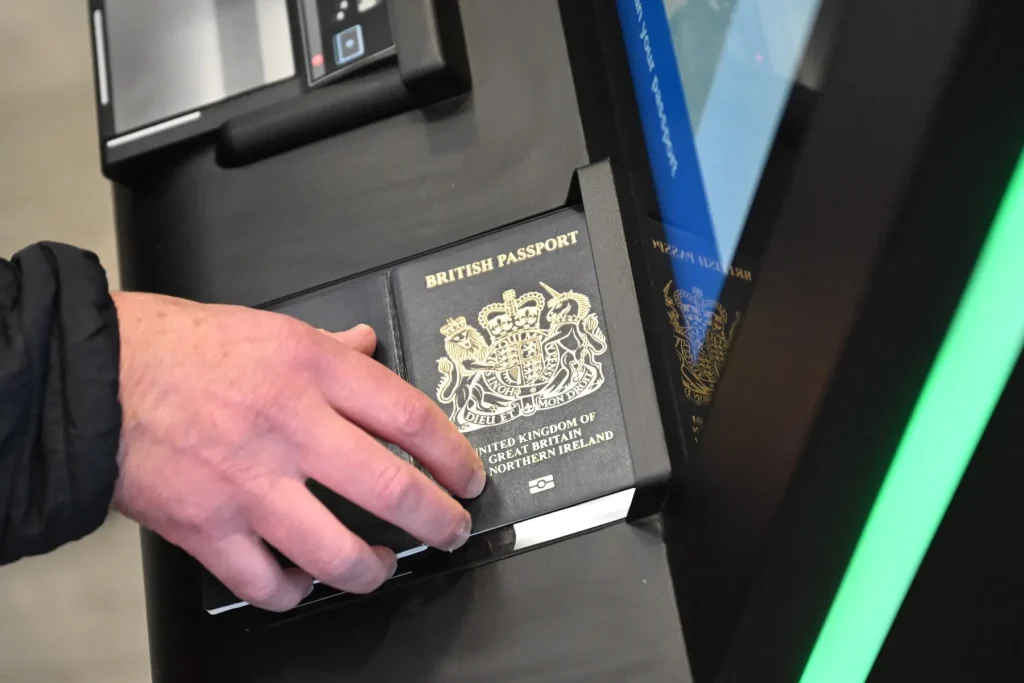
The initial EES registration process for these travellers involves scanning their passport at a self-service kiosk and providing biometric data in the form of a facial photograph and fingerprint scanning. On future entries and exits to the Schengen Area this biometric data is confirmed with quick scanning at the booths again.
As straightforward as that may seem in theory, EES’s introduction has caused delays, huge queues and missed flights for travellers across numerous EU countries, especially at places with a high volume of traffic such as Eurostar stations.
As a result, the European Union has allowed nine Schengen Area countries to pause or delay full biometric checks to help ease congestion and other issues.
Spain is not among these countries, but that’s not to say it hasn’t had teething problems with the new system, particularly at airports which receive high volumes of British tourists.
Since its staggered introduction across Spanish airports in the autumn of 2025, The Local Spain’s readers have reported issues with biometric kiosks not working, not enough staff helping out and a general lack of information given about how EES works.
READ ALSO: ‘Not all EES machines work’ – Your views on the Entry/Exit System in Spain
The International Air Transport Association demanded a full suspension of EES in July complaining that passengers were missing connections in some countries, including Spain.
Ryanair also warned of “queue chaos” back in July at Málaga, Palma de Mallorca, Tenerife South and Alicante airports due to the EES kiosks. It said these four airports were “experiencing major disruptions”.
Since then, there have been reports in Spanish newspaper El País saying that the EES system is working quite well at Alicante airport.
Alejandra Ruiz, Ryanair’s spokesperson in Spain, insisted however that many states lack the resources to ensure the smooth operation of the EES at their airports. “In Spain, these include Málaga, Tenerife South, and Lanzarote, as well as Palma de Mallorca and Madrid”, she said.
Nevertheless, Spanish authorities appear to be rolling with the EES punches without asking for more extensions.
Spanish airports were among the first to implement EES and have therefore also likely had more times to iron out some of the main issues with the new system. Some problems may still persist, but rather haphazardly.