
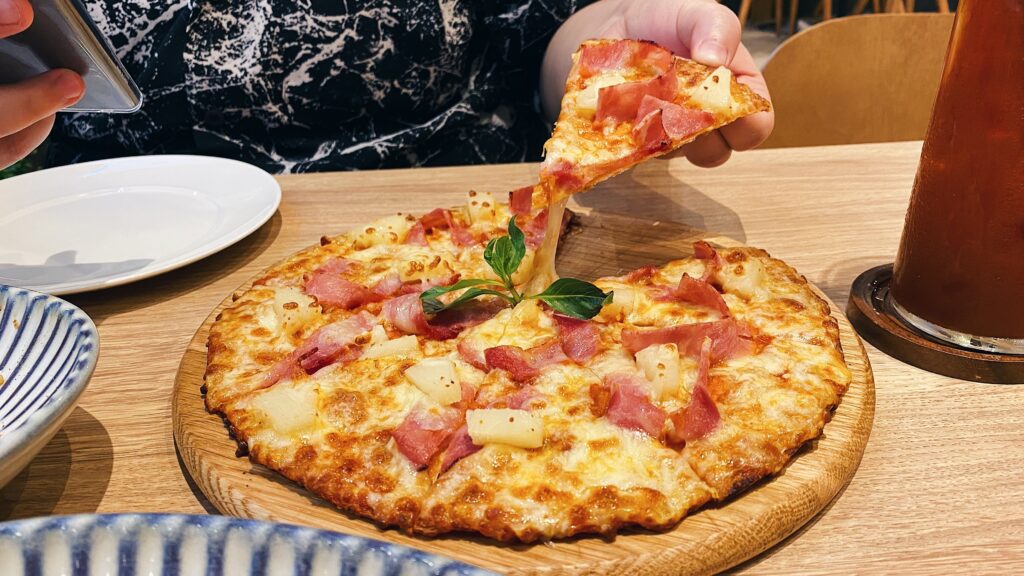
Management said the topping was not the only problem. Photo credit: Emma’sPics/Shutterstock
There are some things Italians take very seriously: their coffee, their pasta, their nonna, their olive oil and, apparently, the right of a pizza to remain pineapple-free. One Italian chef was so opposed to the tropical topping that he refused to make it for customers, even after his boss asked him repeatedly.
Davide Tamburella, who worked at La Costa Restaurant and Bar in Brisbane, Australia, considered putting pineapple on pizza an insult to his Italian culture. His refusal to prepare ham and pineapple pizzas for a private function became one of several issues raised by management before he was dismissed in May. The dispute has since reached Australia’s Fair Work Commission, turning one of the world’s most divisive pizza toppings into an employment case.
A pizza topping that crossed a line
This was not Tamburella’s first disagreement with his employer over pineapple. According to the commission’s findings, it was the third time in four years that he had refused to put the fruit on pizzas. On an earlier occasion, he had reportedly asked his boss to look into how important it was to Italians not to put pineapple on pizza. When the request came up again, he maintained that instructions from management did not have to be followed if they offended his culture.
Most Read on Euro Weekly News
His employer, Elliot Ingram, had a rather different concern: customers had ordered the pizzas, and the restaurant was expected to serve them. The function was reportedly worth more than AU$15,000, making the disagreement considerably more expensive than a heated debate over dinner. La Costa was in Queensland, Australia’s pineapple-growing heartland, where the fruit is big business. The state produces Australia’s commercially grown pineapples, so the chef had found himself defending Italian culinary tradition in the middle of pineapple country.
The dispute was about more than pizza
Management said the topping was not the only problem. The complaints raised before Tamburella’s dismissal also included his use of inappropriate language, his communication style and what was described as growing frustration in the workplace. He had also injured his right hand after striking a metal handrail at work in April, fracturing bones in two places. Tamburella argued that the injury had played a part in his dismissal, alongside the dispute over the pizzas.
He was dismissed on May 20, around a fortnight after a meeting with management. The restaurant’s managing director later said there was more to the dispute than pineapple on pizza. That is worth remembering before imagining an entire restaurant throwing its hands up because one chef refused to reach for a tin of pineapple.
Chef loses challenge over dismissal
Tamburella took his case to Australia’s Fair Work Commission, arguing that his dismissal was unfair. The commission rejected his application in a decision released on November 3. However, it did not rule that the restaurant was right to dismiss him over the pineapple dispute. His application had been lodged outside the legal time limit, and Commissioner Jennifer Hunt found there were no exceptional circumstances to justify accepting it late. The commission therefore did not determine the substantive fairness of the dismissal.
The consequences extended beyond the kitchen. Tamburella had been pursuing an employer-sponsored permanent residency visa, a process he had reportedly spent more than three years working towards. After his dismissal, the restaurant ended its sponsorship, leaving him needing to find another employer if he wanted to pursue that route.
La Costa itself closed in July after its lease expired, with the owner citing high operating costs. Tamburella has since found work as head chef at another Brisbane Italian restaurant. In a final twist, pineapple is not on that restaurant’s menu. The chef may have lost his job and his first legal challenge, but at least his new kitchen appears to share his position on the great pineapple debate. Whether that is culinary principle or simply a very specific recruitment requirement is another question