
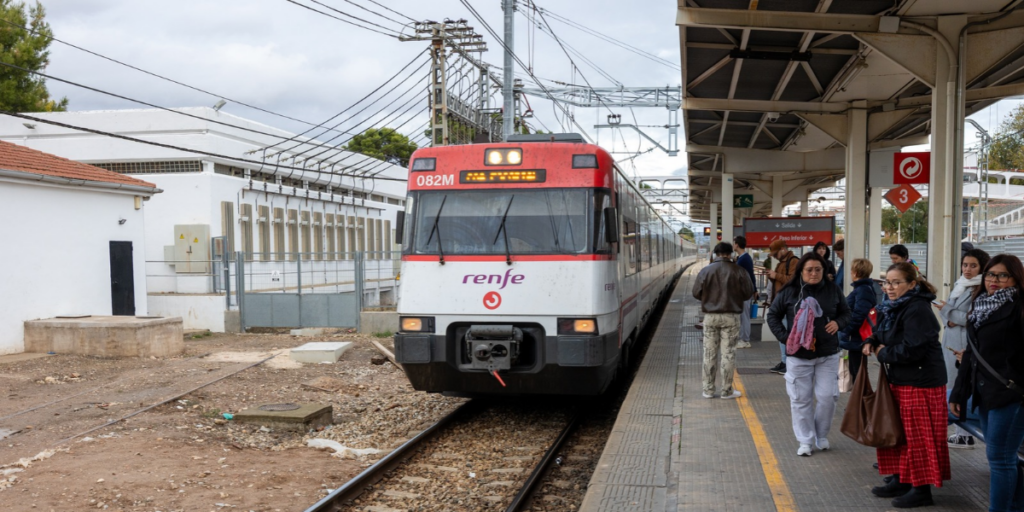
Thousands of rail passengers across Spain can breathe a sigh of relief after train drivers cancelled a planned strike just three days before it was due to begin.
The walkout, scheduled for Monday, November 23, had threatened further disruption to rail journeys across the country, raising concerns among commuters, holidaymakers and anyone relying on trains to reach airports or other destinations.
But on Friday morning, November 20, the Spanish Train Drivers’ Union (Semaf) confirmed that the industrial action had been called off following a breakthrough agreement on railway safety.
Most Read on Euro Weekly News
The decision comes after months of negotiations over working conditions and safety commitments, with a last-minute agreement on procedures for adverse weather proving decisive.
However, while the cancellation removes one major threat of disruption, not every rail union has accepted the agreements, meaning passengers should not assume that all industrial disputes have ended.
Why has Spain’s November 23 train strike been cancelled?
Semaf announced that it had reached an agreement addressing outstanding commitments dating back to February 2026.
The union had accused the relevant authorities of failing to deliver previously agreed safety improvements, prompting drivers to threaten further industrial action.
Following negotiations on Thursday, November 19, an agreement was finally reached on a protocol governing railway operations during adverse weather and other hazardous conditions.
That breakthrough helped resolve the remaining disagreements and paved the way for Monday’s strike to be cancelled.
In its statement, Semaf said the agreement would turn workers’ demands into practical, enforceable and measurable improvements.
The union also argued that the new measures would strengthen safety standards across Spain’s railway network.
What does the agreement mean for railway safety?
One of the most important elements concerns how rail operators and infrastructure authorities respond when weather conditions could affect train safety.
Severe storms, heavy rainfall, strong winds and other adverse conditions can create additional risks for railway operations, making clear procedures and communication essential.
The newly agreed protocol is intended to establish a more consistent approach to dealing with such situations.
Although the detailed provisions have not yet been outlined in the reporting, Semaf described the agreement as an important step towards improving the system.
The union also welcomed progress on outstanding commitments from February, saying the negotiations had delivered structural improvements rather than simply ending the immediate dispute.
Other rail unions also suspend industrial action
The agreement follows a separate breakthrough earlier in the week involving railway infrastructure workers.
On Wednesday, November 18, unions CCOO, UGT and the Railway Circulation Union (SCF) announced that they were suspending a planned strike affecting Adif, Spain’s railway infrastructure manager.
Their decision followed an agreement with the Ministry of Transport concerning staffing levels and the regulation of working hours.
The developments have eased the immediate pressure on Spain’s rail network after a period of industrial uncertainty.
However, the disputes have not been resolved unanimously.
The Independent Trade Union and Civil Servants’ Central (CSIF) rejected the proposals, describing them as insufficient.
CSIF has maintained its industrial action at Adif and Adif High Speed, continuing to demand improvements to working conditions and railway safety.
Will trains run normally in Spain on November 23?
The cancellation means the Semaf train drivers’ strike scheduled for Monday, November 23, will no longer take place.
This is welcome news for passengers planning journeys on services across Spain, particularly those concerned about potential cancellations or reduced timetables.
However, the decision does not automatically guarantee that every service will operate without disruption.
Separate industrial action, operational problems or changes to individual services could still affect journeys.
Passengers travelling over the coming days should check their departure times and any service updates directly with their train operator, whether Renfe, iryo or OUIGO.
For now, the cancellation of Monday’s walkout offers some welcome certainty for travellers, while negotiations over wider railway working conditions continue.