When Jiayi “Jenny” Wu and chef Truman Du reopened their Jackson Street restaurant as Fusion Dumpling, the changes extended well past the menu.
Together, the two restaurant owners hoped to rebuild a Chinatown business that had survived the pandemic while creating a fine dining experience that more closely reflected their personal histories.
Wu’s childhood was filled with the cooking of Shanghai, where soup dumplings, pan-fried buns, and noodle dishes remain central to the city’s food culture. Du, meanwhile, is from Chongqing: a southwestern Chinese city known for chile-heavy dishes and for favoring the numbing heat of Sichuan peppercorns.
At Fusion Dumpling, located in San Francisco’s Chinatown at 650 Jackson St., the two regional traditions now share one menu.
Popular options include pork xiao long bao, pan-fried soup buns, and handmade dumplings as well as spicier dishes influenced by Du’s Chongqing background. More contemporary combinations, including truffle and wagyu dumplings, sit next to familiar Chinese comfort foods for an expansive menu that covers a vast variety of palates.
Before the pandemic, the space previously operated as Pot & Noodle, an individual hot pot restaurant from Wu and Du After years of disruption to Chinatown tourism and the restaurant’s operations, the owners decided it was time to rethink the concept.
They reopened with their new concept as Fusion Dumpling in 2023.
The name itself refers to a combination of regional Chinese cooking styles as opposed to a departure from Chinese tradition. Working together, Wu and Du developed a menu that unites the hallowed practice of Shanghai dumpling-making with Northern Chinese dough techniques and Sichuan flavors.
While rebuilding the restaurant after the pandemic, Wu and Du made it a priority to hire local workers who had lost their jobs, training them in the techniques of making and folding dumplings. The team also learned how to combine regional Chinese flavors with ideas inspired directly by San Francisco. The results are menu items like the mala xiao long bao filled with Sichuan peppercorns and chile and Fusion Dumpling’s dessert soup dumpling made with Ghirardelli chocolate.
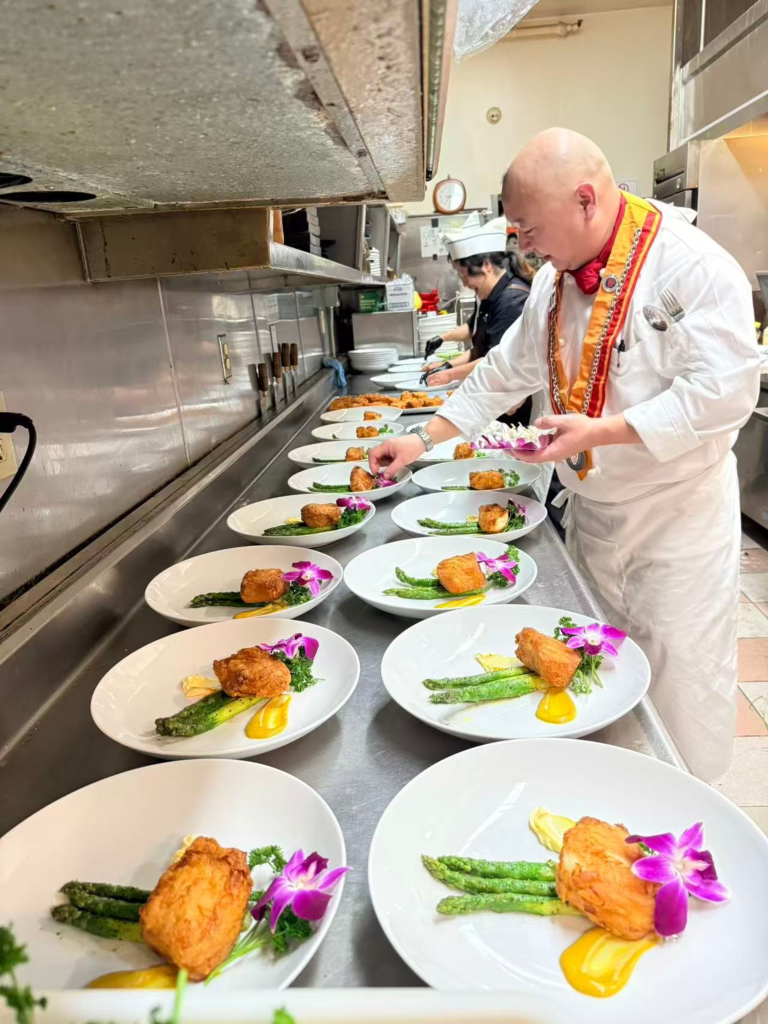
The menu benefits from Du’s experience as a former national banquet chef tasked with preparing meals for government officials and visiting dignitaries in China. In San Francisco, he and Wu are connected to several Chinatown restaurants such as Chong Qing Xiao Mian and Spicy King, which focus more directly on the food of Chongqing and Sichuan, respectively. This also allows Fusion Dumpling to feature a larger role for Wu’s Shanghai background.
The restaurant’s transformation also reflects the challenging choices many Chinatown business owners faced after the pandemic. Having once depended on tourists, downtown workers, and large groups, they were suddenly forced to reconsider their menus, staffing and identities.
For Wu and Du, dumplings offered a way forward.
They see dumplings as familiar enough to attract diners who may know xiao long bao, but flexible enough to represent several regions and generations of Chinese cooking. The menu also allows Wu and Du to present their different hometown traditions without reducing Chinese cuisine to a single, uniform category.
Fusion Dumpling is therefore both a new restaurant and a reinvention of an existing one.
Ultimately, its story is rooted not only in what Wu and Du wanted to serve, but in how two immigrant restaurant owners adapted following a difficult period for San Francisco’s Chinatown by turning a pandemic-era setback into a delicious personal expression of where they came from.