
In brief
Supporters called the declaration of independence a victory for people power and local democracy.
Others said the campaign had a darker side and stirred up fear of newcomers.
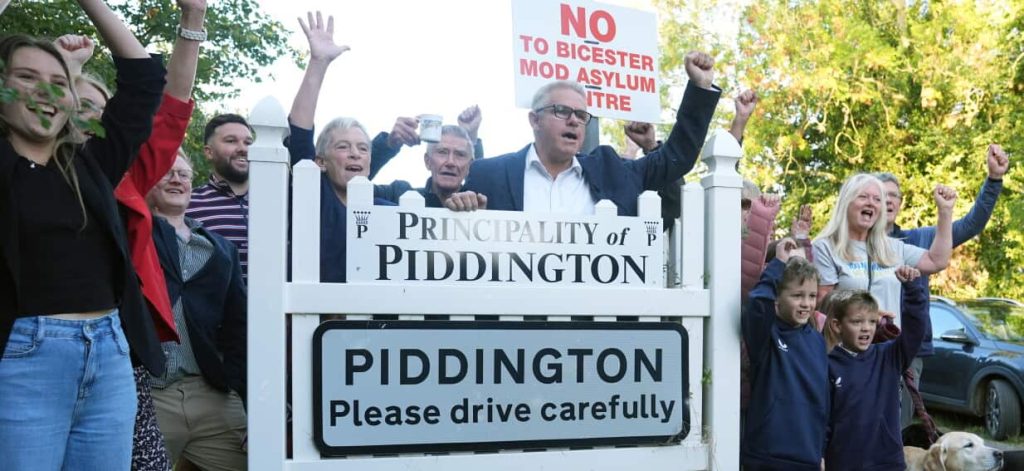
An English village of around 350 people announced overnight that a vast majority of residents had voted to exit the United Kingdom in an “independence referendum” in protest at plans to house over 1,200 migrants in a nearby facility.
Piddington in central England, 25 kilometres from the university city of Oxford, has grabbed headlines with its tongue-in-cheek breakaway vote.
The village’s parish council announced that with 312 ballots counted, 285 had voted to secede from Britain over plans to house asylum seekers in a nearby disused military site, in a symbolic vote with no recognised legal basis.
Residents were handed a ballot paper with the statement: “I support Piddington seeking to secede from the United Kingdom and pursuing self-determination.”
The local parish council chair Tim McNally said that the village will now be known as the “principality of Piddington”.
Your trusted source for staying up-to-date with the world around you. Get free daily news updates and analysis, straight to your inbox.
McNally told UK broadcaster Sky News: “For us, it’s about proportionality — how does a small village of 350 odd people assimilate with 1,250 males?”
He accused the government of “trying to rush this whole plan through”.
READ MORE
The leader of Oxfordshire county council Tim Bearder, speaking to the BBC, warned the planned centre “will be a lightning rod to the far right, who come here to protest” and “potentially attack” asylum seekers.
Prime Minister Andy Burnham promised to “look at the issues raised by the community and in the referendum” but said the “vast majority” of British people backed a government plan to stop housing asylum seekers in hotels and it was “fair” to locate holding centres around the country.
UK culture secretary Lisa Nandy told the BBC a former military base “is a better option for housing asylum seekers” than hotels or rented accommodation and vowed the base would go ahead.
Around Britain, regular protests have been staged against housing asylum seekers in hotels and other facilities.
READ MORE
Supporters called the declaration of independence a victory for people power and local democracy. Some media coverage compared the gesture to the comedy film Passport to Pimlico.
In the 1949 classic, a small group of Londoners discover treasure and declare independence making them exempt from post-war rationing and other bureaucratic restrictions.
Others said the campaign had a darker side and stirred up fear of newcomers. Some backers of the Piddington referendum compared their fight against the asylum accommodation to the 1940 Battle of Britain against Nazi Germany.
Residents of Piddington have voted to leave the UK over plans to house migrants there. Source: AP / Joe Giddens
Villager Herbert Owen, 76, said after voting that the independence referendum “isn’t just about Piddington,” adding: “It means everything our grandparents, our parents fought for. Today is the Battle of Britain.”
Comparing unauthorised immigration to an invasion has become increasingly common among politicians, including Nigel Farage of Reform UK, and far-right groups that have been active in organising and attending anti-immigrant protests.
“We have a village hall, a 12th-century church and a playing field — and that’s it,” another villager Ian Darby, 63, said, questioning how the migrants would spend their time and warning of a “takeover of our village.”
“I’ve lived here, my whole life … I won’t really feel safe enough to walk around anymore,” 17-year-old student and part-time stablehand Dita Jackson told Agence France-Presse.
READ MORE
The government says the proposed centre would be used for a minimum of 10 years to house single adult male asylum seekers.
The “safety and security” of the migrants, staff at the base and the local community would be “of the utmost importance”, it said.
The centre-left Labour Party, in power since July 2024, has vowed to replace use of hotels as migrant accommodation, a policy it inherited from the previous Conservative government, with ex-military bases by 2029.
Refugee groups said military barracks aren’t the right place to house asylum seekers, but cautioned that migrants should not be made scapegoats.
“For people who have fled war and violence and come to the UK to be safe, being accommodated in such remote and unsettling environments only exacerbates their sense of insecurity,” said Jon Featonby, chief policy analyst at the Refugee Council.
“And as we’ve seen from other sites, they’ve undermined social cohesion.”
For the latest from SBS News, download our app and subscribe to our newsletter.