
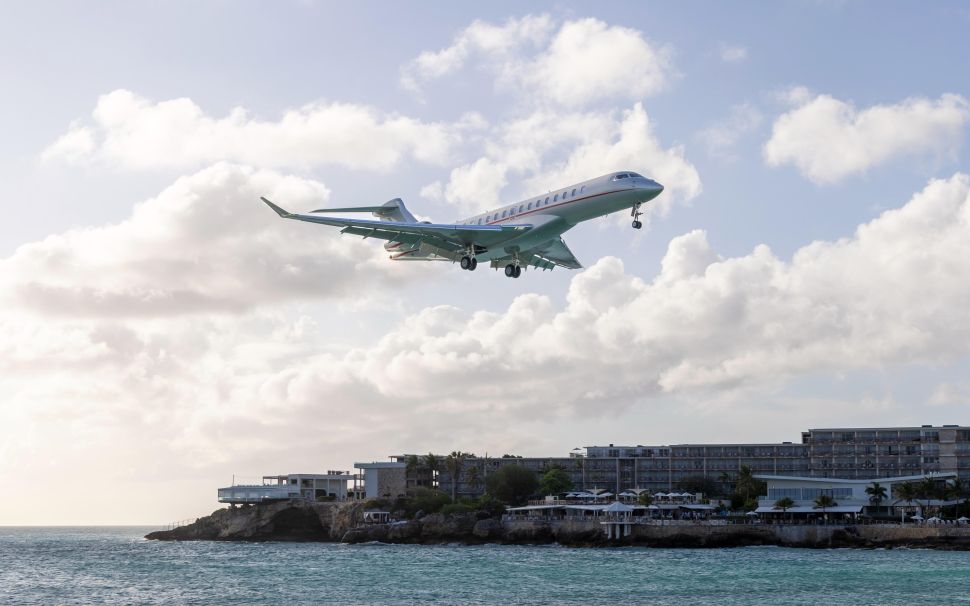
Across the sporting spectrum, rising costs are increasingly pricing traditional fans out of marquee moments. But despite the expense of attending (and even watching) live sporting events, fan enthusiasm hasn’t slowed. Instead, it’s evolving, with dedicated, often wealthy spectators finding ways to enrich their fandom through elevated luxury experiences.
During the Knicks-Cavaliers playoff series in May, private jet marketplace XO reported a 31 percent year-over-year increase in travel between New York City and Cleveland, the company told Observer. People are traveling farther for sporting events, too. At The Masters in April, private jet charter company VistaJet escorted an attendee from Seoul to Augusta, Ga., Leona Qi, VistaJet’s president of U.S. operations, told Observer.
hoper, a global helicopter booking platform headquartered in Greece, said demand for regional helicopter travel jumped during the Winter Olympic Games in Italy in February and the Monaco Grand Prix in June. Because of the “very strict window of time” associated with live sports, the ease and speed of helicopter travel comes in handy for last-mile transportation, Dimitris Kossyfas, hoper’s chief commercial officer, told Observer. Next week, hoper is launching new services in New York in time for the U.S. Open Tennis Championships.
Travelers are also showing increased interest in destination-based tourism, Kossyfas added. In addition to basic transportation, Hoper also offers scenic helicopter tours. For an industry that generated more than $111 billion in tourism revenue in 2025, there’s no denying the novel luxury that accompanies sports-related travel. In the U.S., 86 percent of sports fans believe live professional sports are becoming a luxury experience, according to the 2026 YouGov sports survey.
Venues and sports organizations are also expanding beyond basic attendance. Lexington-based Keeneland, one of the world’s largest thoroughbred racetracks, has seen this evolution firsthand. Founded in 1936, the venue generates more than half a billion dollars in annual sales through its thoroughbred auctions. It will host the 2026 Breeders’ Cup World Championships in October and debuted its newly constructed $100 million Paddock Building earlier this year to meet rising guest expectations.
“Sports travelers today are looking for more than just the sporting event itself,” Gabby Gaudet, Keeneland’s director of communications, told Observer. “They want an immersive, social experience, and something they simply can’t replicate by watching from home.”
A fall-season opening-weekend ticket for the 1936 Room in the Paddock Building, which includes an up-close view of jockeys en route to the saddling area, reception-style dining and access to the lawn, costs $200, compared with $15 for general admission.
In July, Formula One announced a new multiyear partnership with private aviation supplier Flexjet to support VIP attendees with a fleet of more than 340 private jets. The partnership includes access to the F1 Paddock Club (unrelated to Keeneland’s Paddock Building), a high-end hospitality facility with 24 locations, including Monaco, Las Vegas and Madrid, where access costs nearly $10,000.
Formula One saw a year-over-year attendee increase of 42 percent at Monaco’s Paddock Club and 22 percent at its Silverstone location in England, a representative told Observer. So far this year, more than 60,000 guests have visited hospitality spaces at Formula One venues worldwide.
As demand continues to rise, already pricey premium travel is getting even more expensive. A seat on a hoper helicopter during June’s Monaco Grand Prix cost up to €700 ($808), compared to the standard €195 ($225) during the off-season, Kossyfas said. Renting an entire aircraft for six passengers can cost anywhere from $3,000 to $10,000.
Kossyfas hopes the eventual commercialization of eVTOLs—electric vertical takeoff and landing aircraft—will help democratize helicopter transportation. Known for zero emissions and reduced noise pollution, eVTOLs are currently in the final stages of FAA certification. Reduced noise could mean more approved landing zones, while broader operations could make the service more accessible, particularly during periods of heightened demand.