
Through centuries of privileged “high society” escapades, there have been the socialites and those who chronicle their lives, often poking some fun at the extremes of behavior that always seem to follow extreme wealth. From Thackeray’s Regency London to Plum Sykes’ Upper East Side, novelists have long found the rich irresistible subjects, as much for their foibles as for their glamour. The following books provide windows into the antics of the upper classes that range from delicious to cautionary.
The best books about society’s glittering, ruthless elite
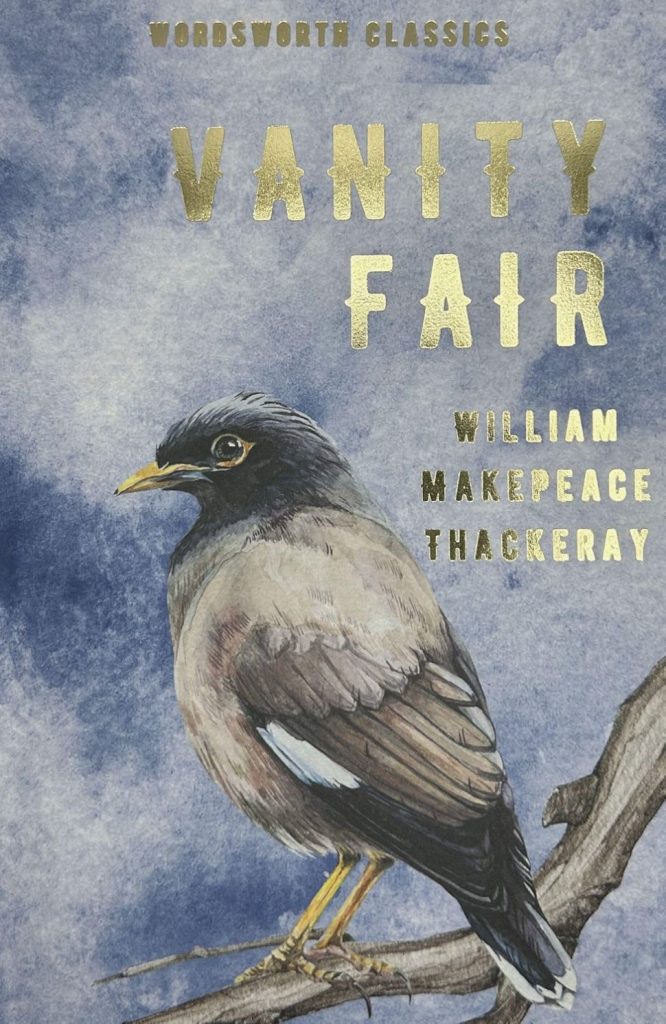
‘Vanity Fair’ by William Makepeace Thackeray
‘The Age of Innocence’ by Edith Wharton
‘Answered Prayers’ by Truman Capote
‘The Great Gatsby’ by F. Scott Fitzgerald
‘Bonfire of the Vanities’ by Tom Wolfe
‘Story of my Life’ by Jay McInerney
‘People Like Us’ by Dominick Dunne
‘Four Blondes’ by Candace Bushnell
‘Vanity Fair’ by William Makepeace Thackeray
If you are reluctant to read Thackeray’s nearly 200-year-old novel, don’t be. Becky Sharp may be a product of the 19th Century, but her ambitions and the havoc they provoke are thoroughly modern. Becky is as duplicitous as she is determined to rise from her humble birth to the highest echelons of English society. Watching her scale the slippery slope from life as a poor governess to meeting the King—and briefly becoming wildly patriotic—remains genuinely funny. Even though Becky may well be a sociopath, it’s hard not to root for her.
‘Vanity Fair’ by William Makepeace Thackeray.
Wordsworth Editions Ltd
‘The Age of Innocence’ by Edith Wharton
Edith Wharton’s Pulitzer Prize-winning novel is not precisely a ringing endorsement of 1870s Gilded Age high society. You can watch with horror as free-thinking Newland Archer and Countess Ellen Olenska are crushed under the wheels of a rigid, hypocritical society that abhors unconventionality. That said, the flower arrangement and table setting descriptions, and the attention paid to the characters’ outfits make it sound like they’re at least in a very pretty gilded cage.
‘The Age of Innocence’ by Edith Wharton.
Scribner
‘Answered Prayers’ by Truman Capote
An excerpt (“La Côte Basque 1965”) from this last and unfinished novel by Truman Capote resulted in his exile from high society. Published posthumously, the book charts the adventures of bisexual hustler P.B. Jones as he observes the upper class, almost all of whom are, in his opinion, as inclined to whore themselves as he. In addition to—supposedly true—anecdotes about the sexual habits of his friends, the book is filled with interviews ranging from Colette to the Duchess of Windsor. People said the book was mean-spirited, but no one said it was badly written.
‘Answered Prayers’ by Truman Capote.
Vintage
‘The Great Gatsby’ by F. Scott Fitzgerald
This F. Scott Fitzgerald novel has never been out of cultural conversation since it was published in 1925. Nick Carraway observes his wealthy, nouveau riche neighbor Jay Gatsby who hosts wild parties in the hopes of attracting his former flame Daisy Buchanan. The world is still full of people longing desperately for those who seem “out of their league” and the description of the glorious socialites Daisy and her husband Tom Buchanan as “careless people” who “smashed up things and creatures and then retreated back into their money or their vast carelessness” seems as relevant today as in the 1920s.
‘The Great Gatsby’ by F. Scott Fitzgerald.
Scribner
‘Bonfire of the Vanities’ by Tom Wolfe
Tom Wolfe’s sweeping novel addresses greed and ambition across the spectrum of the wealthy and powerful in 1980s New York City. All are united over a hit-and-run in the South Bronx, except the protagonist, Sherman McCoy, who gave us the term “masters of the universe” regarding New York financiers. He, his mistress and his very slim “social x-ray” wife dance while the world around them burns.
‘Bonfire of the Vanities’ by Tom Wolfe.
Picador
‘Story of my Life’ by Jay McInerney
No chronicle of social life in Manhattan would be complete without recognizing Jay McInerney. While Bright Lights, Big City skewered the cocaine-fueled world of 1980s publishing, this novel pierces the cocaine-fueled world of 1980s party girls. It is told from the perspective of Alison Poole—a character who also appears in Bret Easton Ellis’s American Psycho and was inspired by Rielle Hunter—as she tries to survive Manhattan club life. Interest in the book was renewed when it was revealed that Hunter had an affair with former presidential candidate John Edwards.
‘Story of my Life’ by Jay McInernery.
Grove Press
‘People Like Us’ by Dominick Dunne
Dominick Dunne’s 1988 novel is all about “the little signals by which people like us recognize each other.” Those quiet luxury markers are particularly hard for social climbers Ruby and Elias Renthal to recognize, even as they also navigate AIDS challenges, gossip and a particularly disastrous charity ball.
‘People Like Us’ by Dominick Dunne.
Random House
‘Four Blondes’ by Candace Bushnell
If Bergdorf Blondes is too saccharine, Four Blondes is strychnine. Observer’s own Candace Bushnell pens a novel that sharply satirizes not only Carolyn Bessette-Kennedy, but also Harvey Weinstein, Courtney Love, Princess Diana and everyone else who might have been considered privileged circa 2000. Whether you love or hate these people, Bushnell’s take on their antics is as witty as it is withering.
‘Four Blondes’ by Candace Bushnell.
Grove Press
‘The Right Address’ by Carrie Karasyov and Jill Kargman
Anything by Carrie Karasyov and Jill Kargman qualifies as a delightful, socialite-filled romp, but The Right Address is a great place to start. It traces the aspirations of a former flight attendant who wants nothing more than to be “the next Brooke Astor”—a goal which requires a Park Avenue apartment in one of New York’s toniest buildings. (Observer makes an appearance with a reporter who mercilessly skewers heroine Melanie.) The authors claim the 2005 novel was inspired by “the insane socialites we’ve eavesdropped on our entire lives.”
‘The Right Address’ by Carrie Karasyov and Jill Kargman.
Penguin Random House
‘Bergdorf Blondes’ by Plum Sykes
Plum Sykes’s 2004 novel is that rare book about socialites with a truly likable protagonist. Featuring a “champagne bubble about town” who is New York’s answer to Cher Horowitz, you’ll watch as she manages “tres difficult” problems. Those include getting her hair as perfectly blonde as Carolyn Bessette-Kennedy’s, dealing with dismissive downtown artistes who want to be sad depressive things about town, and trying to get her boyfriend’s mother a quilted Chanel bag at the sample sale (objectively, the kindest thing a person can do).
‘Bergdorf Blondes’ by Plum Sykes.
Miramax Books