
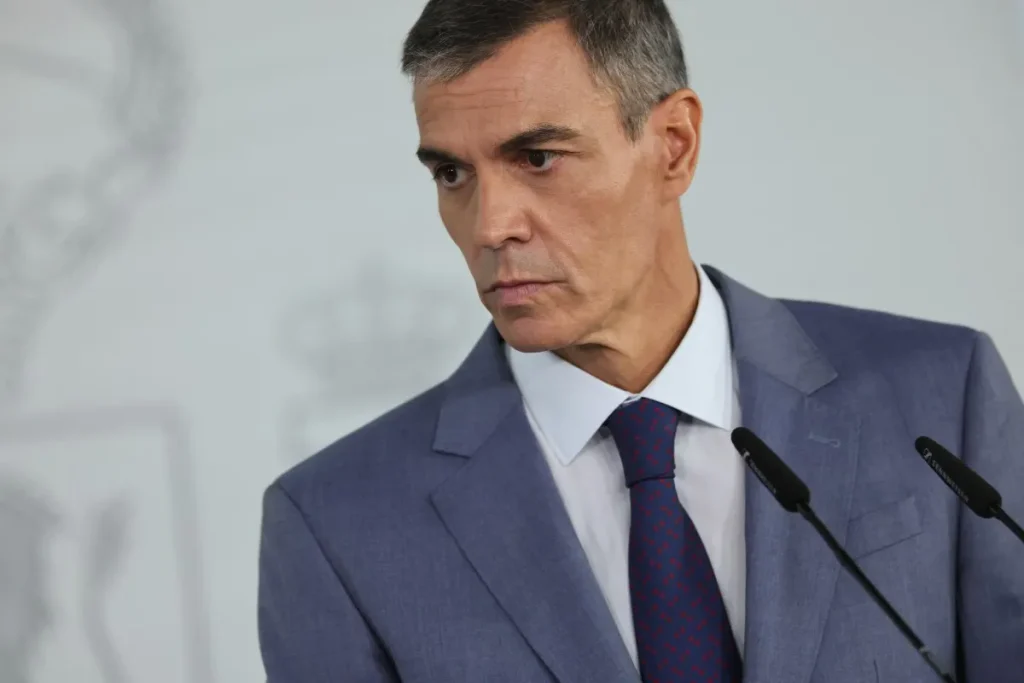
It is the latest gamble by the Socialist leader, 54, who is trailing in the polls but has made audacious political moves a hallmark since taking office in 2018.
AFP looks at the issues that will shape the vote, originally scheduled for 2027 but brought forward by Sánchez after his minority leftist coalition failed to pass urgent housing measures.
Housing crisis
Unaffordable housing has been a major concern in Spanish society for years, but the crisis has dominated the political debate after the eviction of an 87-year-old Madrid pensioner in September sparked nationwide protests.
A shortage of social housing, the expansion of short-term tourist rentals, speculation by large investment funds and insufficient construction are among the factors identified by activists and analysts.
Sánchez will look to capitalise on the popular discontent after the right-wing opposition voted down his housing measures, which included more protections against evictions and the automatic renewal of tenant contracts.
The opposition accuses him of failing to improve the situation during his eight years in power.
Ceuta migrant crisis
A humanitarian crisis in Ceuta remains unresolved after tens of thousands of migrants streamed into the Spanish north African territory from neighbouring Morocco in late July.
Hundreds of migrants are living in makeshift camps, increasing tensions with locals in the small city of around 80,000 inhabitants, who protest regularly and accuse the government of abandoning them.
Sánchez, who has bucked a wider trend in Europe by championing immigration, has come under fire for not preventing the mass entry as the crisis drags on for months.
Analysts believe these circumstances benefit the anti-immigration, far-right Vox party, which is climbing in the polls and calls the rush an “invasion”.
King Felipe VI and Queen Letizia are due to visit Ceuta on October 13th in the first royal trip since 2007, which could inflame tensions with Morocco.
Sánchez has spent years trying to improve Spain’s historically delicate relations with Morocco, which claims sovereignty over Ceuta and the other Spanish north African territory of Melilla, where Felipe and Letizia will travel on October 14th.
Corruption scandals
Propelled to power in 2018 promising to clean up Spanish politics, Sanchez is dogged by a slew of corruption scandals affecting relatives and top Socialist figures.
His wife Begoña Gómez will go on trial for alleged embezzlement and influence peddling, while his former right-hand man José Luis Ábalos was sentenced to 24 years in jail for corruption.
Former Socialist premier José Luis Rodríguez Zapatero, Sánchez’s mentor, is also under investigation for his role in alleged irregularities in the bailout of an airline.
Sánchez has always defended the innocence of his wife and Zapatero, as well as denying any irregular financing of his Socialist party, blaming a right-wing smear campaign for destabilising his government.
The Socialist party could still contest the election if it were placed under investigation, but the political cost would be potentially irreversible.
Rising far right
The main conservative Popular Party (PP) has consistently topped most polls in recent months but not enough to secure a majority.
The far-right Vox, the third-largest force in parliament, could therefore become a kingmaker and demand concessions from the PP in any coalition talks, a scenario that played out in recent regional elections.
PP leader Alberto Núñez Feijóo insists his goal is to govern alone but has left the door open to talks with Vox, saying he does not want to “demonise” the party.
Sanchez frequently juxtaposes his Socialist party’s coalition with far-left Sumar against what he calls a “reactionary international” that would cut back rights if a PP-Vox coalition took power.
On the other hand, Sánchez would need to renew alliances with various small left-wing parties that have sunk in the polls and often squabble among themselves.
Article by Diego Urdaneta