
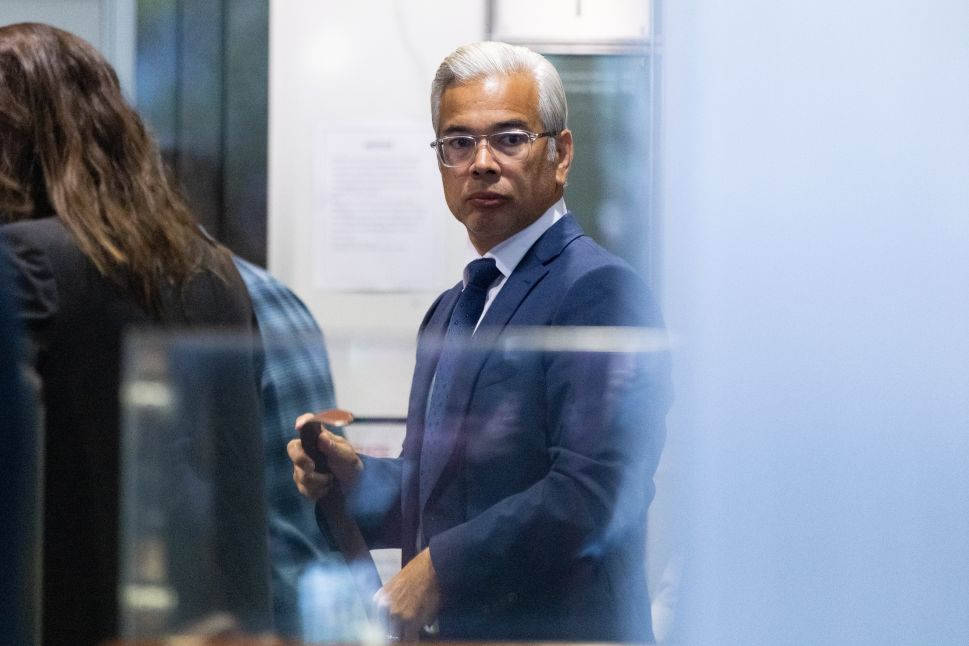
Attorney General of California Rob Bonta has spent five years in the seat teaching Silicon Valley that a federal clearance is not a finish line. He joined the federal case that found Google an unlawful monopolist in ad tech, brought Amazon to court over price-inflating third-party merchant contracts, and extracted binding governance commitments during OpenAI’s nonprofit restructuring to keep oversight anchored in California. Now, a $111 billion Hollywood merger is learning the exact same lesson.
Paramount Skydance CEO David Ellison holds an agreement to acquire Warner Bros. Discovery that expires on June 1, 2027. The antitrust trial standing between Ellison and the closing is set for March 2, 2027, in Oakland. Starting Oct. 1, 2026, every day the deal stays open costs him roughly $7 million in ticking fees owed to WBD shareholders. Bonta controls all three of those numbers by controlling when, or whether, he settles.
Ellison has spent the year trying to unite two historic studios by acquiring WBD. He agreed in February, the Justice Department cleared the deal in June, and regulators in 68 global jurisdictions—including the European Union, the UK’s Competition and Markets Authority, COMESA and China—signed off. The one thing left is the antitrust lawsuit from Bonta’s 12-state coalition and the Writers Guild, because the deal can’t close while the case is pending. The fastest path to closing runs through a settlement on Bonta’s terms, but Bonta pulled the plug on Monday’s scheduled sit-down, accusing Paramount of leaking preliminary talks to the press and demonstrating a “lack of good faith.”
“As soon as Paramount stops playing games and engages sincerely, my office is happy to meet again,” Bonta said in a statement.
Ellison’s Case for Scale
Ellison’s ambition, at least, is the kind you can quantify. Weeks after Paramount Skydance came together, its new boss was already assembling a bid for Warner Bros. Discovery. By February 2026, the son of Oracle co-founder Larry Ellison agreed to pay $31 a share in cash for WBD, pegging the company’s equity at $81 billion and pushing the total enterprise transaction value to $111 billion. The purchase is financed by $47 billion in equity from the Ellison family and RedBird Capital Partners, as well as $54 billion in funded debt from Bank of America, Citigroup and Apollo, with the rest covered by assumed liabilities and existing cash on hand. Ellison’s pitch is a “next-generation media and entertainment company,” built from two studios that predate television.
In a New York Times op-ed, Ellison argued that the opposition isn’t really about market share. If it were, he wrote, the deal would have never been cleared across 65 countries (with the final three global jurisdictions, including Mexico, pending review at the time). The real objection, he conceded, is the news division: whether he can be trusted with CNN. Ellison didn’t dodge that critique—he spent more than half the essay on it, and in it, he made another pledge. “I do not aspire to lead these companies to bend their newsrooms to my views.” He cited a figure—28 percent of Americans trusting the news, the lowest on record—and framed rebuilding that trust as a long-term expense he intended to carry.
For the people actually holding the remote, the case for a mega-merger between Paramount Skydance and WBD goes like this: one app instead of two, folding Paramount+ into HBO Max for “a little over 200 million direct-to-consumer subscribers,” which would allow the consolidated streamer to square up against Netflix. Most live sports will live under one roof, too—from the NFL to March Madness to the NHL and the UFC.
The state coalition’s antitrust filing argues that combining Paramount+ and Max into a 200-million-subscriber platform would grant the studio substantial control over licensing fees for independent producers and allow it to hike consumer prices unchecked.
What Bonta Wants
Bonta was born in Quezon City and raised at La Paz, the United Farm Workers’ headquarters, where his parents organized alongside César Chávez and Dolores Huerta. He went to Yale twice and became California’s first Filipino American attorney general. Then he passed on this year’s governor’s race to keep the seat.
The federal government may have greenlit the Paramount Skydance-Warner Bros. Discovery deal, but the AG declined to follow. Instead, Bonta led 11 other states into an antitrust suit last month, with the WGA filing its own a day later. And while the coalition runs a dozen deep, the fight runs through California for a reason: Hollywood is California’s signature export, the state’s economy is the fourth-largest on the planet, and the courtroom where this all ends is in Oakland. “California has the authority by itself to try and challenge this deal, and California would be the area that’s most affected,” Columbia’s Tim Wu told NPR.
The legal argument is structural, not personal. “As of 2026, no one should treat a federal decision on antitrust as the end of the story,” Fordham’s Zephyr Teachout wrote in The Nation.
Bonta is certainly facing pressure—California Governor Gavin Newsom, L.A. Mayor Karen Bass, the DGA and IATSE are all pushing him toward a settlement, for different reasons. Newsom and Bass have a state economy to protect, and IATSE and the DGA have members waiting on production to restart, banking on Ellison’s pledge to finance 30 theatrical releases annually and keep physical crews working. Still, Bonta’s terms haven’t budged.
Any deal with Ellison will require “robust structural remedies,” Bonta stressed to CNBC last week, noting that neither “the streaming market” nor “CNN” are at the root of the complaint, but rather the control that the combined company would have over three distinct product markets: theatrical film distribution, distribution of blockbuster films, and licensing of basic cable programming. “I hope they can focus on the actual allegations we make in our complaint,” Bonta added.
Assets, Not Assurances
What would a settlement look like?
The first real glimpse came following Friday’s closed-door settlement session. Over the weekend, The Wall Street Journal reported on confidential details of the talks, revealing that the 12-state coalition and the WGA want Paramount Skydance to part with a chunk of Warner Bros. Discovery’s cable networks—specifically assets like TNT, TBS, and the Discovery portfolio—to minimize the number of networks the company controls. Behavioral pledges, per WSJ’s report, won’t cut it. Bonta has dismissed them as “empty promises, self-serving promises, promises that are unenforceable.” (Paramount denies being the source of the leak and says it remains ready for good-faith talks.)
Ellison’s media conglomerate has asked the court, overseen by U.S. District Judge Araceli Martínez-Olguín, to compel the coalition and the WGA to post a $1.88 billion bond by Sept. 30 to cover the wait. The motion remains pending before the Northern District of California, with Bonta’s office formally opposing the demand, noting to the press that they believe Paramount is “trying to put the California taxpayers on the hook.” Bonta told CNN that he “respectfully” suggests Paramount “focus on the antitrust case in front of them that we set forth in our complaint, because that’s all this is about.”
The dispute hasn’t stopped the process. The two parties will meet again; the court has ordered both to name magistrate candidates to oversee mediation this week. Ellison’s public position hasn’t moved, either: “Hollywood’s story can have a happy ending only when we connect with our audience,” he wrote in the NYT.
Mediation begins with about five weeks before the meter starts. After that, every day Bonta spends not settling costs Ellison $7 million. Boardroom or courtroom, these two men are deciding how entertainment capital flows for the next decade. Ellison may command the box office soon enough. For now, California controls the clock.