
From the biblical tale of Cain and Abel to HBO’s Succession, family sagas centering on power and inheritance have always exercised a hold on the public imagination. There is something raunchy, dramatic and almost thrilling in witnessing the freewheeling fortune of a legendary family, idolizing the patriarchs, romanticizing the women and observing the scions, who stumble and more often than not self-destruct in the eye of the masses. Whether it’s the families embodying politics and prestige, such as the Kennedys, Windsors and the Gandhis, generational American billionaires like the Rothschilds and the DuPonts, or corporate empires selling taste like the Agnellis and the Hermès family, visceral impulses and unforgettable drama result when wealth and power are inextricably tied to bloodlines.
Far before the term “nepo baby” was coined or the Kardashians premiered on reality TV, tabloids, an entire literary shelf of memoirs and biographies and Graydon Carter’s Vanity Fair were devoted to narrating the lives of the rich, famous and trust funded (or those with Swiss bank accounts: take your pick). And yet, more than just money, these dynasties dictated fashion, taste and culture. The 1980s saw an excess of Gucci trademark handbags, the interlocking Gs in the logo signaling an almost tacky wealth, and the Medicis in medieval and Renaissance Italy commissioned enduring works of art like Botticelli’s The Birth of Venus and Donatello’s bronze statue of David, the decapitated head of Goliath lying at his feet.
Even within the realm of literature, the drama of lineage and succession remains timeless, ranging from Zeus overthrowing his father to Shakespeare’s plays about the Plantagenet battles for the throne of England. Classics like John Steinbeck’s East of Eden and William Faulkner’s Absalom, Absalom! spotlight power struggles around the primordial sense of belonging that can only be tied to one’s last name. It’s no surprise then that the dynastic wheel of fortune continues to fascinate with its twists and turns, particularly now when the 25 richest families in the world have amassed $2.9 trillion. The following books trace how the world’s most storied families, real and imagined, turned fortune into myth and, in some cases, myth into a battle of heirs.
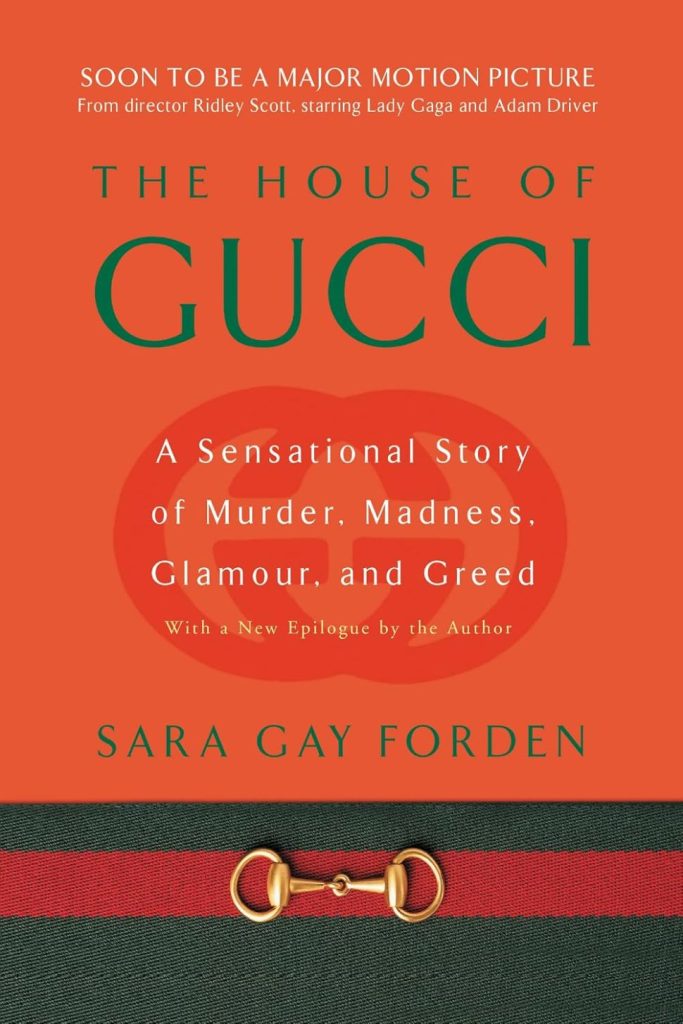
‘The House of Gucci: A Sensational Story of Murder, Madness, Glamour and Greed’ by Sara Gay Forden
‘Empire of Pain: The Secret History of the Sackler Dynasty’ by Patrick Radden Keefe
‘Medici Money: Banking, Metaphysics and Art in Fifteenth-Century Florence’ by Tim Parks
‘Marella Agnelli: The Last Swan’ by Marella Caracciolo Chia
‘At 24 Rue Faubourg Saint Honoré’ by Frédéric Laffont
‘Wide Sargasso Sea’ by Jean Rhys
‘An Oresteia’ by Aeschylus, Sophocles and Euripides
‘Jackie As Editor: The Literary Life of Jacqueline Kennedy Onassis’ by Greg Lawrence
‘The House of Gucci: A Sensational Story of Murder, Madness, Glamour and Greed’ by Sara Gay Forden
“Who is that girl over there in the red dress who looks so much like Elizabeth Taylor?” Maurizio Gucci asked a friend at a party in 1970. He then approached Patrizia Reggiani, sparking the tempestuous romance that made and broke the Gucci dynasty. Ambitious and wanting to marry a man with an esteemed name, Patrizia helped Maurizio take control of the Florentine fashion house and revive the brand on the international market, even as lawsuits from relatives flooded in. And yet, it was precisely Patrizia’s “relentless criticism and bossiness” that precipitated their bitter divorce, and later, Maurizio’s murder at the hands of a hitman hired by his scorned ex-wife. Pulsing with passion and betrayal, Forden’s book is a murder mystery rooted in detangling the complex feuds of the Gucci family, fixating any reader with its real-life rise and fall.
‘The House of Gucci: A Sensational Story of Murder, Madness, Glamour and Greed’ by Sara Gay Forden.
Mariner Books
‘Empire of Pain: The Secret History of the Sackler Dynasty’ by Patrick Radden Keefe
The story of the Sacklers is the apex of the American Dream: Jewish immigrants in Brooklyn who initially ran a small grocery store, growing into a multibillion-dollar empire at the intersection of copywriting, medicine and finding pharmaceutical solutions for psychiatric illnesses. In his 640-page magnum opus, Radden Keefe traces the lineage of the Sacklers from the brilliant, philandering Arthur Sackler, who ran the first experiments using histamine, helmed the ad agency that marketed Pfizer and other groundbreaking drugs to hospitals, and outsourced his rare art collection to the Met, to the family’s ongoing downfall in several lawsuits charging Purdue Pharma with causing the opioid epidemic. True to form, Radden Keefe’s painstaking research of archives, more than 100 interviews and attention to visual detail in photographs lend vigor to the lifelike narration of the book. Empire of Pain is more than just a journalistic investigation; it’s a family epic of mythic proportions.
‘Empire of Pain: The Secret History of the Sackler Dynasty’ by Patrick Radden Keefe.
Vintage
‘Medici Money: Banking, Metaphysics and Art in Fifteenth-Century Florence’ by Tim Parks
Perhaps the most iconic family of bankers in history, the Medicis famously funded the Italian Renaissance, propping up architectural landmarks like St. Peter’s Basilica and championing artists like Botticelli, Michelangelo, da Vinci and more. In chatty, witty prose, Tim Parks breaks down the Medici family’s inner dynamics and the chokehold they had on Europe by gifting the Vatican generous loans. Ranging from Machiavellian schemes of murder, the sexual hedonism of slave-concubines and illegitimate children, and the management of money that kept it all going, Parks illustrates the links between Catholic guilt (and punishment), Italian art and the Medicis.
‘Medici Money: Banking, Metaphysics and Art in Fifteenth-Century Florence’ by Tim Parks.
W. W. Norton & Company
‘Marella Agnelli: The Last Swan’ by Marella Caracciolo Chia
This sumptuous coffee table book chronicles Marella Agnelli’s life through the houses she decorated and the gardens she tended. A Neapolitan noblewoman and part of Truman Capote’s coterie of elegant socialites, Marella was known for her unparalleled style and taste, contributing to Vogue and collaborating with interior designers like Russell Page and Renzo Mongiardino. The book showcases photographs accompanied by luxurious prose about the Agnellis’ homes, including the baroque ancestral home in Villar Perosa, the colorful and rustic cottage in St. Moritz, Gianni Agnelli’s whimsical, pop-art loft in Milan and their minimalist apartment in Rome. Of the latter, Hubert de Givenchy notably said, “This is the only contemporary house I have seen that has true grandeur.”
The prose alternates between Marella Agnelli’s dreamlike recollection of her own memories in italicized font and Chia’s exacting descriptions of these lush interiors, detailing everything from the architectural blueprint of a given house to the famous paintings that hung on the walls. (The Agnellis were avid collectors, owning artworks by Klimt, Francis Bacon, Renoir, Warhol and more.) Marella Agnelli: The Last Swan is both a sensual experience and a historical document, ending on the lagoons and still gardens of a 64-acre property the matriarch renovated in Marrakesh toward the end of her life.
‘Marella Agnelli: The Last Swan’ by Marella Caracciolo Chia.
Rizzoli
‘At 24 Rue Faubourg Saint Honoré’ by Frédéric Laffont
A quaint treatise on the Hermès family translated by Charlotte Coombe and Tina Cover, it shines a light on the artisan’s workshop where the dynasty for luxury leather goods started: at 24 Faubourg Saint Honoré in Paris. Once a shop of 20 employees known for making harnesses and selling custom wares to bygone royalty like the Russian czar, Hermès has since expanded into a multibillion-euro empire famous for its breezy scarves and statement iconic handbags. Laffont’s book is divided into 24 “cantos,” or songs, tracking the Hermès family’s painstaking commitment to craftsmanship and the house’s global expansion to Wall Street and beyond. The physical book is made of handcrafted leather, making it a perfect gift or a collector’s object sitting prettily on the bookshelf.
‘At 24 Rue Faubourg Saint Honoré’ by Frédéric Laffont.
ICONOCLAST
‘Wide Sargasso Sea’ by Jean Rhys
Jean Rhys’ stunning classic narrates the tale of Antoinette Cosway, a Creole girl growing up in Jamaica, and her tumultuous marriage to Edward Rochester, a handsome and brooding Englishman who marries her for her money. A plantation heiress, Antoinette’s life is thrown into turmoil at a young age when the majority Black population on the island revolts. And yet, as the daughter of Europeans settled in the Caribbean, she is not fully accepted by Mr. Rochester either; anxieties around her sensuality and knowledge of the island abound. Painted in lyrical, haunting prose, Wide Sargasso Sea serves as a precursor to Jane Eyre, but also a portrait of a doomed marriage when inheritance, colonialism and carnal passions collide.
‘Wide Sargasso Sea’ by Jean Rhys.
W. W. Norton & Company
‘An Oresteia’ by Aeschylus, Sophocles and Euripides
No reading list on dynastic succession is complete without a Greek tragedy, and An Oresteia (translated by Anne Carson) pulses with a bevy of matricide, adultery, emotional incest between siblings, mother-daughter rivalry and the sensational intergenerational fallout of the Trojan War. After Agamemnon returns home, bringing the spoils of war in the form of the Trojan princess-turned-slave-concubine Kassandra, his scorned queen, Klytaimnestra, plots to kill and overthrow him in revenge for when he sacrificed their daughter to win the war. The cycle of blood and betrayal continues when Orestes, the long-lost prince, returns to claim his throne, even if it means murdering his mother in the process. Carson’s verse is lucid and airy, resonating with her trademark poeticism, and the book is obsessively readable, the ancient entertainment equivalent of The Sopranos or Game of Thrones.
‘An Oresteia’ by Aeschylus, Sophocles and Euripides.
Farrar, Straus and Giroux
‘Jackie As Editor: The Literary Life of Jacqueline Kennedy Onassis’ by Greg Lawrence
Jackie Kennedy was known for being in the eye of the storm, marrying powerful men and exercising taste and influence from their side. She worked with historians to redecorate the White House, and convinced Charles De Gaulle to loan the Mona Lisa to the United States: nearly two million Americans viewed da Vinci’s iconic painting, first at the National Gallery, and then at the Met. After JFK’s murder, she married Greek tycoon Aristotle Onassis, scandalizing the public, which ironically nicknamed her “Jackie O.” When her second husband died of complications from surgery, she entered a lengthy court battle with his daughter Christina for his assets, eventually reaching a $26 million settlement as the widow of one of the richest men in the world.
Little known about Jackie Onassis’ legacy is the 19 years she spent as an editor of books in New York, beautifully chronicled in Jackie as Editor by Greg Lawrence. Jackie’s firsthand experience with tragedy, and her almost knee-jerk instincts for fame and fortune shaped her judgment as an editor. “My hunch was that her principal means of acquisition, her line into getting a book… was that she would go to dinner parties with very interesting people who would tell her interesting things. And then she would say, ‘That’s so interesting! You must write a book about that,’” the editor Elisabeth Sifton said.
And indeed, Jackie’s status as a member of the international jet set but also her intellectual passions paved the way for trailblazing publications. She worked with Barbara Chase-Riboud, the artist, on the novel Sally Hemings, retelling Thomas Jefferson’s illicit, decades-long relationship with an enslaved woman. She commissioned the English translation of Naguib Mahfouz’s Nobel-winning epic Cairo Trilogy, and published an illustrated storybook of Alexander Pushkin’s fairy tales, approaching the Russian dancer Rudolf Nureyev to write the introduction. Jackie’s biggest project was Moonwalk, Michael Jackson’s authorized autobiography, which only came into fruition after she charmed him to write it. Lawrence, who had Jackie as his own editor on a book he co-wrote with his then-wife, the prima ballerina Gelsey Kirkland, reports with verve and empathy in a compilation of interviews spotlighting almost all of Jackie’s books, from start to finish. Jackie as Editor establishes that Jackie was not just a wife and a widow, but a powerful tastemaker in her own right.
‘Jackie As Editor: The Literary Life of Jacqueline Kennedy Onassis’ by Greg Lawrence.
Thomas Dunne Books
‘I’ll Take the Fire’ by Leïla Slimani
The third and final book in Slimani’s Moroccan trilogy, I’ll Take the Fire surveys the 1990s in Morocco through the point of view of Mia Daoud, a talented, closeted lesbian student with aspiring dreams of being a writer. Mia and her sister Inès are the daughters of Mehdi, a brilliant economist, and Aïcha, a calm, half-Alsatian gynecologist. A lapsed Marxist, Mehdi works as a civil servant, negotiating with the IMF to invest in infrastructural projects and trying to change the country for the better, even as he is surveilled by spies for the royal family. Misfortune strikes when he is jailed on charges of embezzling funds (a real-life parallel to Slimani’s own father, who was cleared after his death), and Mia hustles in Paris to support her family. “[M]oney was a world in itself. A world where race and gender are dissolved in a number of zeroes,” Mia reflects, as she makes more in euros than her parents ever made in Morocco. I’ll Take the Fire shows the fragility of inheritance in a postcolonial Muslim country and how efforts to create generational wealth fall into flux when injustice, corruption and political scapegoating prevail.
‘I’ll Take the Fire’ by Leïla Slimani.
Penguin Books