
Ministers’ criminal records will be kept hidden from the British public thanks to a tribunal ruling.
Under a ruling by the first-tier information tribunal, Britons will not be told which Cabinet members declared any past criminal convictions during their vetting process.
The tribunal sided with Whitehall against The Times last month when the newspaper tried to find out how many people in Sir Keir Starmer’s Government disclosed criminal records as part of their appointment procedure.
It rejected the request on data protection grounds, as that information constituted criminal offence data – which Parliament has given “enhanced” legal protection.
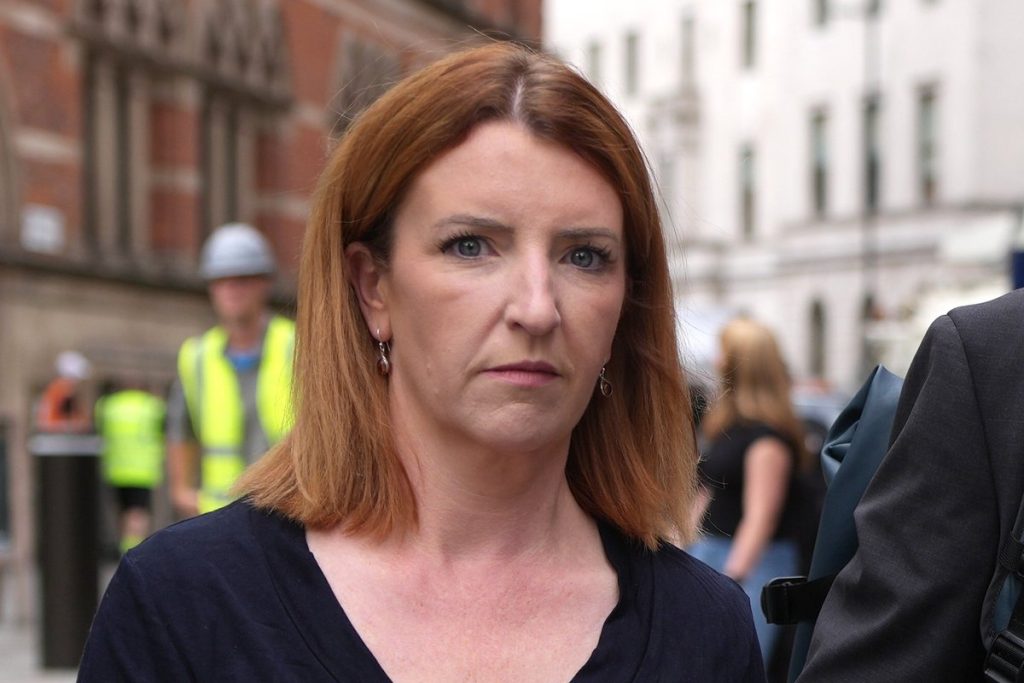
The initial investigation came after Louise Haigh resigned as Transport Secretary in November 2024 after her undisclosed fraud conviction came to light.
Haigh admitted misleading police after wrongly telling officers her work phone had been stolen as she was “mugged” on a night out in 2013.
She claimed she had thought the phone had been taken, but later found it at home.
Six months before she became an MP, Ms Haigh pleaded guilty to making a false report to police and was handed a conditional discharge by magistrates. Her conviction is believed to now be classified as “spent”.
Louise Haigh was convicted of fraud by false representation in 2015 – a matter over which she resigned
|
GETTY
Despite being forced to quit under Sir Keir, she has since returned to Government under Andy Burnham.
The Times sought to determine whether other sitting ministers had made similar declarations during their vetting.
The tribunal acknowledged the significant public interest at stake, noting that “the request concerns standards in public life and the integrity of those holding ministerial office”.
It also recognised how “ministers exercise significant public power and there is a legitimate public interest in scrutiny of systems intended to ensure their suitability for office”.
GOVERNMENT SILENCE – READ MORE:
Louise Haigh was the first minister to resign under Sir Keir Starmer’s watch when her fraud conviction came to light
|
PA
But it ruled that even confirming no ministers had declared convictions could amount to unlawful disclosure of criminal offence data about every Cabinet member.
As a result, voters remain unable to scrutinise the integrity and background of those holding the highest office.
Simon Madden, the director of the propriety and ethics team at the Cabinet Office, gave evidence that “the process depends in part upon candid disclosures being made in circumstances where confidentiality is expected”.
The ruling was not unanimous, however.
A dissenting panel member argued the request concerned “disclosure behaviour” rather than convictions themselves, and that such candour deserved democratic oversight.
The Government refused to reveal how many of Andy Burnham’s ministers had declared criminal convictions
|
PA
The dissenter wrote: “The information sought concerns what individuals chose to disclose in response to a broad suitability inquiry. It does not concern the underlying question of whether any individual in fact has a criminal conviction.”
The Government refused to reveal how many of Mr Burnham’s ministers had declared criminal convictions when asked outside the freedom of information process.
It also refused to explain why it believed this information should remain hidden from the public.
A spokeswoman said: “The Information Commissioner’s Office exists to uphold information rights in the public interest.
“Its decisions are entirely independent of Government.”