
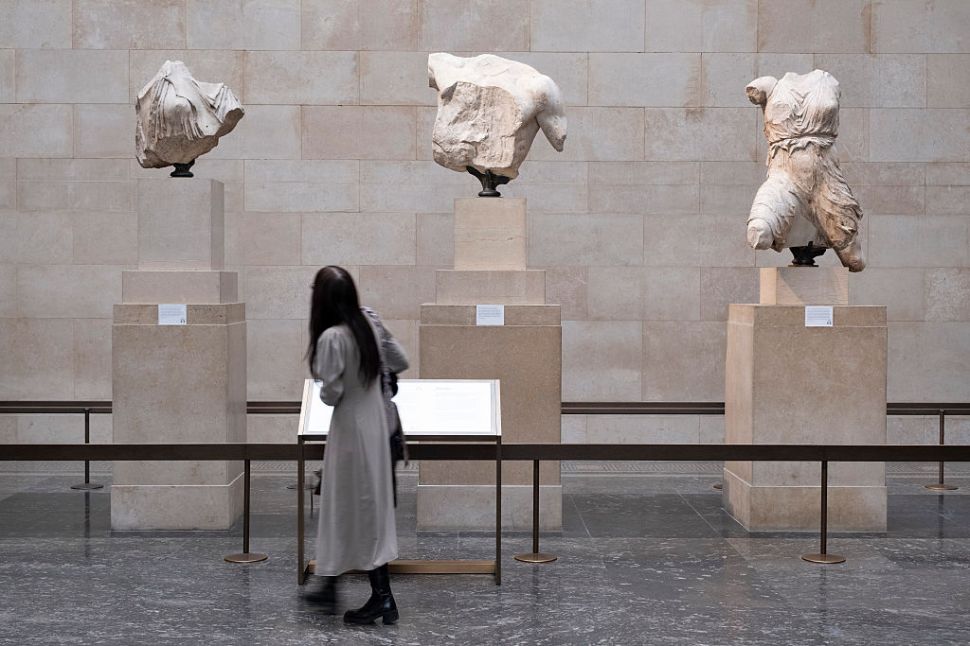
Historically, museums were seen mainly as places to house and protect precious art and artifacts. With exhibitions traditionally organized chronologically, geographically or by category, they have long offered either an encyclopedic or a highly focused compendium of the evolution of human culture and creativity over the centuries. This early notion of the museum was largely tied to the fact that these institutions emerged alongside the modern nation-state. They became apparatuses that helped shape shared national narratives, functioning as both civic classrooms and symbolic machines for the state: public instruments for organizing knowledge, identity and power.
Society has changed significantly since then, with museums shifting away from models that put them on par with temples and archives toward models that foregrounded each institution’s responsibilities to the public. The new paradigm places greater emphasis on museums’ social role within communities, and institutions responded with missions centered on participation, accessibility, diversity, accountability and sustainability.
And there’s still room for change. Earlier this year, the International Council of Museums (ICOM) voted to adopt a revised Code of Ethics for Museums that further emphasizes this social role and civic function in a shifting world marked by deepening racial divisions and political tensions.
The revised code is still anchored by the most recent official definition of ‘museum,’ approved in Prague in 2022, which describes “a not-for-profit, permanent institution in the service of society” that “researches, collects, conserves, interprets and exhibits tangible and intangible heritage,” while remaining “open to the public, accessible and inclusive,” fostering “diversity and sustainability,” operating ethically and professionally “with the participation of communities,” and offering experiences for “education, enjoyment, reflection and knowledge sharing.” In a compromise between traditional and activist positions, the definition insisted that museums cannot merely preserve heritage. They must also be accountable for how they interpret it, whom they serve and who participates in making meaning.
Recognizing the diversity of museums worldwide, the revised Code of Ethics for Museums establishes common ethical principles on issues ranging from governance and education to museums’ relationship with society. Yet far from being rigid, it allows for flexibility in implementation across different cultural, legal, professional and resource contexts. It’s accompanied by a practical guide to help museums and their staff apply the principles in day-to-day operations.
ICOM identified technology as one of three major challenges museums face, as A.I. reshapes people’s understanding of history, culture, science, creativity and art. The climate crisis could not go unaddressed: the group prompts museums to raise awareness among their audiences while making concrete efforts toward carbon neutrality. Lastly, the revised code invites museums to openly confront the role they have played in shaping power dynamics within the colonial frameworks that often built them, as ongoing restitution cases remind us.
The Code of Ethics for Museums’ five core principles:
1. Service to society
The document describes museums as civic, inclusive and reparative institutions that serve society by protecting and interpreting tangible, intangible and digital heritage. Naming digital heritage alongside physical and intangible heritage is a major expansion, one also reflected in the latest UNESCO report. Museums should collaborate with diverse individuals and communities and use this shared heritage to open dialogue, uphold human rights, practice social justice and promote peace in a time of polarization and division. “When opposing opinions or conflicts arise due to cultural differences, museums should be safe spaces for dialogue and promote mutual understanding,” the document reads, assigning the museum an almost militant role in defending today’s fragile peace.
Fostering inclusive participation and combating all forms of discrimination become central to the museum’s mission. That mission also includes addressing social exclusion, promoting equitable access and continuously pursuing a long-term plan for social, environmental, cultural and financial sustainability.
2. Professionalism
The code now includes recommendations for museum staff on workplace ethics, safety and digital responsibility. Like the latest UNESCO report, it recognizes that digital tools are not neutral infrastructure; they reshape knowledge, ownership, representation and risk. Museum leaders should therefore oversee digital tools, evaluate their benefits and ensure they “cause no harm.” Staff using them are asked to consider ethical implications, environmental impact, the potential for misinformation and the effects on intellectual property rights, Indigenous rights and data sovereignty.
The code also contains provisions on conflicts of interest. “Every museum should create and make public a policy on accepting gifts, favors, loans, invitations or other benefits to help staff and volunteers avoid conflicts of interest,” it states. “Everyone who works in or with museums should work actively to prevent illicit trafficking in cultural property,” reads the principle that follows.
3. Education
Rather than classroom or an encyclopedia, the document describes the museum as a platform for sharing knowledge and fostering reflection on the objects and content it holds and displays. The wording marks a significant shift away from the older, top-down idea of the museum as a place that educates the public from a position of authority. It instead emphasizes dialogue, lifelong learning, multilingual and intercultural exchange, active learning and critical thinking.
Particular emphasis is placed on respect for and engagement with Indigenous Peoples’ traditional knowledge, practices, languages, laws, rights and customs. More broadly, the code calls for working with local and other communities on the representation and display of items associated with them. This matters because it expands what counts as legitimate knowledge within museums. Institutions are encouraged not to impose external readings on traditional knowledge and belief systems but to work with the communities that produced them in framing narratives and interpretation. “To enhance social relevance, inclusivity and meaningful engagement, audience feedback should be integrated into program development,” the code states.
Community engagement is especially relevant to reparative practices, a key call in the document: museums should acknowledge and help repair past injustices, support cultural rights and enable communities to reconnect with their history. On the educational side, the document also asks for new attention to the use of technology in educational activities, exhibitions and publications: “Museums should maintain an awareness of how digital media and digital technologies affect users and ensure that measures are in place to protect their audiences’ physical, mental and emotional well-being.”
4. Collection stewardship
Collections remain at the core of every museum’s function, again described as tangible, intangible and digital heritage held “in trust for society.” Yet the code suggests that collections should no longer be treated as isolated museum property: the call is to respect diverse perspectives and the rights of the communities whose heritage museums hold.
For human remains, and for artifacts and creative expressions that incorporate them, the code advises that decisions be made in collaboration with descendants or communities of origin, when known. Stricter due diligence standards and procedures are also required for acquisitions, whether through purchase, gift, loan, bequest or exchange. “Museums should ensure that all objects are obtained in compliance with applicable laws regulating the ownership, import, export and transfer of cultural or natural materials. Museums should refrain from acquiring objects from occupied territories,” the document advises, urging museums to research and establish an object’s origin and complete history before any acquisition. Ethical deaccessioning policies and the responsible use of technology to support the study of collections are also encouraged.
5. Governance
As for what governance should look like in museums today, the code places transparency and autonomy at the center. It also emphasizes the relatively new notion of “shared authority”: museums are invited to define themselves and shape their programming through co-creation and collaboration with the communities they serve and represent. “The governing body should reflect the diversity of the communities it serves and strive for inclusive representation and leadership,” according to the code.
The code maintains that museums are not-for-profit, permanent institutions whose governing bodies are responsible for long-term sustainability and public service. It asks museums to make public their legal status, not-for-profit certification and core documents. They are also to adopt policies on collections, fundraising, institutional integrity, board and staff diversity and emergency response. The document stresses autonomy as necessary to resist financial or political influence that could compromise a museum’s mission or values, and to ensure that income-generating activities do not undermine institutional integrity. Care and respect for staff are deemed essential, particularly as growing unionization and internal protests test museums’ stability and reputation.
If the 2022 definition expanded the museum into an accessible, inclusive, ethical and participatory institution, the revised code asks what that means in day-to-day operations. Who has access to museums? Who participates in their knowledge sharing? Who controls data and information? How are different forms of heritage treated, and how are staff and communities protected? And how should museums behave amid the climate crisis, digital disruption and the unresolved legacies of colonialism? In essence, the 2026 code turns the museum from a guardian of objects into a network of social and civic obligations. Collections remain at the core of what museums do, but communities and workers are recognized as the souls that shape meaning and determine an institution’s impact. That distinction matters in a landscape of contested histories, digital futures, climate risks and increasingly polarized public spheres.