
The Armory Show, one of the world’s most prominent contemporary art fairs, opened this week in New York, ushering in the Big Apple’s autumn art season. Staged at the Javits Center through September 27, this year’s edition brings together more than 230 galleries from 30 countries and a special Caribbean-focused curatorial program. Artists from the diaspora enjoy the spotlight this year in the Platform and Focus sections at this year’s fair. The first, “Passages and Thresholds,” is curated by Jovanna Venegas of SculptureCenter and uses large-scale installations to explore themes of technology, architecture and reconstruction as imagined across the Caribbean. The second, curated by María Elena Ortiz of the Modern Art Museum of Fort Worth, presents solo and duo works from the region to draw out the thematic connections—and disconnections—between artists, and the broader cultural dialogue embedded in their practices.
We’ve compiled a list of essential pre-reading, from art market reporting that can guide buying decisions to scholarship on Caribbean art to aid in discovery so you can navigate this year’s fair with greater insight, even without an advisor by your side.
Essential pre-Armory reading
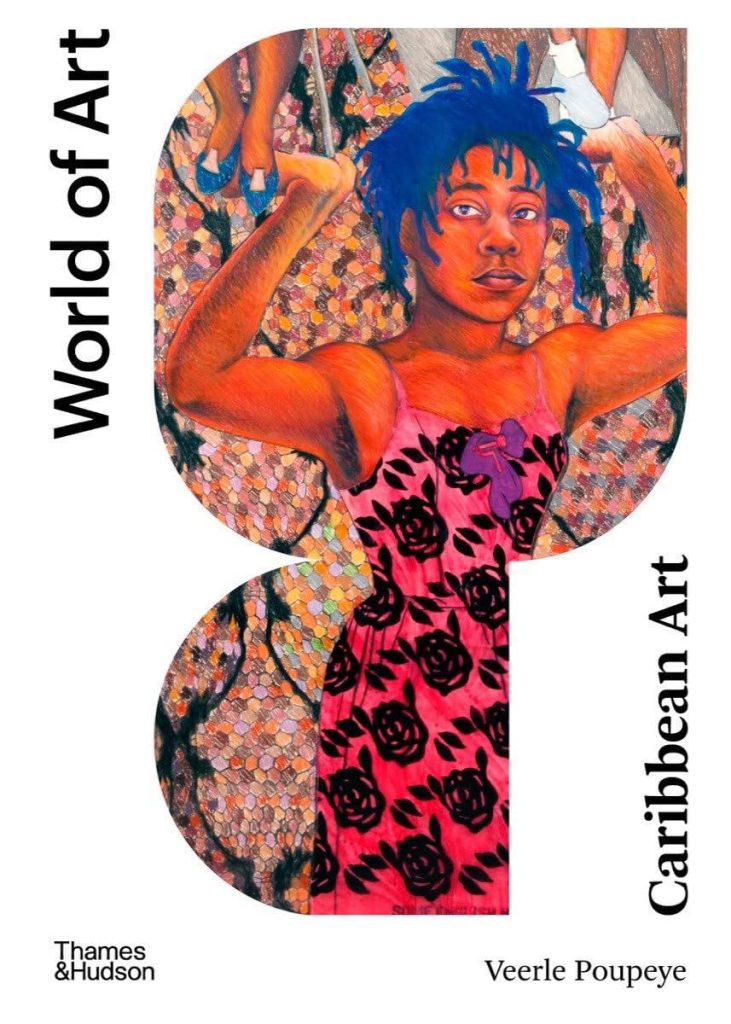
Veerle Poupeye’s ‘Caribbean Art’
The Caribbean focus of the curated sections of this year’s fair may be unfamiliar to some, particularly its underlying critiques of colonialism and its aesthetic intersections with Surrealism. Veerle Poupeye’s Caribbean Art is an instructive primer on the history of Caribbean art and how regional artists have reckoned with ideas of disempowerment, migration and the ongoing negotiation of identity (including throughout the Caribbean diaspora in the United States) in their art. The geographical area is formed by more than 20 countries, so Caribbean identities remain distinct and complex, with unique histories and cultures that can’t be distilled down into one collective identity.
Caribbean Art (World of Art) by Veerle Poupeye.
Thames & Hudson
Curator bios and publications
Before SculptureCenter, Venegas previously worked at the San Francisco Museum of Modern Art and served as a curatorial advisor for the 2022 Whitney Biennial. Venegas’s curatorial practice champions ambitious commissions and artist-led experimentation. For the biennial, she showcased projects from around the U.S.-Mexico border region and set each against the larger national debate about immigration, sovereignty and border control. Read our 2023 interview: “Jovanna Venegas On SculptureCenter, Collaboration and Working in New York City.”
Ortiz founded the Caribbean Cultural Institute at Pérez Art Museum Miami and has also earned a reputation as one of the leading curators of Caribbean and diasporic art. She is also the editor of Surrealism and Us, the catalogue accompanying the 2024 exhibition of the same name that considered the history of Surrealism in art produced by Black artists from the Caribbean and U.S. It features insightful commentary from Ortiz on the conceptualization of this artistic movement and its unexpected connections to Black expression in the Americas, and is well worth reading in full.
Jovanna Venegas and María Elena Ortiz.
Photo: Yvonne Venegas / Courtesy María Elena Ortiz
Recent art market insights
The political, social and economic challenges of 2026—geopolitical instability, inflation pressures, A.I.-linked tech spending—have helped fuel some uncertainty in the art market. Along with restructuring in the gallery business, a rise in digital sales and increased trade costs, the role of the art fair itself is also evolving—at least according to some experts.
“Beneath the Art Market’s Recovery, a Structural Reset Is Underway“: Observer’s Elisa Carollo reports that while the art market may have grown in recent times, this doesn’t account for the structural changes happening behind the scenes.
“Art Fairs Are Built for a Market That No Longer Exists“: Curator Paco Barragán contends art fairs no longer align with the modern marketplace for how art is bought and engaged with.
Early sales were reported across the market spectrum, but not at the level of years past.
Photo by Kunning Huang, Courtesy of The Armory Show 2026
‘A Year in the Art World: An Insider’s View’
Art historian and curator Matthew Israel’s behind-the-scenes exploration of the global contemporary art industry follows a year-long itinerary across the international landscape. He demystifies the complex ecosystems of the art market by interviewing influential insiders, including artists, dealers, curators and collectors, and the book dives into the high-stakes pressure of international art fairs. It’s a transparent guide to the modern art world’s inner workings, revealing both its dazzling glamor and its underlying systemic realities.
‘A Year in the Art World: An Insider’s View’ by Matthew Israel.
Thames & Hudson
The gallery list
If you haven’t already, take a look at the list of exhibitors in the Galleries section. It’s a large selection, more than any one art lover can take in over a single weekend. Planning ahead is essential. Names of note to prioritize this year include:
Victoria Miro: The prestigious British gallery remains a key pillar of the contemporary art world, with presentations regularly praised for maintaining a curatorial rigor that is museum-worthy.
El Apartamento: Founded in Cuba in 2015, the rising contemporary art gallery (with spaces in Miami and Madrid) will help elevate artists of the Caribbean diaspora at the show’s South Entrance.
TEMPLON: A major name from Europe in contemporary art, the gallery has long remained committed to showcasing innovative work and nurturing artists who favor the large-scale.
Dimin: A younger outfit that has officially been promoted to the larger Galleries space this year, the change reflects Dimin’s maturity and growing currency in the art world.
This year’s edition brings together more than 230 galleries from 30 countries.
Courtesy The Armory Show
Artist interviews
Beyond the galleries, it’s worth familiarizing yourself with the practices of some key artists to get a better grasp of their ideas and aesthetics ahead of encountering their work up close:
Bony Ramirez, in a 2024 interview with Observer, explains how he uses his art to explore the “colonialization of the Caribbean and various forms of exploitation.”
Yanira Collado, interviewed by Onajide Shabaka in BOMB Magazine, explains that she often uses discarded materials to build her installation pieces in an effort to examine ideas of displacement and embodied history.
Lizania Cruz‘s interview in Dazed covers a project mounted in 2020—one set against the political dialogue born during the pandemic on racial and economic inequality—tasking the public to write their own “obituary” of the American Dream.
Bony Ramirez in 2024.
Miguel McSongwe/BFA.com
‘Modern Art Invasion: Picasso, Duchamp, and the 1913 Armory Show That Scandalized America’
The original Armory Show was a show, not a selling fair. Grounded in solid primary research, the book details how a 1913 exhibition of 1,300 works at Manhattan’s 69th Regiment Armory single-handedly imported European modernism to a conservative American establishment accustomed to the Old Masters. Lunday explores the event through the diverse lenses of its organizers, contributing artists (such as Pablo Picasso, Henri Matisse, and Marcel Duchamp), bewildered viewers and outraged critics who famously questioned the artists’ sanity. Or, if you’re short on time, you could simply read Mary Gregory’s article “The Women of the Legendary 1913 Armory Show.”
Elizabeth Lunday’s ‘Modern Art Invasion: Picasso, Duchamp, and the 1913 Armory Show That Scandalized America.’
Lyons Press
Exhibition reviews
The curated sections are where art from the Caribbean and its diaspora are featured, so it’s worth checking out past criticism of the artists represented in this year’s fair.
Lucia Hierro, a conceptual artist often preoccupied with the corrosive effects of capitalism, produces work that “transforms quotidian products into ‘simulacra’—elevated as markers of social behavior and economic systems.”
Curtis Santiago, best recognized for his diminutive dioramas, can “manifest worlds where the psychic costs of diaspora are made material.”
Renée Cox is a Jamaican-American artist whose practice has long examined Black identity and often reimagines Western religious imagery: “chief among the wrongs she battles is racial prejudice.”
And other names for the expanded “Solo” exhibition to read up on:
Betsabeé Romero, a Mexican visual artist whose artworks “gently spur you to think about the origins, use and social relations surrounding objects and materials.”
Henry Glavin, whose “woodsy paintings” focus on the domestic profile of houses and apartments to extract their hidden emotional heft when unoccupied.
Swivel Gallery presenting Lucia Hierro.
Photo: Cary Whittier