
It wasn’t until recently that the international art world started paying close attention to Central Asia. Long isolated as part of the Soviet bloc, the “Stans”—Kazakhstan, Kyrgyzstan, Tajikistan, Turkmenistan and Uzbekistan—have only recently begun gaining greater international visibility, announcing landmark museums, launching biennials and attracting a new wave of tourists interested in their uniquely layered cultural heritage, where historical Persian, Arabic and Turkish influences coexist with imposing Soviet modernist architecture.
Uzbekistan, in particular, has stood out for a new wave of investment in its cultural sector, aimed at supporting the creation of a local cultural and creative ecosystem while enhancing the international visibility of its culture, from its centuries-old heritage to today’s talents. A key power player behind this push has been Gayane Umerova, head of the Department of Creative Economy and Tourism of the Administration of the President of the Republic of Uzbekistan and chairperson of the Uzbekistan Art and Culture Development Foundation (ACDF), a foundation aimed at preserving, promoting and fostering Uzbekistan’s heritage, arts and culture.
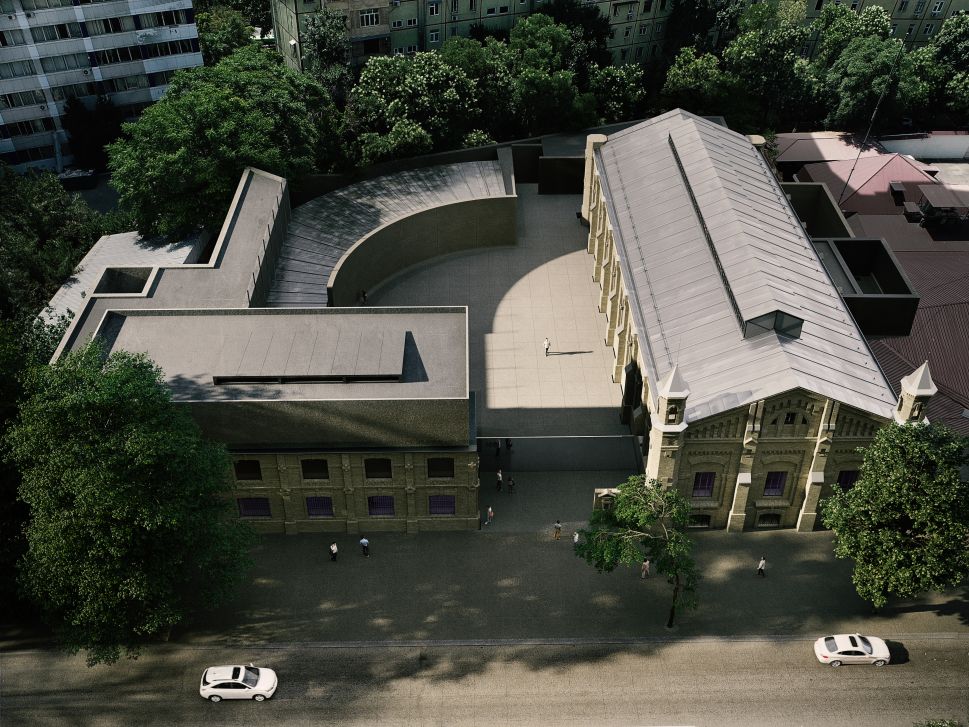
ACDF is the entity behind the renovation and development of the Center for Contemporary Arts Tashkent (CCA Tashkent), a new cultural hub for the country and the broader region, which finally opened on September 6. Housed in a 1912 former tram depot transformed by acclaimed French architects Studio KO, the CCA marks the first institution of its kind in Uzbekistan: a permanent center for contemporary art, research and community engagement in the heart of Tashkent, the capital. Its year-round program is led by chief curator Dr. Sara Raza, a global art curator, art historian and scholar who previously served as curator of the Guggenheim UBS MAP Global Art Initiative for the Middle East and North Africa. Its inaugural exhibition, “Hikmah,” centers on wisdom, bringing together new commissions and recent works by 10 Uzbek and international artists across the center’s restored spaces.
ACDF is also overseeing the realization of the new National Museum of Uzbekistan, designed by Tadao Ando and set to create another landmark in Tashkent. The foundation also commissioned the inaugural Bukhara Biennial, held in 2025, which welcomed more than 1.8 million visitors to the Silk Road city of Bukhara, with both international and local contemporary artists interacting with and reactivating historical sites.
Additionally, ACDF has been building the country’s presence at international events such as the Venice Biennale while organizing key international happenings and cultural forums inside the country, including the inaugural Aral Culture Summit and the 2025 UNESCO General Conference, which have brought cultural leaders across disciplines to the country to foster intercultural dialogue and exchange.
Ahead of the official opening of the CCA, Observer spoke with Umerova about her and ACDF’s roles and strategies for building long-term cultural infrastructure in Uzbekistan while bringing the nation’s art, artists and cultural heritage into the global spotlight.
After the collapse of the Soviet Union, Uzbekistan’s cultural scene was weak, while public demand for contemporary culture remained limited, as both the population and the government had other priorities. Things began to change only recently, Umerova tells Observer. “The country was in stagnation for more than 30 years, so there were a lot of gaps in theater, the film industry, concerts, art and craft. We’re really trying to make sure that this mechanism is working again, that it is restored, renovated and functioning.” Under the previous government there was not sufficient financial support for the arts to sustain projects on the scale of a biennial or a national pavilion at the Venice Biennale. But, she added, once the government establishes culture as a priority, organizations in the sector feel supported and can plan more ambitiously.
ACDF’s initial strategy was to create a strong cultural offering first, with the expectation that communities and a wider cultural infrastructure would develop around it. Over the past nine years, the foundation has been working to rebuild both the country’s cultural infrastructure and its international visibility.
A key point from the beginning, however, was to strike a balance between driving tourism and raising awareness within the country. There’s ample evidence that investments in the cultural sector can turn a city into a global destination, but avoiding a shortsighted, extractive model requires equally strong engagement with local communities. Only in this way can art and culture truly have a broader impact on local development, not only by generating economic flows but also by building long-term capabilities and development opportunities. Umerova has been well aware of that from the very beginning.
Results on the tourism side are already visible: Uzbekistan’s foreign tourist arrivals rose from 2.7 million in 2017 to nearly 11.7 million in 2025, more than a fourfold increase, while exports of tourism services climbed from $531 million to $4.8 billion, according to Uzbekistan’s government.
Notably, Uzbekistan also has a very young population, with people under 30 making up 52 percent, about 20.3 million, of its roughly 39 million inhabitants. The national average age is 29.5 years, while children under 14 account for 30.5 percent of the population. One of ACDF’s goals from the beginning was to build an audience among younger generations, and through them to develop a local cultural economy capable of supporting opportunities in the creative industries for generations to come.
“Our country was usually predominantly interested in professions like lawyers, engineers and doctors—these classical jobs—and now we can see new jobs emerging,” Umerova says. Art journalism, for instance, was hardly established as a field. “It wasn’t common to write about artists. Now we can see so many articles in the local press. There’s now a new market and new jobs.”
For this reason, Umerova tends to describe the CCA as a form of “social-cultural architecture” that local communities can engage with on multiple levels. “They don’t have to particularly love the art, but they should be comfortable being surrounded by art. It’s about giving them the time to adapt.” Results are evident in audience development. “When we were starting this project, we didn’t really see enough young crowds interested in this. People were more into I.T. or other spheres, like film or music. But now we can see more and more people becoming interested in arts and crafts.”
This has also been the approach behind the Bukhara Biennial, which intentionally embraces an extremely contextual and site-specific model. “It wasn’t only about making sure that tourists or the international art scene were coming. It was also important for us to see that locals were interested and that locals were engaged.”
From the beginning, the strategy has been to use the biennial as a catalyst for local development and urban revitalization, opening new spaces and territories within Bukhara’s historic cultural district. “Bukhara tells us. Bukhara shows us the way,” Umerova asserts. The city already contains layers of history, experience and knowledge; rather than imposing an external framework on it, the curatorial process begins by examining those layers and allowing the city itself to suggest ways to reactivate them. “Basically, it already has everything. It has so many layers of history, experience, wisdom and everything else. You basically dig a little bit, and Bukhara tells you how to embrace it.”
Led by Diana Campbell as artistic director and curator, and Wael Al Awar as creative director of architecture, the inaugural edition in 2025 featured more than 200 artists from 39 countries, including internationally acclaimed names. Importantly, all 70 commissioned works were produced in Uzbekistan through collaborations among Uzbek artisans, Uzbek and Central Asian artists and international participants, further turning the Biennial into a catalyst for local opportunities, valorizing existing knowledge and heritage while fostering intercultural exchange and creative collaboration. International participants included Antony Gormley, Subodh Gupta, Carsten Höller, Delcy Morelos, Tarek Atoui, Slavs and Tatars, Shakuntala Kulkarni and Tavares Strachan, among others. A second edition of the Bukhara Biennial is already planned for September 3 – November 21, 2027, with architect and designer Kulapat Yantrasast appointed artistic director.
The CCA’s inaugural exhibition, “Hikmah,” Uzbek for “wisdom,” explores ideas around insight, intelligence and divine wisdom, staging a dialogue not only between local and international artists but also between cultural heritage and contemporary voices, both international and local. Importantly, the exhibition will feature a series of context-specific works set to respond directly to the building and its architecture, including new commissions by Muhannad Shono, Nari Ward, Shokhrukh Rakhimov and Tarik Kiswanson. The exhibition will also include works by Kimsooja and Ali Cherri, as well as a loaned work by Nadia Kaabi-Linke from the Solomon R. Guggenheim Museum and loaned works from the Savitsky Museum in Nukus by Vladimir Pan, Daribay Saipov and Bakhtiyar Saipov.
Providing visibility to both the country’s historical heritage and today’s talent remains central, Umerova emphasizes, but fostering cultural exchange is equally essential to supporting the growth of local talent and opening it up to the world. With the CCA entering this new chapter and the new building and programming about to be unveiled, Umerova joked that the team is beginning to separate psychologically from the CCA because “the baby is ready, the baby is born.”
While the foundation now focuses on the many museum projects set to be delivered in the coming years, it continues to invest in its visibility on international platforms. Until recently, artists from Kazakhstan, Kyrgyzstan, Tajikistan and Uzbekistan were presented collectively at the Central Asian Pavilion, but the countries now each have their own national pavilions. Particularly ambitious this year is the Uzbekistan Pavilion at the Arsenale, “The Aural Sea,” which brings together newly commissioned and recent works by local and international artists alike—including Jahongir Bobokulov from Uzbekistan, Zi Kakhramonova from Uzbekistan, Aygul Sarsen from Karakalpakstan, Uzbekistan, Zulfiya Spowart from Uzbekistan, Xin Liu from China, A.A. Murakami from the U.K. and Japan and Nguyen Phuong Linh from Vietnam—staging a cross-border dialogue between East and West around the disappearance of the Aral Sea and the alternative histories and futures the vanished sea has inspired. Commissioned, as always, by ACDF, which has been behind Uzbekistan’s presence at the Venice Biennale Arte and Architettura since 2021, the pavilion turns to myth, imagination, oral storytelling and elemental memory as ways of confronting collective trauma and shared, era-defining ecological shifts.
Following the country’s presentation at Milan Design Week 2026, the themes of both projects are directly linked to the Aral Culture Summit, which returns this September for a second edition. First launched in April 2025 during the E.U.-Central Asia Climate Forum in Samarkand before continuing in Nukus, the capital of Karakalpakstan, the summit aims to bring together artists, architects, scientists, policymakers, activists and local communities every 18 months to confront the ecological disaster together while envisioning alternative solutions.
Umerova describes the Aral Culture Summit and the Aral School emerging from it as one of ACDF’s focuses at the moment. “It’s more about sustainability,” she explains. “We’re trying to navigate it from the farming point of view and from the point of view of new creative materials. We’re trying to make sure that art has a legacy there.”
Umerova was also central to encouraging UNESCO to host the 43rd session of its General Conference in Samarkand that same year. She has also been instrumental in securing Uzbekistan’s participation in Expo 2025 Osaka and is the commissioner and co-curator of “Instruments of the Mind,” a landmark exhibition that brings the pioneering work of Uzbek artist Vyacheslav Akhunov into the spotlight at Palazzo Franchetti, the first official collateral exhibition organized by CCA.
Discussing these initiatives and ACDF’s strategic direction, Umerova acknowledges that the Korean model has been an important reference for them, demonstrating the clear effects of well-planned, sustained investment in the international visibility of Korean culture. “When we started to form our foundation, we were really amazed by their experience and by how it was rising,” she says. “It’s important for us to invest in our artists abroad and ensure they are seen on international platforms.”
The Venice pavilion is central to this effort, but the strategy also extends to participation in World Expo. After Osaka, Uzbekistan will participate in the next Expo in Riyadh, where the foundation again plans to incorporate artists, artisans and other creative elements into their presentation. “We want to make sure that these pavilions aren’t just seen as representations of the country in terms of trade and the market, but that they also showcase artistic and creative talent.”
Beyond these global events, the foundation is also working closely with Delfina Foundation in London to enable a group of Uzbek artists each year to participate in its highly respected residency program. At the same time, the CCA is also building a domestic residency network. Always working with Studio KO, the foundation has developed two residencies in Tashkent and is expanding the program into other cities, including Samarkand, Bukhara and Kokand. Most importantly, this is also about creating jobs and building new infrastructure in cities where there is not yet much cultural infrastructure or broad engagement with the cultural scene.
The underlying principle is decentralization, as Umerova emphasizes; they don’t want Tashkent to become the country’s only cultural center. Instead, their residency network and the various events in the nation should highlight the distinct cultural legacies of cities along the Silk Road.
For instance, already in the planning stages and set to be completed around the same time as the National Museum of Uzbekistan in 2028 is a major Silk Road museum in Samarkand. Meanwhile, the foundation is working on a new museum in Bukhara dedicated to Jadidism, a movement that emerged in Uzbekistan in the early 20th Century, around the 1910s and 1920s. Importantly, Umerova clarifies, all of these projects are about beautiful “sustainable architecture,” while giving new meaning to the region.
Central Asia and countries such as Uzbekistan sit strategically between western China and European markets, maintaining both economic and cultural relations with each, as well as with the Gulf. According to Umerova, there is now a coordinated effort with neighboring countries and the Caucasus, as well as continuous exchange with China and, in particular, the Middle East. “We’re very close. We’re making sure that we engage in each other’s projects,” she says. “We engage there, and they come here. This dialogue is quite important for us.”
Still, to ensure this infrastructure’s longevity, a system primarily funded by government and public money may not be enough. A healthy art ecosystem capable of sustaining its talents also needs a growing private sector and a market that can contribute to artists’ careers and increase their visibility within the international art industry over time. Umerova is well aware of this, but she also sees it as a longer-term process that begins with building a local audience and a local cultural class.
There are already some positive indicators on the market side, she adds. Collectors who encountered artists through the Bukhara Biennial have begun showing greater interest in Uzbekistan’s local scene. Uzbek artists have also begun appearing in contexts such as Art Basel. Most significantly, she said, some artists who participated in the Bukhara Biennial were subsequently signed by private galleries. “For us, this is a beautiful outcome that can really help the artists grow,” she says, noting that these early developments demonstrate how institutional exposure can translate into longer-term professional growth. The eventual goal is an ecosystem in which museums, biennials, galleries, collectors and audiences reinforce one another and secure Uzbekistan a place in the global cultural conversation.