Falteri: “Savannah and Atlanta are strategic partners. We must now turn these meetings into trade flows, investments and concrete partnerships.”
A new logistics and business corridor between Italy and the United States is taking shape following a three-day institutional and economic mission to the State of Georgia led by Italy’s Liguria Region.
From September 23 to 25, a delegation from Liguria — the northwestern Italian region that includes Genoa and some of the country’s most important ports and logistics infrastructure — visited Savannah and Atlanta to develop new cooperation in ports, logistics, international trade, innovation, research and investment.
A central role in the mission was played by Federlogistica-Conftrasporto, one of Italy’s leading national associations representing the logistics, freight, port and transportation sectors, through its President, Davide Falteri.
Federlogistica used the mission to advance the concept of a “Georgia–Liguria Logistics Bridge,” a permanent framework designed to connect ports, logistics operators, companies, universities and innovation ecosystems on both sides of the Atlantic.
The objective is to move beyond institutional dialogue and create a platform capable of generating new trade flows, investments and business opportunities linking Georgia and the Southeastern United States with Italy, the Mediterranean and the broader European market.
“Savannah and Atlanta are strategic partners for Italy and for the Mediterranean logistics system,” said Davide Falteri, President of Federlogistica-Conftrasporto. “The value of this mission will ultimately be measured by what happens next: new trade flows, new investments, stronger relationships between companies and concrete industrial and logistics partnerships.”
Connecting two strategic gateways
The delegation was led by Admiral Massimiliano Nannini, Chief of Staff to the President of the Liguria Region, and brought together representatives from the Liguria Region, Federlogistica, the Ligurian Sea Port System Authorities, the University of Genoa, Genoa Airport, Agenzia In Liguria, the Italian Institute of Technology, Liguria International and FILSE.
Ligurian companies Cactus Holding and Firmamento Technologies also participated in the Atlanta programme.
The composition of the delegation reflected one of the key messages Federlogistica brought to the United States: international competitiveness increasingly depends on the ability to connect infrastructure, logistics, technology, research and private enterprise within a single economic ecosystem.
“This mission demonstrated the importance of presenting ourselves internationally as an integrated system,” Falteri said. “Liguria brings together ports, logistics, universities, advanced research, technology, tourism and a highly specialized business community. Federlogistica’s role is to help connect these assets with international markets and turn institutional relationships into opportunities for companies.”
Savannah and Liguria: two port systems with global ambitions
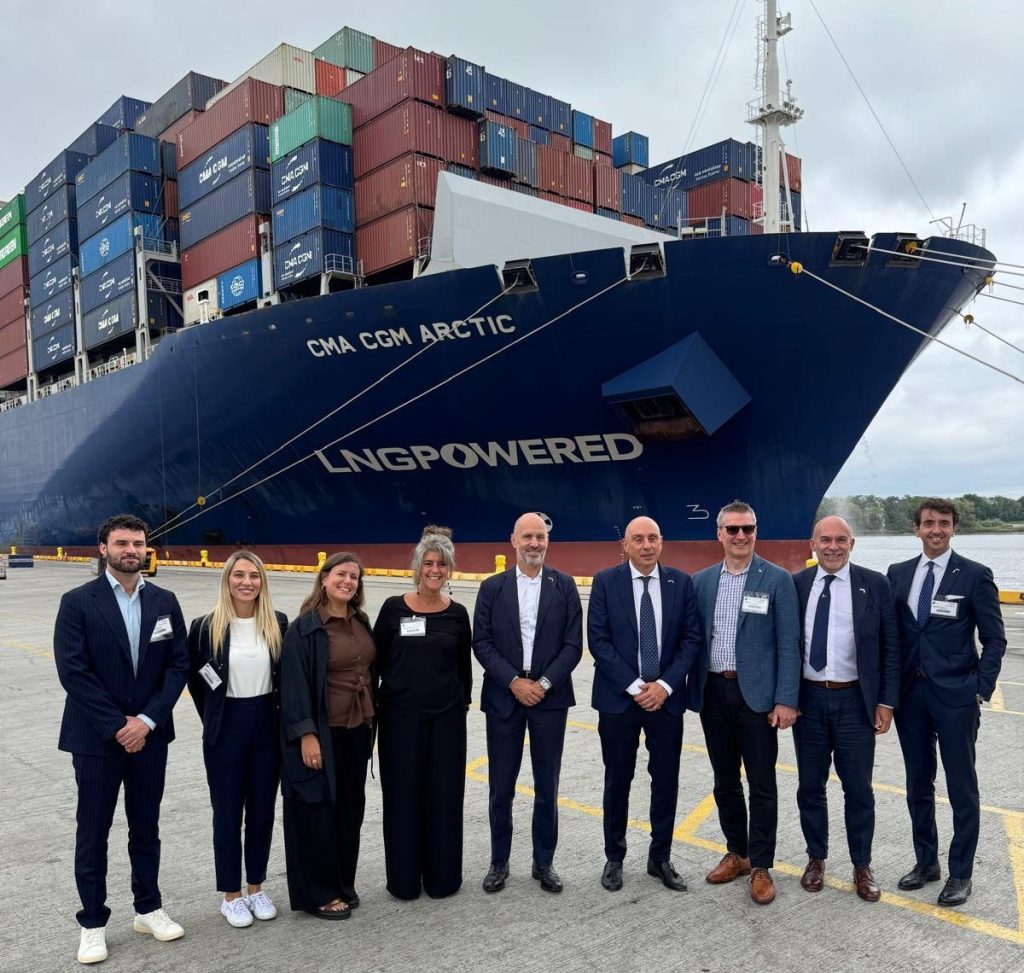
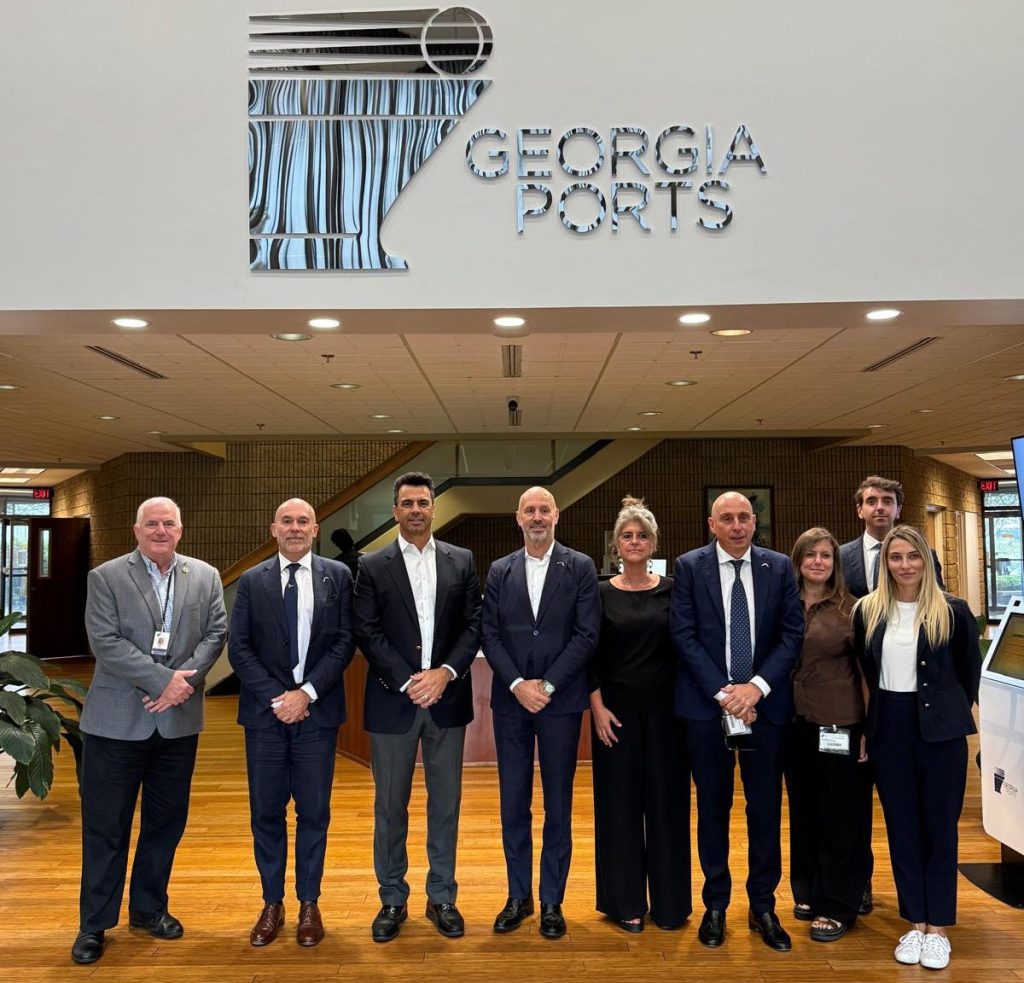
The first stage of the mission took place in Savannah, where the delegation visited the Georgia Ports Authority and the Garden City Terminal, one of the most important container facilities in the United States.
Meetings focused on Savannah’s development strategy and on potential synergies with the Ligurian ports of Genoa, Savona-Vado and La Spezia, which together form one of Italy’s principal maritime gateways and a major entry point into European and Mediterranean markets.
Discussions with senior representatives of the Georgia Ports Authority highlighted several similarities between the two systems.
Both Georgia and Liguria are investing in intermodal transportation, infrastructure expansion, digitalization and more efficient logistics corridors in order to extend the geographic reach of their ports.
Savannah serves as a major gateway to the Southeastern United States and the broader American market. Liguria, strategically located on Italy’s Mediterranean coast, provides maritime access to Northern Italy, Southern and Central Europe and key Mediterranean trade routes.
For Federlogistica, this complementarity represents a potential foundation for developing stronger transatlantic supply chains.
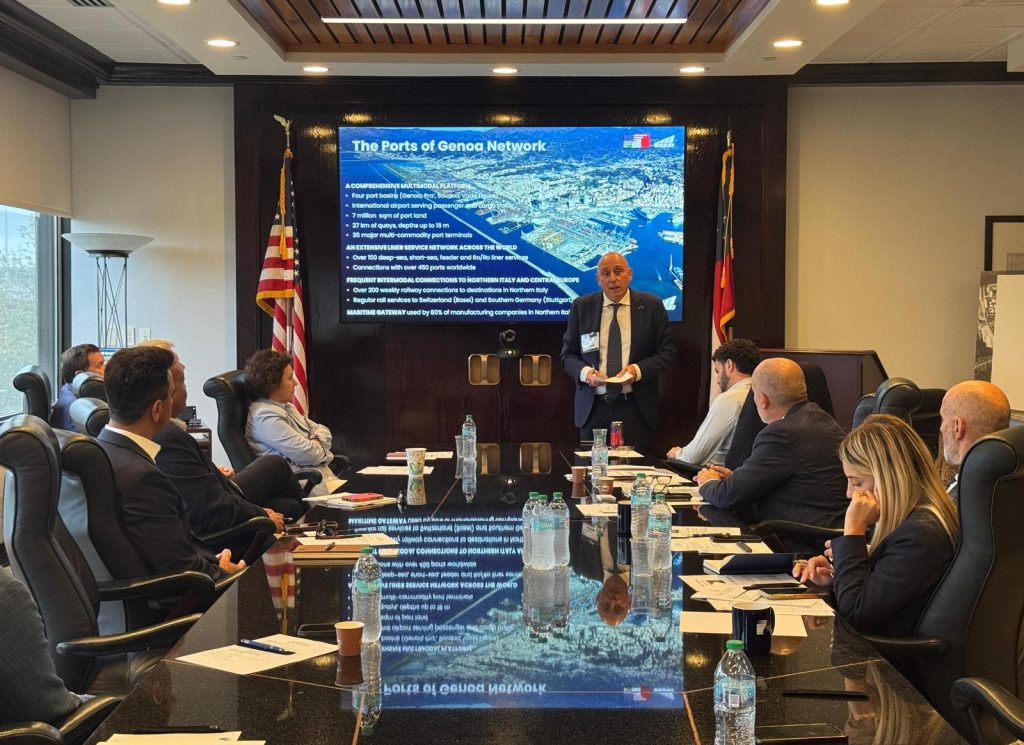
Alberto Pozzobon, Marketing Manager at the Western Ligurian Sea Port Authority, presented the strategic role of the Ligurian ports and the opportunities offered by digital logistics corridors capable of making cargo movements faster, more transparent and more efficient.
The Savannah programme continued at the World Trade Center Savannah, where the delegation met representatives of the local business community to discuss international trade and possible cooperation among companies, logistics operators and import-export organizations.
During the meeting, Maria Nives Riggio, Deputy General Manager of FILSE, presented Liguria’s innovation ecosystem and the regional tools available to support companies and start-ups.
Particular attention was given to FILSE’s BIC business incubator and its role in connecting universities, research organizations, public institutions and the private sector.
From logistics to innovation and investment
The Atlanta portion of the mission expanded the conversation beyond ports and transportation.
Meetings focused on investment attraction, advanced manufacturing, automation, aerospace, electric mobility, financial and technology services and artificial intelligence — sectors in which both Georgia and Liguria are seeking to develop new international partnerships.
The delegation met representatives of the local economic community at the Metro Atlanta Chamber and the Gwinnett Chamber of Commerce and visited some of Atlanta’s principal innovation hubs, including Tech Square, the Advanced Technology Development Center and Emory University, including its entrepreneurial and innovation hub, The Hatchery.
Artificial intelligence, automation and emerging technologies applied to logistics and supply chains were among the principal areas of discussion.
The meetings also explored potential partnerships between Italian and American universities, research centers and companies, with particular attention to applied research, technology transfer and emerging fields including quantum computing.
For Federlogistica, these areas are becoming increasingly important to the competitiveness of the logistics industry itself.
Modern logistics, Falteri emphasized during the mission, can no longer be viewed simply as the movement of goods.
It increasingly depends on data, artificial intelligence, automation, digital infrastructure, energy systems and the ability of ports and logistics operators to integrate into technologically advanced supply chains.
A permanent Georgia–Liguria platform
The final day of the mission included two roundtable discussions dedicated to the future of logistics and innovation, bringing together representatives of the transportation sector, the Ligurian port system, companies and research organizations.
A separate meeting with tourism operators also explored opportunities for cooperation in destination promotion and the development of new connections between Georgia and Liguria.
According to Federlogistica, however, the principal challenge begins after the conclusion of the institutional mission.
“The mission must not end with the journey,” Falteri said. “Federlogistica intends to begin immediately mapping existing and potential trade flows, identifying companies interested in developing business between the two markets and selecting specific supply chains where permanent cooperation can be tested.”
Federlogistica’s proposed next step is the creation of a Georgia–Liguria operational working group, supported by permanent local contacts in the United States.
The association also intends to identify sectors where cooperation can generate measurable results, facilitate direct contacts between American and Italian companies and create a structured dialogue among ports, logistics operators, universities and technology organizations.
The objective is to build on the September meetings beginning in 2027 through new business missions, company-to-company exchanges, university and research partnerships and joint initiatives capable of producing a permanent connection between the logistics and production systems of Liguria and Georgia.
For Federlogistica, the Georgia mission represents a broader model for the internationalization of Italian logistics: using institutional relationships to open markets, connecting companies directly with international counterparts and positioning Italy’s port and logistics system as a strategic platform between the United States, Europe and the Mediterranean.
A coordinated institutional effort
Federlogistica expressed its appreciation to the Liguria Region, which promoted the mission, and to Admiral Massimiliano Nannini, who led the delegation and coordinated its institutional, economic, scientific and business components.
Special thanks were also extended to Angelo Vaccarezza, Liguria Regional Councillor responsible for International Relations, for supporting Liguria’s international outreach, and to Filiberto Calascibetta, Honorary Consul of Italy in Atlanta for the State of Georgia, for his contribution to strengthening institutional and economic relations between Italy and Georgia.
Federlogistica also expressed particular gratitude to Liguria International and to Alessandro Pittaluga, Project Coordinator, who, despite not travelling with the delegation, played a key role in designing the programme and organizing the mission.
Particular appreciation was extended to Luca Calandrini of Liguria International for his professionalism and organizational coordination. The quality of the programme, the level of the organizations involved and the management of the meetings were instrumental to the success of the initiative.
Federlogistica also thanked all members of the delegation, including the Ligurian Sea Port System Authorities, the University of Genoa, Genoa Airport, Liguria International, Agenzia In Liguria, the Italian Institute of Technology, FILSE, Cactus Holding and Firmamento Technologies.
On the U.S. side, the association thanked the Georgia Ports Authority, World Trade Center Savannah, Metro Atlanta Chamber, Gwinnett Chamber of Commerce, Emory University, the innovation centers involved in the programme and all the American institutions, companies and organizations that welcomed the Italian delegation.
“Georgia has shown that there is significant interest in building stronger economic relationships with Italy,” Falteri concluded. “Federlogistica now wants to provide the logistics and business infrastructure needed to make those relationships grow. Our goal is simple: transform connections into projects, projects into trade and trade into long-term partnerships.”