
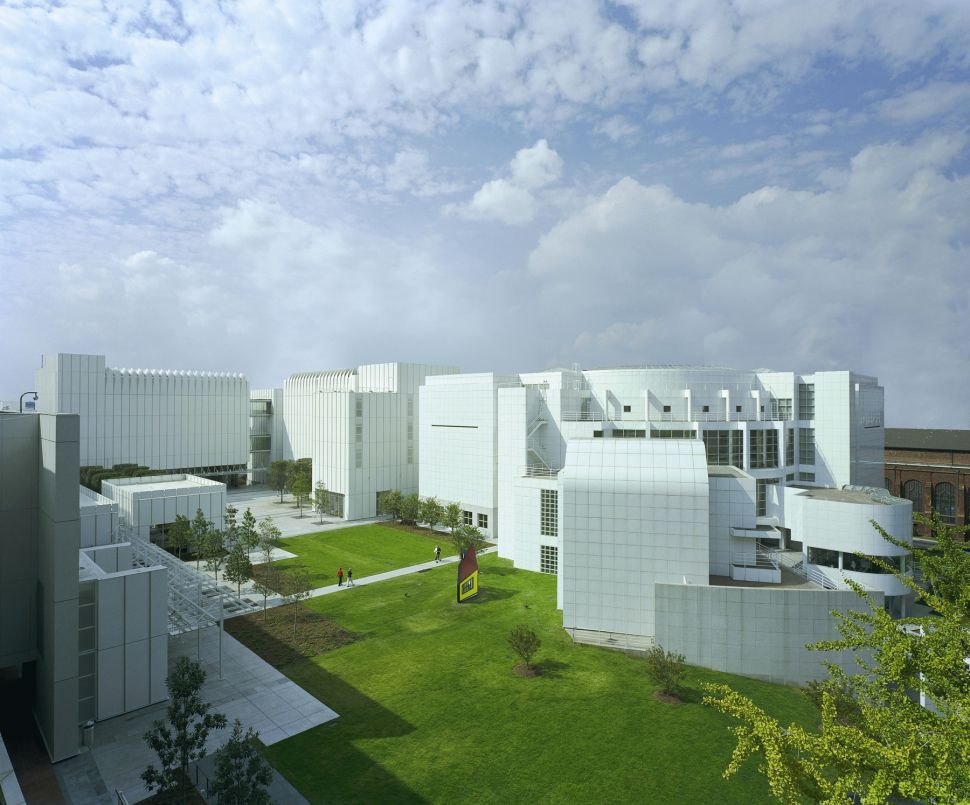
Over the past several years, the High Museum of Art in Atlanta has built a distinctive reputation for its ability to attract a diverse audience and its commitment to inclusivity and accessibility, becoming a key cultural center in the city’s artistic landscape and the broader American South.
Founded in 1926, the High Museum of Art has been a constant throughout Atlanta’s transformation from a regional city into a global hub. The museum has witnessed—and, in many ways, helped shape—the city’s cultural evolution. Atlanta is recognized today as the birthplace of the Civil Rights Movement, a global capital of hip-hop and the “Hollywood of the South,” as well as an increasingly vibrant art center. Yet, over the 100 years since the museum’s founding, society at large has changed dramatically, and so has the role museums are expected to play within it. Today, there is a greater emphasis on participation, accountability and close dialogue and exchange with the communities they serve—an approach that, in many ways, the High anticipated early on.
As Atlanta’s leading museum celebrates its centenary this year, Observer spoke with its director, Rand Suffolk, about the institution’s evolution from a place primarily dedicated to collecting and displaying art into one that has actively redefined its purpose, acquisition strategy, overall programming and communication through its relationship with the communities it serves.
The High Museum traces its origins to the Atlanta Art Association, established in 1905. It acquired its first permanent home in 1926, when Harriet “Hattie” High donated her family’s residence on Peachtree Street. The museum subsequently expanded alongside Atlanta’s emergence as the principal economic and cultural center of the American Southeast. The opening of Richard Meier’s striking white building in 1983 gave the institution an internationally recognizable architectural identity. Renzo Piano’s 2005 expansion substantially increased its capacity and fully integrated the High into what is today the Woodruff Arts Center campus, part of an entire cultural district that has become the heart of the city’s cultural and creative life.
Throughout this time, the High’s mission has never fundamentally changed, even as the context in which it operates has evolved rapidly, Suffolk notes.
“All nonprofits should exist to make the world a better place. The way in which the High Museum of Art does it—or other art museums do it—is via engagement with complex visual culture,” Suffolk notes. “In other words, it’s our responsibility to present the finest examples of artistic achievement we can get our hands on, make them look beautiful when they’re installed, and then hopefully facilitate a dialogue that’s going to encourage people to see their place in the world differently or to look at themselves differently.”
Still, the High’s present reputation for community engagement is closely associated with Suffolk’s appointment in 2015. From the beginning, his approach aimed to challenge the traditional museum assumption that an institution’s primary responsibility is to preserve and present exceptional objects, while the public is expected to adapt to its established conventions. Instead, the High has increasingly treated the composition of its audience as an institutional responsibility in its own right. In practical terms, this has meant reconsidering pricing, programming, the artists represented in exhibitions and the ways visitors encounter the permanent collection.
This community- and context-oriented thinking, Suffolk admits, characterized his vision from his very first interviews. Between his first interview for the director’s role and his first board meeting, a period of about eight or nine months, Suffolk conducted what he describes as “a completely unscientific survey” of roughly 60 people, from trustees and museum staff to Uber drivers, hotel-bar patrons and people he met at the supermarket. The question was simple but revealing in its ability to capture the museum’s actual public perception: Was the High better known for what it is or what it does?
“Almost without hesitation, probably 90 percent of the roughly 60 people I spoke to said what it is,” he recalls. “The more I teased feedback out of people, the more I learned that everybody thought the High was exceptional, but no one would really characterize us as essential within the community.”
That distinction became central to his work over the following decade: transforming a museum with an established reputation and a history of ambitious achievements into an institution that Atlantans regarded as vital to their daily lives.
“We’ve tried very hard to reposition ourselves within the community, focusing on earning a different kind of credibility and making changes to ourselves as an organization so that ultimately we could become what I hope is a profoundly different magnet within the city of Atlanta and beyond,” Suffolk acknowledges. Growth, inclusivity, collaboration, connectivity and optimism became his five guiding principles. “We want those things to be the white noise of our existence, the stuff that informs every decision we make and every action we take as an organization.”
Repositioning the museum meant changing how it operated and earning a different kind of credibility within Atlanta and beyond.
Suffolk described two complementary main functions of the museum, in his view. The first, bonding, allows visitors to recognize themselves in its collections, acquisitions, exhibitions and communications. Notably, 72 percent of the High’s exhibitions over the previous decade had highlighted or focused on important work by BIPOC artists, LGBTQ+ artists or women artists, rather than including such artists only as token presences.
While the High’s acquisition of works by artists from these groups predated his arrival, during his tenure, the museum explicitly made that commitment a defining and visible feature of its institutional identity.
Today, the museum holds more than 20,000 works across seven curatorial departments. Its particular strengths include American art, photography, African art, modern and contemporary art, decorative arts and folk and self-taught art, especially works from the American South. Its Southern collecting identity is particularly important: the High established a dedicated department for folk and self-taught art in 1994, becoming the first general-interest museum in the United States to do so. Its collection includes works by artists such as Thornton Dial, Bill Traylor, Nellie Mae Rowe and Howard Finster. Following its 2018 reinstallation of its permanent collection, teh most recent reinstallation of its American and African Art collection galleries was aimed at further reconsidering the narratives, hierarchies and physical presentation through which audiences encounter those collections.
In fact, the second function Suffolk identified is bridging, as the museum needs to try to stimulate conversations among visitors from different backgrounds and encourage them to reconsider their own identities in relation to others. “Our goal, at the end of the day, is to be a place where all of Atlanta is comfortable coming together. We think there’s something super generative and incredibly powerful about being that place,” he argues, noting that this role is all the more important because there are not enough such spaces within the city. “We want to be a space where the richest of the rich can come together with those with the least among us; where every color of the LGBTQ+ rainbow can come together with every color of the ethnicity rainbow.”
The results soon became visible, and the High Museum of Art established itself as one of the country’s most successful museums in attracting an exceptionally diverse audience. Communication, public programming and reduced admission fees were all instrumental in achieving this result.
The share of visitors identifying as BIPOC grew from 15 percent in 2015 to 55 percent in 2025, averaging around 52 percent over roughly nine years. The economic spectrum is similarly diverse, with about 40 percent of visitors coming from households earning less than $70,000 a year, while approximately 45 to 50 percent come from households earning more than $100,000. “Unfortunately, Atlanta invariably finds itself at the top or near the top of surveys about income inequality in major U.S. cities,” he explains. “We pay attention to that. And It’s important for us to be that place where those two sides can exist together.”
The High tries to balance affordability with its need for admission revenue. In addition to two free days each month, it uses a one-price admission model: children five and under enter free, while all other visitors pay the same admission price. Another important effort in this direction has been removing barriers for schoolchildren: through its Art Access program, the High provides free museum admission, transportation funding and educational resources for students from Title I schools. During the 2021-2022 school year, more than 5,800 students participated in the program.
Meanwhile, on the second Sunday of each month, when admission is free, the learning and civic engagement team provides family programming, and the museum attracts approximately 5,000 visitors on average. Attendance on individual Sundays ranges from around 3,800 to 7,500, according to Suffolk. Programs such as Friday Jazz and HIGH Frequency Friday bring music, DJs and performances into the galleries, which remain open later, helping to attract younger audiences in particular. Suffolk reported 45 consecutive sellouts, with 3,000 tickets constituting a sellout, and said recent editions had generated between 150 and 200 new memberships in a single night.
Notably, the High has actively worked to nurture and develop its next generation of audiences and members. Suffolk reports that 78 percent of general visitors in the previous year were under 55, with 52 percent under 35. “Early on, we made a decision that we needed to double down on engaging—or attempting to engage—the next couple, three generations of end users,” he says. “We really focused on engaging families, young professionals, millennials, Gen Z and so forth. The good news is that we’ve been pretty successful.”
Suffolk described the museum’s audience strategy as a progression through three phases. During the first six or seven years of his tenure, the principal goal was attraction: transforming the High into a different kind of magnet for the community. Over the past three or four years, the High has instead entered an affiliation phase: membership grew from 26,000 households in 2017 to nearly 49,000 at the time of the interview, while retention increased from approximately 45-47 percent to 65 percent. Even its HIGH Frequency Friday events have contributed to this growth, Suffolk notes, generating between 150 and 200 new memberships each time.
For Suffolk, the next stage is now “accumulation.” “We want to hold on to all these new members and snowball those efforts over time, so we get not only more revenue for the organization but also increasingly create this small army of advocates and end users—a fan base of the museum that’s going to continue to engage and support us into the future,” he says.
While accessibility and inclusivity remain central to its mission, as Suffolk acknowledges, the museum cannot operate entirely without paid admission. Yet, at the other end of the spectrum, patrons can spend substantial sums at fundraising galas, and Suffolk sees these different points of entry as part of the museum’s effort to provide multiple ways for people to connect, with opportunities designed to accommodate different audiences and levels of financial commitment.
When we spoke, the museum had just hosted the Driskell Prize gala on September 19, awarding the prize this year to Dr. Cheryl Finley, Walton Endowed Professor and Director of the Atlanta University Center Art History + Curatorial Studies Collective at Spelman College. Since its inception in 2005, the Driskell Prize has annually recognized an early- to midcareer African American scholar or artist whose work makes an original and important contribution to the field of African American art or art history. So far, the endowment for Driskell has supported the purchase of 53 works by African American artists and awarded cumulative
gifts of $500,000 to past recipients.
This is a significant anniversary: 100 years. The world is very different from the one in which the museum was founded. Institutions now face technological, social, economic and political challenges, especially in the United States. As the High looks toward its next 100 years, Suffolk emphasizes the importance of remaining true to the museum’s mission and identity. “We’re trying very hard to remember who we are as an organization, where our strengths really lie, and to focus on that.”
At the same time, he believes museums must rethink the measures by which they understand success and impact. “We’re trying very hard to be part of a conversation about what constitutes the metrics of success or impact for the great American art museum of the 21st century,” he argues. The 20th-century model of the major American art museum was celebrated for its architecture, blockbuster exhibitions and exceptional acquisitions—areas in which the High has a substantial history, he reflects. Yet, a 21st-century museum needs to understand itself as a means rather than an end and adapt its strengths to changing community needs. “As we move into the 21st century, we’re all trying to figure out what’s different, what’s changed and how we can be, as I like to say, ‘differently useful,’” he acknowledges. “I don’t think that’s going to be easy work, but it’s going to be the wicked important work that’s going to keep institutions like ours sustainable.”
When it comes to technological innovation, Suffolk referred to an op-ed he had written roughly a year earlier about A.I. and art museums. “I’m not sure museums, especially from a public-facing standpoint, have the expertise or resources to stay relevant effectively when it comes to that,” he argues. “It costs so much, and things move so quickly; they’ll become obsolete overnight. How do they stay interesting and relevant?”
Rather than trying to compete directly in technological development, he suggested museums should pay attention to artists working with A.I., assess whether their practices offer compelling experiences for audiences and present those works within an appropriate curatorial framework.
At the same time, for Suffolk, the more interesting long-term question in the A.I. debate for museums is what would distinguish a museum from other leisure activities if the technology ultimately gave people substantially more free time. “How do we distinguish ourselves as being more than simply an inspired distraction on this menu of things you can do with your leisure time? How do we define what we can offer moving forward? I think that’s a much more interesting challenge in terms of how we stretch or reinterpret our ongoing mission as an organization.”
Some employees were testing paid A.I. tools, including Copilot and another product whose name is unclear in the supplied transcript, for everyday efficiency. Still, the immediate priority is to strengthen the quality, structure and use of the museum’s data before deciding how A.I. might best complement those capabilities. At the moment, the High has been prioritizing data and analytics over a broad A.I. strategy. Its prospective work includes data integration and infrastructure, reporting and dashboards, analysis and insight generation, visitor research and feedback synthesis, and predictive analysis and modeling.
Asked about ICOM’s evolving definition of the museum, which places greater emphasis on public participation in how objects are displayed and interpreted through a shared process of meaning-making, Suffolk defended the importance of curatorial authority but argued that its value lies in framing dialogue rather than prescribing what visitors should conclude. “I think that’s best used when you’re framing a dialogue, not necessarily being prescriptive about what the outcome should be,” he says. “As long as you have a genuine, sincere, consistent invitation for people to be part of that conversation, then I think that’s where the value is.”
For Suffolk, the museum should help people develop their own points of reference and convictions and discover art or ideas they had not previously encountered. “At the end of the day, if people are coming into the museum looking at the world this way and they leave looking at the world this way then we win. We’re doing our job as an organization. That’s the most important thing.”