
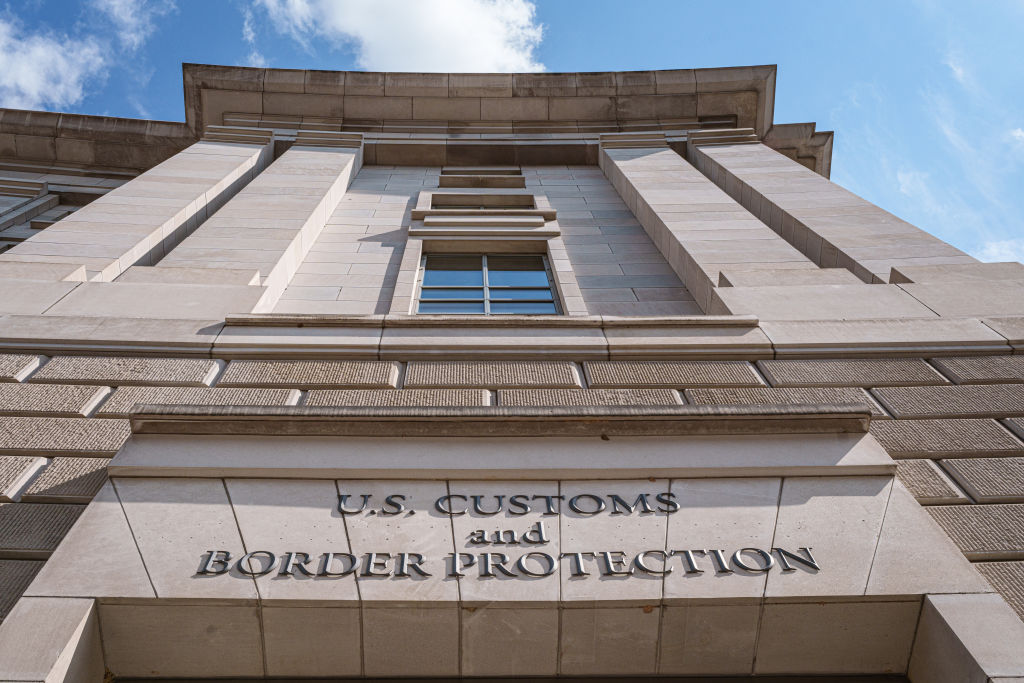
ATLANTA – U.S. Immigration and Customs Enforcement (ICE) paid more than four-and-a-half times the county tax value for a north Georgia warehouse it planned to turn into a detention center, according to a new report.
What we know:
The findings come from a performance audit released Thursday by the U.S. Government Accountability Office, the nonpartisan investigative arm of Congress that tracks federal spending.
Four Democratic congressional ranking members requested the review to examine how ICE managed costs during its detention expansion.
The federal office determined that ICE should consider cost-effectiveness by developing estimates before making investments in detention centers. It also stated that ICE should update is spending plan for detention funding.
By the numbers:
Between January and March 2026, ICE spent more than $1 billion to buy 11 warehouses nationwide to convert into detention and processing centers, including two in Georgia:
$68.2 million: What ICE paid for a warehouse in Oakwood—more than four-and-a-half times Hall County’s nearly $15 million tax valuation.
$128.6 million: What ICE paid for a second, larger warehouse in Social Circle—more than double its $58.3 million tax assessment and over four times the $29.4 million a buyer paid for it in 2023.
$1.07 billion: Total ICE spent between January and March 2026 to buy 11 warehouses nationwide—seven of which (including Social Circle) the agency is now working to sell.
$20.5 million: Amount already spent on site inspections ($7.7 million) and utilities and security ($12.8 million) across the 11 warehouse sites—costs auditors warn taxpayers won’t get back.
$13 million a month: Average amount ICE paid for empty beds at four newly acquired detention centers, including more than $540,000 a month for roughly 150 unused beds a day at the Folkston D. Ray Processing Center in south Georgia.
71%: Jump in ICE’s average daily detainee population between January 2025 and July 2026, while its number of detention centers roughly doubled from 129 to 261.
Nearly two-thirds vacant: Share of ICE’s contract-monitoring jobs sitting unfilled nationwide (55 of 87 positions) as facilities doubled.
Why ICE expanded, and why it scaled back
Big picture view:
The warehouse purchases came during a rapid nationwide push to expand detention space following a January 2025 executive order.
To fund that expansion, Congress approved $45 billion for ICE detention in July 2025 through the One Big Beautiful Bill Act, which the Department of Homeland Security refers to as the Working Families Tax Cut Act, and more than $31 billion in June 2026 through the Secure America Act.
However, ICE’s warehouse program quickly ran into lawsuits in other states and a spring 2026 review by Homeland Security Secretary Markwayne Mullin. In June, Mullin said that the department had re-evaluated the warehouse plan because it had not completed proper planning and due diligence beforehand.
ICE has since scaled back the initiative and is working with the General Services Administration to sell seven of the 11 warehouses, including the Social Circle facility.
Empty beds and ICE’s operational rationale
Dig deeper:
The report also found ICE paid millions each month between October 2025 and April 2026 for empty beds at four newly acquired detention centers operating under guaranteed minimum payment contracts, including the facility in Folkston.
ICE officials told auditors that guaranteed bed payments protect facility operators from financial loss and help the agency secure space quickly during urgent surges. After scaling back the warehouse plan, ICE also spent $2.2 billion over the summer to buy four existing detention facilities. Officials acknowledged those purchases are not expected to save money, but said owning facilities ensures ICE can keep operating in states or cities where local governments resist immigration enforcement.
Behind the scenes, rapid growth strained oversight: as the number of detention facilities roughly doubled, nearly two-thirds of ICE’s contract-monitoring positions nationwide sat unfilled.
To keep up with vendor bills, ICE rolled out automated invoice-checking software and raised top-level DHS review thresholds so lower-dollar payments could move faster.
What Homeland Security is saying
What they’re saying:
In a Nov. 6 response letter included in the report, the Department of Homeland Security agreed with both of the recommendations—to keep spending plans updated and to evaluate full life-cycle costs before making major facility purchases.
DHS wrote that it “remains committed to ICE strengthening the necessary processes, policies, procedures, and safeguards to ensure the continual oversight and management of ICE’s financial resources as it carries out its mission.”
Department officials said ICE is creating a standardized review process that will weigh alternatives—such as leasing, renovating or using existing government space—while also factoring in operational needs in sanctuary jurisdictions.
DHS added that it already updated its warehouse spending plan after scaling back the program in 2026 and has approved spending plans in place for 2027, though auditors kept that recommendation open pending detailed project-level budget projections.
Unanswered questions
What we don’t know:
Federal auditors have not determined how much money the government could lose once the seven unwanted warehouses are sold.
Officials also have not announced a timeline for when the Social Circle warehouse, or any other Georgia properties slated for disposal, will officially be sold, or whether ICE plans to buy or expand other detention space in Georgia.
The Source: The information in this story comes from a performance audit released Nov. 19, 2026, by the U.S. Government Accountability Office (“Immigration Detention: ICE Should Determine Cost Effectiveness of New Initiatives Before Continuing,” report GAO-27-108665), county property tax records cited in the report, federal funding laws, and a Nov. 6 response letter from the Department of Homeland Security.