
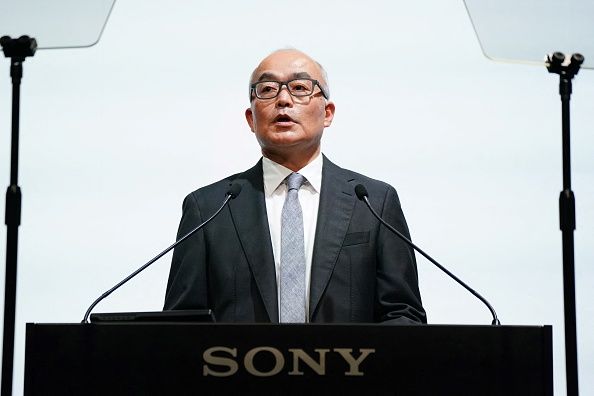
Sony Group president and CEO Hiroki Totoki wants more of the money PlayStation players spend after buying the console. His pivot toward content and software has become more pressing as memory prices climb. The game and network services division accounts for about 35 percent of Sony’s consolidated sales and operating income.
Sony Interactive Entertainment CEO Hideaki Nishino announced plans on Oct. 7 to launch a dedicated anime hub on the PlayStation 5 home screen in spring 2027, with easy access to Crunchyroll. The idea is to bring Sony’s overlapping communities of anime fans and gamers closer together.
Sony CFO Lin Tao said during the Nov. 5 earnings presentation that Sony wanted to raise anime’s global profile, attract more fans and turn that reach into long-term revenue growth for its anime businesses.
The PS5 uses GDDR6 memory, and securing supply has become a management priority. Tao said discussions with suppliers had aligned on the quantity needed for next year’s projected hardware sales.
“With regard to PS5 hardware, we have been able to offset the rise in memory prices through adjustments to promotions and pricing,” Tao said during the Nov. 5 earnings presentation. Tao also cited cost reductions and said Sony expected hardware profitability for the fiscal year to remain on par with the previous year.
With chipmakers swarmed by A.I. data center demands, consumer-grade memory chips have taken a backseat. Micron disclosed in its annual report that it had shifted some DRAM supply toward data centers and cloud customers to meet strong A.I. demand.
The business beyond the console
In gaming, hardware consoles have long been a low-margin distribution channel serving downstream revenue like subscriptions and game purchases. Third-party game sales typically bring in around 30 percent platform fees, while owned franchises let publishers retain more of the sale price before development and marketing costs. Subscriptions also bring recurring revenue between releases. The memory chip cost squeeze has given Totoki another reason to focus on what customers spend within the consoles.
Sony’s sales in the three months ended Sept. 30 increased 10 percent year over year, with its operating income margin rising 4.3 percentage points to 18.1 percent. This came despite a decrease in hardware unit sales and the impact of the July 28 Kumamoto earthquake, which temporarily suspended operations at the Kumamoto Technology Center, part of Sony’s semiconductor business.
For the same period, game and network services reached 1.21 trillion yen (about $7.56 billion) in sales and 220 billion yen (about $1.38 billion) in operating income.
Digital software and add-on content sales rose to about 644 billion yen (about $4.04 billion), up from 568 billion yen (about $3.56 billion) a year earlier.
Anime moves closer to PlayStation
As Totoki seeks to make Sony less dependent on hardware sales, Sony Pictures Entertainment CEO Ravi Ahuja announced Crunchyroll Storyworks on Oct. 7. The new division is designed to adapt international stories into anime and turn Japanese anime into live-action projects. It will operate within Crunchyroll’s content group, adding to Sony’s broader efforts to connect its entertainment businesses.
In Sony’s strategy presentation in May, Totoki and his team announced that Crunchyroll had surpassed 21 million paid subscribers as of the end of March. PlayStation had 127 million monthly active accounts across PS4 and PS5 in September; that is a potential audience for the anime hub, rather than a count of additional Crunchyroll subscribers. Total playtime on PlayStation was already up 4 percent year over year.
As Crunchyroll Storyworks matures, combining talent across Crunchyroll, Aniplex, Sony Pictures, and Japan’s broader creative community, Totoki intends to keep highlighting human creativity. “I don’t think an A.I. could replace humans because, particularly in the entertainment field, I think creativity is quite important,” he said at the Paley International Council Summit on Oct. 20, according to gaming site IGN. In May, Totoki joined the nonprofit Paley Center for Media’s board of trustees alongside Disney CEO Josh D’Amaro.
The economics will depend on what customers are willing to keep paying for. “In this uncertain time for memory prices, the hardware margins stop being interesting, or something companies can rely on,” Akash Mahtani, founding hardware engineer at the utility management company Grid AI, tells Observer. “From my engineering perspective…the business model is as important as technical challenges when building a new product line.”
At Grid AI, property managers pay a monthly fee for water-leak sensors and can add software features as their needs grow, Mahtani says. He sees Sony’s reliance on Crunchyroll as another version of that service model.
This model, he adds, is sustainable only if the subscription adds real value beyond what the hardware can do on its own. “Charging monthly fees for a feature people already paid for just creates backlash and tarnishes a brand’s image,” he says. “But charging for enhanced features and an ecosystem that keeps getting better is accepted.”