
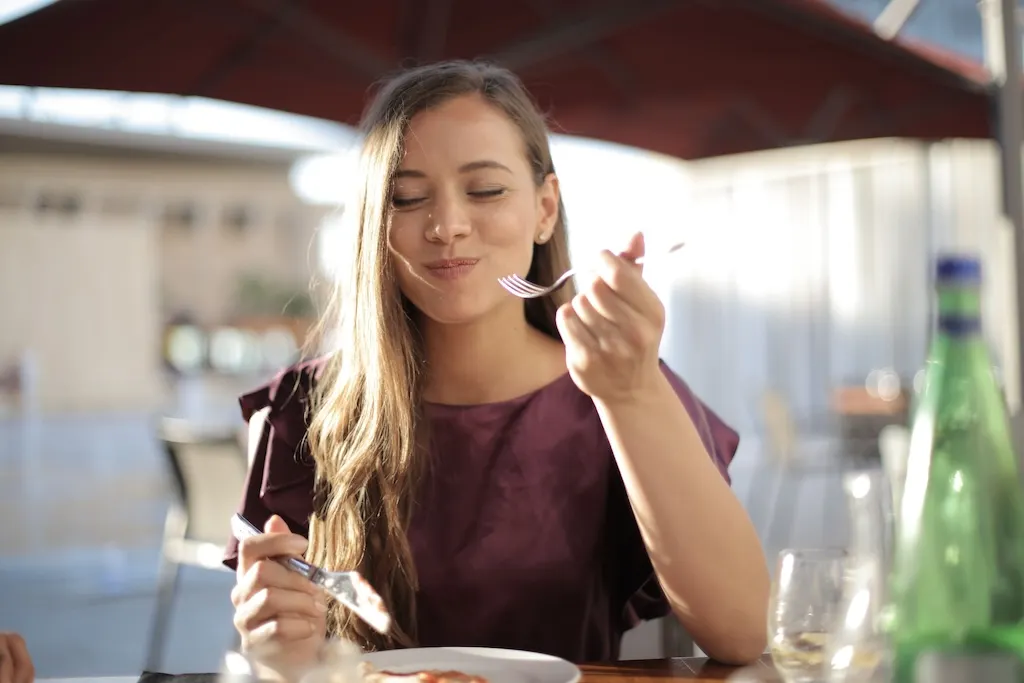
If you’ve lived in Spain a while, you’ll probably have noticed that solo dining wasn’t very common, and even considered socially unacceptable, but in recent years that’s all been changing.
Historically, eating alone in a restaurant in Spain was seen as strange or unusual. Eating is a social occasion in Spain and most traditional dishes are designed for sharing.
Think tapas plates, paella, fabada (an Asturian stew), fideuà (like paella with short noodles) or pulpo a la Gallega (Galician style octopus).
Most of these are simply too big for one person to eat alone. The very concept of much of Spanish cuisine is designed to be eaten in a group.
There has been a dramatic shift in recent years, however, meaning that dining alone has become increasingly common.
READ ALSO – Your verdict: Is Manchego the best Spanish cheese?
According to the 2025 Brand Restaurant Observatory prepared by global market research company Circana and global professional services KPMG, a whopping 32 percent of all visits to restaurants in Spain are now done alone.
This means that one in three meals eaten outside the home is consumed alone.
The Catalan Restaurant Guild has in fact reported a sustained increase in individual diners since 2022, as well as a rise in restaurants offering more single meals, rather than sharing plates.
Diana Londoño, operations director at Paellería, a restaurant specialising in individual paellas in Barcelona, told Restauación News: “Before, we served individual tables occasionally. Now, they come in at all hours”.
It may be common for workers to go and eat lunch alone, but Londoño maintains that their clientele is diverse, including workers during their lunch break, people who live alone, or those who simply prefer to eat out without relying on others.
READ ALSO: Is it true 10pm dinners in Spain are dying out?
So, what’s behind the shift and why are people so accepting of eating alone in Spain nowadays?
There are several theoretical answers, but one of the main ones could be the rise in single-person households. According to data from Spain’s National Institute of Statistics (INE), single-person households already represent 28 percent of the total in Spain, with forecasts pointing to 33.5 percent by 2039.
In Barcelona, the proportion is even higher with 31.6 percent of households with just one person, according to the 2025 municipal register.
The second reason is the sheer increase in the number of restaurants catering for single diners now, like Paellería.
The rise in the number of international restaurants also fuels this idea as they’re much more likely to serve individual dishes than Spanish tapas bars for example.
According to a report by the company Delectatech, 34 percent of restaurants in Spain specialise in international cuisine.
Within this category, American restaurants are the most numerous, representing 56 percent of all international establishments. Of that percentage, 29 percent serve North American cuisine, while 27 percent offer typical Latin American dishes.
READ ALSO: What are the origins of Spain’s tapas food culture?
This means that individual meals such as burgers, ribs, tacos, and arepas are very common now in Spain and are also quick and convenient to eat alone.
Asian cuisine also has a significant presence in the country, accounting for 21 percent of all international restaurants in Spain. Again, dishes such as ramen, noodles or Thai curry are designed typically designed as individual meals.
Website Restuaración News believes that individual dining will continue to grow in the coming years. “More tailored menus, spaces designed for solo diners, and the complete normalisation of eating alone are painting a new picture for the hospitality industry” they explain.
Dining alone is not just a growing trend in Spain, a study by Oxford Economics revealed that almost a third of British adults eat alone “most or all of the time” during the week.
According to recent foodservice data from Technomic Ignite, 38 percent of all restaurant visits in New York are from solo diners, this is up from roughly 30 percent in 2019.