
After taking 2025 off, the Art Dealers Association of America (ADAA) has returned to the Park Avenue Armory with a new name and revised format for its longstanding signature fair. Opening this evening in preview, ADAA Fair runs November 13-16 with 63 participating galleries spanning historical, modern and contemporary art. That’s 12 fewer than in 2024, and that’s not the only change.
This year’s event has put a notably greater emphasis on presentations by regional American galleries and newer ADAA members, with exhibitors from Boston, Philadelphia, Chicago, St. Louis, Nashville, Miami, Dallas and elsewhere. “The American gallery landscape extends well beyond New York and Los Angeles,” executive director Kinsey Robb told Observer earlier this week. “Across the country, exceptional dealers are building ambitious programs, supporting artists, developing collectors and contributing significantly to their cultural communities.”
The fair’s philanthropic priorities have also changed. For 36 years, it supported Henry Street Settlement with its opening gala. This year, proceeds will benefit the education and artistic programs of the Whitney Museum of American Art in New York. The rebrand certainly marks a new chapter for the association, but as Robb noted in a statement, “the qualities that have long defined our fair remain unchanged: thoughtful presentations, genuine dialogue and a collegial community of galleries committed to excellence.”
What follows are the booths worth seeking out at this year’s edition of the fair, from long-overdue rediscoveries to fresh readings of postwar abstraction and the quieter pleasures of works on paper.
Must-See at ADAA
Roberts Projects Presenting Betye Saar | Booth B1
Centennial presentation featuring never-before-seen works
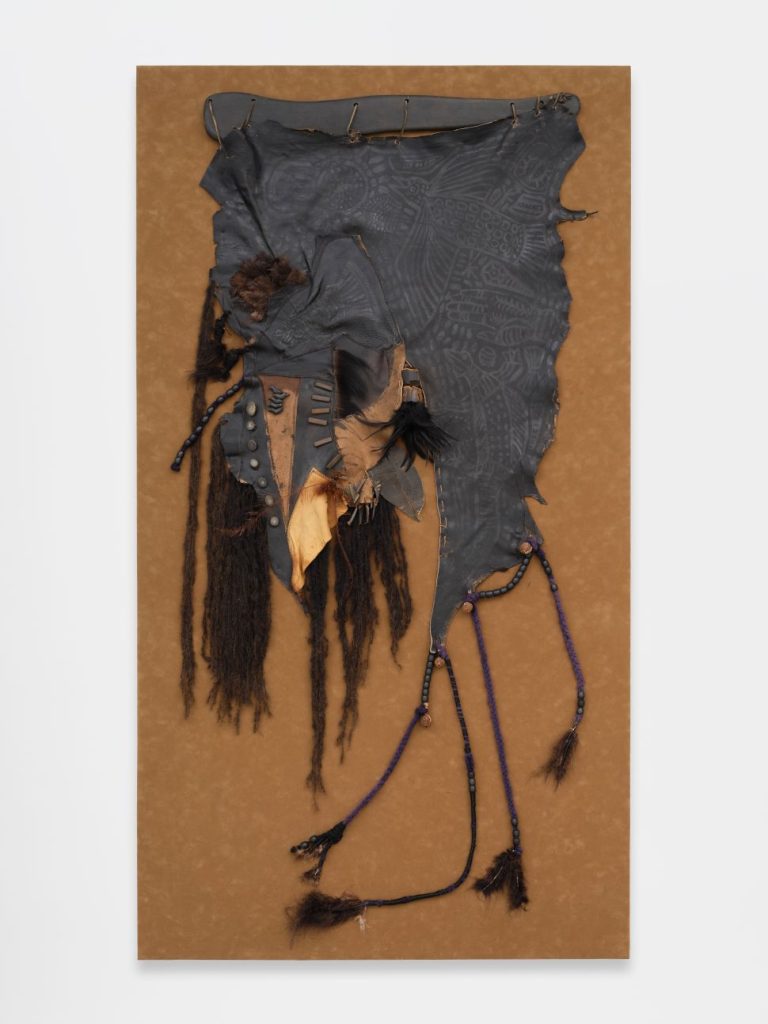
Roberts Projects’ solo booth honoring Betye Saar on the occasion of her centennial brings together assemblages from the 1960s and 1970s, sketchbooks and photographs, along with a group of newly discovered costume sketches and ink drawings from the 1960s that have never been exhibited publicly. Saar died on July 26, 2026, just four days before what would have been her 100th birthday, amid a centennial initiative involving more than 40 museums and public institutions.
The presentation is likely to affect her market, which was being reassessed even before her death. Long-overdue institutional recognition in recent years has helped consolidate her standing among the most significant figures of postwar American art, and her growing visibility has translated into increased collector interest. Her auction record stands at $378,000, achieved by Rainbow Mojo (1972) at Sotheby’s New York in November 2022. Yet prices vary widely by medium, period and provenance, with works on paper and prints generally trading at far more accessible levels.
Betye Saar, Giza, 1972.
Courtesy the artist and Roberts Projects / Photo: Paul Salveson
Yares Art’s “Larry Poons: Painting is Color!” | Booth A5
The art world is increasingly turning its attention to artists who were influential in their time but later received less institutional and market recognition than their better-known contemporaries. One of them is Larry Poons, whose visibility and market have been gaining momentum in recent years. Emerging in New York in the late 1950s and early 1960s, he has arguably remained less commercially visible than some of his peers, and until recently, his works were considerably more affordable. That may now be changing. Last spring, Almine Rech presented “Kentucky Cols.,” Poons’ third solo exhibition with the gallery and his first show in Paris in nearly 40 years. In May, at Christie’s New York, one of his early Dot Paintings, Zorn’s Lemma (1963), fetched $787,400, nearly double its $400,000 low estimate.
At ADAA Fair, Yares Art is presenting “Larry Poons: Painting is Color!,” a focused showcase of the artist’s finest late abstract paintings made between 2005 and 2026. Throughout his career, Poons was driven by the belief that color is the true essence of painting: a living force that generates its own space, movement and meaning, with no need for subject or narrative. His late canvases unfold as dynamic, magmatic fields of shifting energy that translate the alchemy of matter. Lush coils, loops, sweeps and swaths of radiant chromatic intensity dance across the surface in a fluid, immersive interplay of color, sensation, movement and material presence.
Larry Poons, Untitled (018E-1).
Photo: Adam Reich, courtesy Yares Art. Copyright Larry Poons. Licensed by VAGA at Artists Rights Society (ARS), New York
Berry Campbell Presenting the Women of Abstract Expressionism
Co-founded by dealers Christine Berry and Martha Campbell, Berry Campbell has built its program and business model around in-depth archival research and historical scholarship, carving out a reputation as a leading destination for neglected artists of the American postwar era, with a particular emphasis on the women of Abstract Expressionism. Here, the gallery is bringing renewed attention to a group of long-overlooked figures of postwar abstraction, including Alice Baber, Janice Biala, Bernice Bing, Elaine De Kooning, Dorothy Dehner, Judith Godwin, Mercedes Matter, Ethel Schwabacher and Lucia Wilcox. Alongside them is Lynne Drexler, whose market has followed a particularly remarkable upward trajectory in recent years.
Drexler’s rediscovery is a telling example of how sustained gallery advocacy and institutional reassessment can reshape an artist’s market. She gained considerable attention after Berry Campbell, which represents her estate in the U.S., collaborated with Mnuchin Gallery in 2022 to present a major exhibition of her early abstractions. The momentum continued with White Cube’s 2023 announcement that it would represent her archive internationally, followed by solo exhibitions in London and Hong Kong. Her auction market has since posted a series of remarkable results: after Flowered Hundred (1962) sold for $1.38 million at Christie’s in 2023, Airlee (1960) achieved $1.56 million at Sotheby’s in November 2024. A year later, Keller Fair II (1960) set a new auction record of $2.03 million at Christie’s New York against an estimate of $800,000-1.2 million. At Art Basel this June, White Cube reportedly sold an early work for $2.5 million.
Janice Biala, Campo Santo Spirito Venici, c. 1982.
© Estate of Janice Biala, courtesy Berry Campbell
Alexander Gray Associates Presenting Betty Parsons and Carrie Moyer
Booth D4
Alexander Gray Associates has staged an intergenerational conversation between Betty Parsons and Carrie Moyer. The two artists share a sensuous approach to abstraction, using exuberant color and organic forms to create compositions rooted in their respective lived experiences. Parsons’ vibrant, spirit-inflected abstractions find a compelling contemporary counterpart in Moyer’s materially experimental practice, whose canvases and works on paper alternate between the graphic flatness of her 1990s agitprop posters and the lush material possibilities of acrylic paint. Working 60 years apart, both explore the evocative potential of color beyond representation, somewhere between embodiment and expression.
The pairing comes at a moment of renewed institutional attention for both artists. The Hessel Museum of Art recently staged “Betty Parsons: An Expanded World,” the first major retrospective to examine Parsons’ intertwined identities as an artist and as the pioneering dealer who helped shape the American avant-garde. Long overshadowed as an artist by her role in championing figures such as Jackson Pollock, Mark Rothko and Barnett Newman, Parsons is now receiving greater recognition for her own practice. The reassessment is gradually extending to her market: her auction record stands at $138,600, set at Phillips, and more recent results, such as the $48,750 sale of Three Reds at Rago in March 2025, point to continued collector interest. Moyer, for her part, is featured in “Gender, Genre, Generation: Women Painting Abstraction” at the Sheldon Museum of Art, on view through January 3, 2027.
Betty Parsons, Red Eminence, 1955.
Courtesy Alexander Gray Associates
Peter Blum’s “Alex Katz – Works on Paper”
Booth C3
Another focus of this year’s fair is the intimate and often more accessible world of works on paper. One highlight in this year’s offerings is Peter Blum’s solo presentation of works on paper by Alex Katz spanning the 1950s through the 2020s, with his early cut-paper collages shown alongside charcoal and graphite drawings made throughout his career. The presentation follows “Alex Katz: Out of Sight” at the Colby College Museum of Art, the first major exhibition in more than three decades devoted to Katz’s drawings, which closed on October 11 and travels to the Hudson River Museum in 2027. It also coincides with the October 28 opening of “Henri Matisse – Alex Katz: The Silence of Painting” at Musée Matisse in Nice.
While Katz’s major paintings command far higher prices at auction, works on paper, editions and preparatory studies offer more accessible entry points into his market. An ink drawing, Untitled (Ada Study) (1981), sold for $4,480 at Wright in September, for instance, while the screenprint Day Lilies (1993) achieved $10,240 at Rago the following month. Unique studies can reach considerably higher levels. Study for Pink Roses 1 (2012), an oil on board, fetched $77,400 against a $40,000-60,000 estimate at Phillips in May, and Study for Ada in Spain (1981), while an oil on Masonite achieved $167,700 against an $80,000-120,000 estimate. These works on paper and preparatory studies are not simply more affordable alternatives; they offer closer insight into the compositional thinking and experimentation behind Katz’s celebrated visual language.
Alex Katz, Edwin and Ada on a Beach, ca. 1959.
Courtesy Peter Blum Gallery