
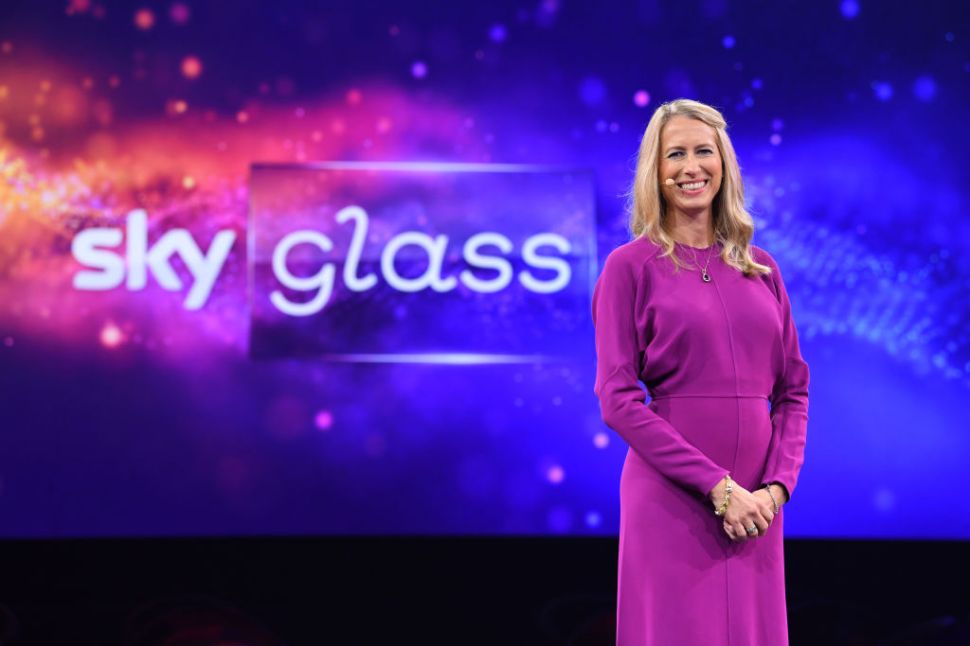
Dana Strong) in magenta dress against galactic backdrop. ” width=”970″ height=”647″ data-caption=’Sky CEO Dana Strong is pursuing ITV’s broadcasting and streaming business in a deal worth up to £1.6 billion. <span class=”lazyload media-credit”>Joe Maher/Getty Images for Sky</span>’>
Sky CEO Dana Strong sees Premier League football and Love Island as having something in common: advertisers willing to pay to reach their audiences. Her proposed acquisition of ITV’s broadcasting and streaming business would bring one of Britain’s largest free-to-air broadcasters into a company built on pay-TV subscriptions. It would also put more of the country’s television advertising under one roof, drawing regulatory scrutiny.
On Nov. 4, U.K. Culture Secretary Lisa Nandy issued a public-interest intervention notice concerning the deal, worth up to £1.6 billion (about $2.15 billion). The Competition and Markets Authority will examine jurisdictional and competition questions, while Ofcom will consider media ownership, freedom of expression and programming diversity. Both must report by Jan. 27, 2027, after which Nandy could order a deeper investigation.
Under the July agreement, Comcast-owned Sky would pay £1.2 billion in cash, transfer Love Productions, valued at £200 million, and potentially pay another £200 million based partly on ITV’s 2027 advertising performance. ITV Studios, the production business behind many ITV programs, is excluded and would remain with ITV plc. Sky would also commit at least £2.1 billion to a separate five-year content agreement with ITV Studios upon completion.
Since becoming Sky’s CEO in 2021, Strong has overseen the launch of Sky Glass, a television with built-in streaming, and Sky Stream, a device that delivers Sky’s channels over broadband without a satellite dish. ITV would give her something Sky’s pay-TV base cannot provide on its own: access to tens of millions of viewers watching free television and ad-supported streaming.
“ITVX is arguably the crown jewel of this deal,” Paolo Pescatore, founder of media and telecommunications research firm PP Foresight, tells Observer. Its mass-market reach and advertiser relationships could help Sky draw new customers to its broader services, he says, although the challenge would be to make money from that audience without diminishing ITVX’s free-to-view appeal.
What the free audience brings
The business behind that reach is substantial. ITV Media & Entertainment generated £850 million in advertising revenue in the first half of 2026, about 87 percent of its £975 million total revenue. Digital advertising sales rose 13 percent to £268 million, while ITVX’s monthly active users climbed 10 percent to 17.9 million. Sky estimates that the combined broadcasters would account for approximately 20 percent of all U.K. in-home viewing.
ITV also brings advertising technology and established agency relationships. Its Planet V platform enables targeted video-ad purchases. In May, ITV extended its capabilities to live television through Live Addressable+, initially working with Omnicom Media Group and more than 20 brands. Data partnerships involving Tesco Clubcard and automotive marketplace Carwow help advertisers target particular audiences. Sky already operates AdSmart, its own household-targeting system. Combining the operations is an opportunity, although no specific integration has been announced.
“ITV has traditionally been the hammer and Sky the scalpel,” Jessica Dervyn, senior principal analyst in the Gartner Marketing Practice, tells Observer. She says combining ITV’s mass reach with Sky’s household-level targeting could help advertisers reduce duplicated audiences and improve measurement across traditional television and streaming.
“For advertisers, the bringing together of ITV & Sky’s ad tech and operations could make premium video simpler and more efficient to plan, buy and measure,” Ian Daly, trading lead at media agency the7stars, tells Observer.
“However the consolidation of two major broadcasters raises important questions around choice and competition,” he adds. ISBA, which represents British advertisers, has raised concerns about transparency, competition and independent measurement. Fewer independent sellers could leave advertisers with less leverage over prices and terms.
Pescatore says the combination would strengthen Sky’s bargaining position, although competition from YouTube, Netflix and Amazon could keep that power in check.
Michelle Sarpong, head of activation at the7stars, says those platforms are not always direct substitutes for traditional broadcasters. “The concern isn’t about having fewer suppliers on a media plan. It’s about losing meaningful competitive tension between sellers, because that competition has historically helped agencies secure better value and flexibility for advertisers,” she tells Observer.
A changing advertising market
The sales landscape is shifting even without the deal. In September, Channel 4 secured the rights to sell advertising for Channel 5 and other Paramount channels starting in 2027, taking a portfolio previously handled by Sky Media. Even as Strong pursues ITV’s advertising relationships, Sky Media is set to lose Channel 5’s advertising business.
Sky expects annual cost savings of approximately £200 million by the end of the third year after the deal closes. But regulatory approval could come with additional costs. Pescatore says Sky might have to accept legally binding safeguards for news independence, British programming and advertising.
“Excessive concessions could undermine the rationale for the deal,” he says.
For Strong, gaining ITV’s free-to-air audience could make Sky a stronger rival to global streaming platforms. Regulatory conditions could limit how Sky capitalizes on the deal.