
Switzerland is synonymous with cheese and chocolate, but the country’s cuisine extends far beyond its two famous exports. In fact, each of its 26 cantons has a notable local dish very much worth trying, beyond the expected fondue and raclette. The country has more to offer than just dairy, and sticking exclusively to Switzerland’s most obvious dishes is a disservice to yourself and the region as a whole—it overlooks the many meat- and vegetable-focused dishes, not to mention dessert creations, that showcase Switzerland’s unique biodiversity and hyper-local styles of cooking.
The country is divided into four linguistic regions (German, French, Italian and Romansh), and this is reflected in the cuisine, as well—each region incorporates neighboring countries’ cooking styles. The cuisine is also heavily influenced by geography; many Swiss dishes are meat- and root-vegetable-heavy, reflecting its landlocked location and alpine topography.
Ready to expand your understanding of Swiss cuisine and discover some dishes you might not be as familiar with just yet? Here are eight dishes to try the next time you visit, and where to eat them.
Expand Your Swiss Cuisine Palate
Zurich: Züri Gschnätzlets
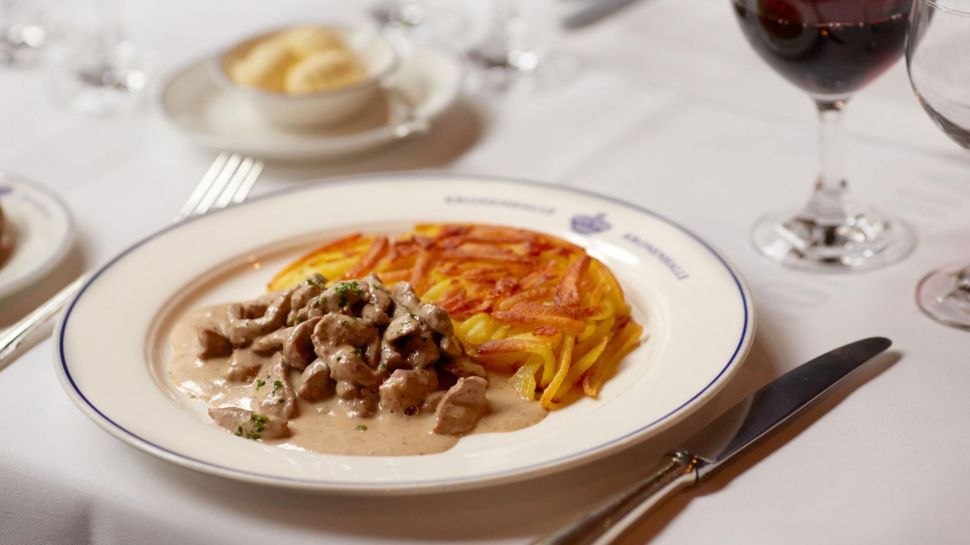
Zurich is Switzerland’s most visited city, but few come for Züri Gschnätzlets the way they’d go to Vienna for schnitzel or Naples for pizza. However, one bite of this creamy mushroom veal dish and you’ll wish you’d traveled here sooner for it. The sauce is made with white wine, heavy cream and occasionally demi-glace or veal stock, creating a rich, velvety main event that pairs perfectly with the crunchiness of rösti, its traditional side dish. Hearty and typically large in size, this is a dish that’s especially comforting during the colder seasons.
Where to eat Züri Gschnätzlets: Kronenhalle
Rämistrasse 4, 8001 Zürich
Open since 1924, Kronenhalle is one of Zurich’s most esteemed dining destinations. A white-tablecloth restaurant with Chagall- and Picasso-adorned walls, this is a traditional, iconic place to enjoy Züri Gschnätzlets.
Züri Gschnätzlets.
Elisabeth Real / Zürich Tourismus
Graubünden: Capuns
Graubünden is a unique canton in more ways than one. It’s the only canton where Romansh is widely taught and spoken, and it’s also the largest, hosting nearly half of the country’s biodiversity, with around 30,000 animal and plant species. As such, it makes sense that one of the canton’s most renowned dishes, capuns, spotlights its vegetable bounty. The star of the show is Swiss chard, which is wrapped around a flour and egg batter mixed with onion, herbs and smoked meats like salsiz to make a leafy green dumpling served in a creamy sauce.
Where to eat Capuns: Stiva Grischuna
Via Cavardiras 3, 7180 Disentis/Mustér
Housed in a building dating back to the 1800s, Stiva Grischuna is a piece of local history with a striking wood-paneled ceiling and rustic Rococo architectural style. This traditional Graubünden house is the ideal place to have capuns in an authentic, informal setting.
Capuns.
GutundTasty via Pixabay
Zug: Zuger Kirschtorte
Zuger Kirschtorte is a love letter to cherries, made with cherry buttercream, sponge cake, nut-meringue and a shot of cherry brandy, also known as kirsch. Developed by pastry chef Heinrich Höhn when he was just 20 years old, this delightful pink confection has been a runaway hit since its creation in 1915. At the height of its success, over 100,000 cakes were produced, and Audrey Hepburn and Charlie Chaplin were among its fans.
Where to eat Zuger Kirschtorte: Treichler Zuger Kirschtorte
Bundesplatz 3, 6300 Zug
The birthplace of Zuger Kirschtorte is still standing—it’s a popular bakery, café and museum devoted to the cake. Steps away from the train station, this is an unforgettable sweet pit stop when you visit Zug.
Zuger Kirschtorte.
Courtesy Treichler Zuger Kirschtorten
Vaud: Papet Vaudois
Papet Vaudois is a classic meat-and-potatoes dish that reflects the country’s humble beginnings. According to legend, the dish was created in the village of Orbe over 1,100 years ago, when villagers added cabbage to their sausages to stretch their meat further when a German emperor came to visit. Apparently, the royal was impressed, and the dish is still beloved today, with the cabbage sausages served alongside a creamy leek-and-potato mash.
Where to eat Papet Vaudois: Pinte Besson
Rue de l’Ale 4, 1003 Lausanne
Billing itself as the oldest pub in Lausanne, Pinte Besson is a great place to try Papet Vaudois in a stained glass-windowed space dating back to 1780. Enjoy the rich dish with a glass of chasselas wine; only one to two percent of this wine is exported outside of Switzerland, so savor your sip.
Papet Vaudois.
Courtesy Hotel Marina Lachen
Basel: Basler Leckerli
Basler Leckerli are chewy, spiced cookies hailing from the city of Basel. The dough is reminiscent of gingerbread in flavor, while the added nuts and candied citrus resemble fruitcake. Cut into small rectangles with a thin layer of icing on top, these cookies date back to the 15th century, when they first appeared in medieval monastery baking. It’s important to keep Basler Leckerli airtight so that they maintain their soft texture; otherwise, they turn dry and brittle quite fast.
Where to eat Basler Leckerli: Jakob’s Basler Leckerly
St. Johanns-Vorstadt 47, 4056 Basel
Jakob’s Basler Leckerly offers a deep dive into the cookie’s history and evolution. Here, you can sample the Honey Läckerli of the 18th century, the classic Basler Läckerli of the 19th century and the Chocolate Läckerli of the 20th century all in one place, plus tour the factory and purchase personalized gifts.
Basler Leckerli.
Jakob’s Basler Leckerly
Ticino: Risotto alla Ticinese (with porcini mushrooms)
Risotto originated in northern Italy, but due to the region’s proximity to Ticino, the canton has its own take on the dish, and its rendition with porcini mushrooms is exceptionally tasty. Served in almost all grotto-style restaurants in the region, the risotto differs in three small ways from versions in neighboring Lombardy or Piedmont. First, Ticino grows its own rice, Riso Nostrano Ticinese, one of Europe’s northernmost rice types. Second, risotto in Ticino is often made with a splash of merlot rather than a dry white wine, which is more common in Italy. And finally, often the dried porcini come from alpine valleys in Ticino, and growing in a cooler environment gives them denser flesh than mushrooms grown at a lower altitude. The result is a dark-hued, intensely flavorful risotto you’ll remember for years to come.
Where to eat risotto alla Ticinese: Grotto San Salvatore
Via Minudra 1, 6912 Pazzallo
Located at the foot of Monte San Salvatore, you’ll find Grotto San Salvatore, a traditional Ticinese restaurant with a charming tree-lined garden. While in some restaurants risotto alla Ticinese is seasonal, you can find the comforting two-person dish here year-round.
Risotto alla Ticinese.
Courtesy Presence Switzerland FDFA/Sébastien Crettaz
Lucerne: Luzerner Chügelipastete
Speaking of mushrooms, Lucerne also has a tasty dish featuring the ingredient. Its Luzerner Chügelipastete is also visually striking, served in a towering puff pastry structure. Inside the vol-au-vent-reminiscent construction, you’ll find a tasty blend of veal, Brätchügeli (small sausage meatballs), mushrooms, raisins and a wine cream sauce with optional additions of sweetbreads or diced apples. The dish first appeared in 1867 for Lucerne’s cantonal carnival, and the crunchy, hearty meal has been a hit ever since.
Where to eat Luzerner Chügelipastete: Wirtshaus Galliker
Schützenstrasse 1, 6003 Luzern
This fourth-generation-owned restaurant showcases the best of Lucerne cuisine, including, of course, Luzerner Chügelipastete. Come here for a cozy lunch or dinner in one of the city’s culinary mainstays.
Luzerner Chügelipastete.
Courtesy Cookinesi
Bern: Berner Platte
In Bern, you’ll find the Berner Platte, a meat feast featuring pork shoulder (schüfeli), smoked pork loin (rippli), smoked bacon (speck), boiled beef (siedfleisch), pork knuckle (gnagi), smoked beef tongue, and tongue sausage (zungenwurst). Served alongside sauerkraut, beans and potatoes, this dish has celebratory origins, which explains its abundance. On March 5, 1798, the Bernese defeated the French Army at Neuenegg, and this plentiful dish was born of the victory. Each cut of meat is cooked individually to maintain its distinct flavor and presented platter-style, making meat lovers’ hearts skip a beat when served.
Where to eat Berner Platte: Kornhauskeller
Kornhausplatz 18, 3011 Bern
This striking vaulted cellar restaurant in a baroque building provides the perfect backdrop to your meat feast. Formerly a granary, Kornhauskeller is a cavernous, spacious restaurant, known to locals as “chübu” (bucket), that entices with its architecture and traditional Bernese dishes.