
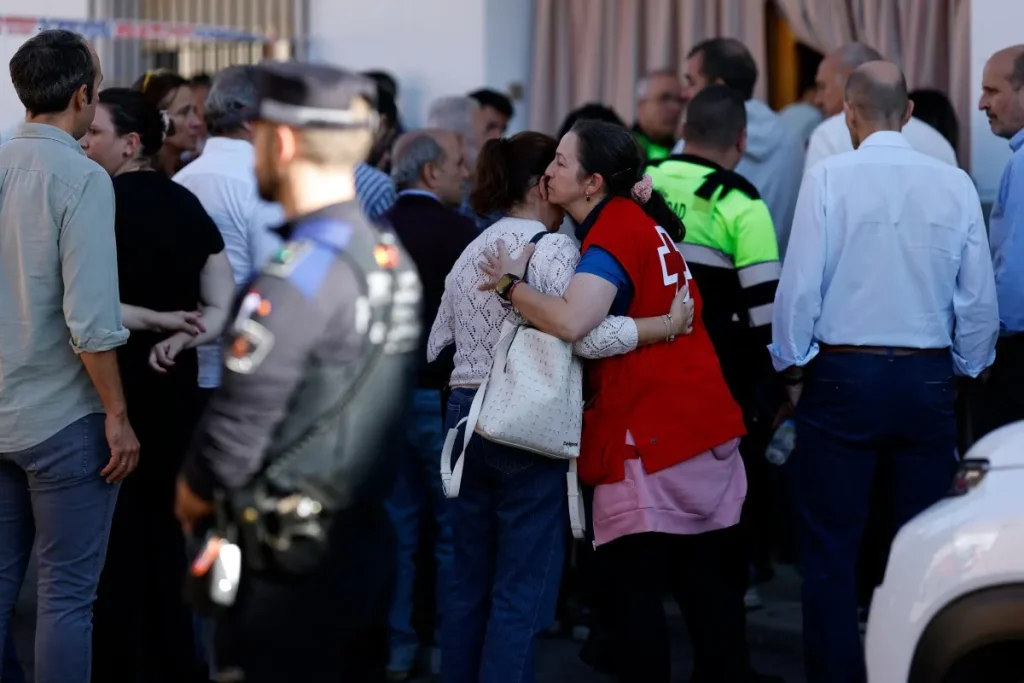
On the eve of the second anniversary of Valencia’s devastating floods, the country was rattled by its second major train collision this year. Is Spain more prone to natural and human-caused disasters than its European neighbours, and if so, why?
After more than a decade reporting on news in Spain, there are certain events that have stuck in the back of my mind: King Juan Carlos’ abdication, the national side’s footballing glory, the Covid-19 pandemic, the volcanic eruption in La Palma or last year’s nationwide blackout.
I also distinctly remember the 2013 rail crash in Galicia in which 80 people lost their lives, and the image of the distraught blood-stained train driver emerging from the wreckage.
Admittedly I’ve developed a bit of a hard shell as a result of years of writing up breaking news and explainers at speed, but over the past few years the barrage of bad news coming from Spain – especially in terms of avoidable disasters – seems to have intensified.
The 2024 Valencia DANA floods and this year’s two separate train collisions were the worst tragedies due to their high death tolls, but other events such as the 2023 fire in a Murcia nightclub that killed 13, or the 2024 Valencia skyscraper blaze in which 10 people lost their lives also spring to mind.
Rising heatwave deaths and more frequent wildfires, as well as other deadly floods also seem to make the news more often.
It’s all a bit too doom and gloom, right? I’ll be the first to admit that exposure to the 24-hour news cycle can lead anyone to become a bit negative about global events, so am I just imagining things when it comes to Spain’s recent propensity for disasters?
Statistically speaking, Spain does not have a higher overall frequency of deadly catastrophes than other European countries, but it has recently experienced an unusually intense and tragic cluster of high-profile disasters.
Spain’s railway network used to be considered one of the safest transport systems in Europe, especially when compared to road travel.
But as an article published in Spanish daily El Periódico en España on Thursday points out, Spain now accounts for almost three out of every four deaths in high-speed rail accidents worldwide during the 21st century.
In terms of European rail accidents (not just high-speed) since the start of the century, the Galicia, Córdoba and Toledo crashes are among the six deadliest on the continent, with the worst being a funicular fire in Austria in 2000 which caused 155 deaths.
So train tragedies can happen anywhere, but they certainly seem to happen more often here.
When it comes to floods, the European Data Journalism Network reported that Spain was the country with the most people affected by floods in 2023-2024 by a long shot – 190,790 people – more than all other EU countries combined over that two-year period.
Obviously, the Valencia floods that killed 241 people had much to do with that.
As for wildfires, Spain has lost 299,000 hectares of land to forest fires this year, accounting for 44 percent of the EU total. It’s by far the most affected country, followed by Italy with 17 percent and France with 14 percent.
In terms of heat-related deaths, which can’t be classified as a one-off disaster but which still account for thousands of fatalities each year, Spain ranks third after France and Italy with figures around 6,824 deaths attributable to extreme heat in urban areas, as analysed in a study by Imperial College London.
All these events leading to loss of life and land have placed Spain’s infrastructure and emergency readiness under intense public scrutiny.
Are authorities doing enough? Is taxpayers’ money going towards ensuring the safety of Spain’s growing population, together with the almost 100 million tourists that visit each year?
It would be unfair to say that the country hasn’t learnt from its mistakes, at least to some extent, as seen when ES-alert messages are sent to people’s phones hours in advance if there’s the threat of very adverse weather.
But all too often whenever a catastrophe strikes and an investigation is opened, what becomes clear is how there’s too many government departments and people involved in the decision-making process in the lead up to these accidents, and when things go wrong everyone passes the buck.
Nobody has been held to account for the Valencia floods, the Córdoba train collision probe has been open since January without clear conclusions, and we can expect to see the same with the most recent crash in Toledo.
In fact, we’ve already analysed how Spain’s deeply ingrained red tape made Valencia’s flood response ineffective, and other examples of how Spanish bureaucracy has cost people their lives or worsened their situation, such as in the case of the volcanic eruption in La Palma in 2021, or the earthquake in Lorca in 2011.
As explained in an article in business daily Expansión on Friday, “Renfe (Spain’s train operator) and Adif (Spain’s railway infrastructure manager) need to depoliticise and professionalise their management”, with several analysts concluding that Spain shouldn’t have opened up its rail network to private companies if it couldn’t guarantee safety standards following increased traffic on the tracks.
Spain finds itself at the forefront of the climate crisis while remaining an extremely popular country to live in and visit, all of which is putting huge pressure on public resources if not managed properly.