
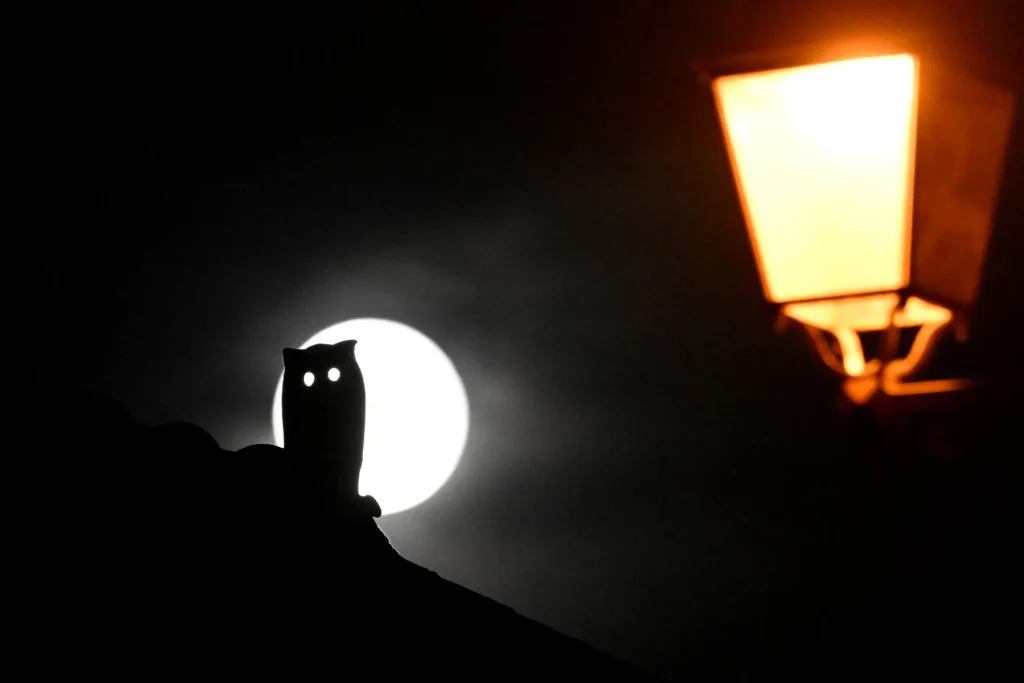
As Halloween approaches, Brittany and Normandy also celebrate the spooky season with Samhain – a festival inspired by Celtic traditions and European folklore.
Traditionally, Samhain marked the end of the harvest season and the beginning of winter. In the traditional Irish calendar, celebrations centred on the night of October 31st, ahead of the festival day on November 1st
The period marked the end of the agricultural cycle, when crops had been gathered and livestock brought in from the fields. It was also associated with beliefs about the spirits of the dead and their relationship with the living.
You may have come across Samhain, also written Samain in French. This Celtic festival is associated with the transition from the lighter half of the year to the darker winter months. The Irish word Samhain is pronounced “sow-in”, while the French pronounce it sa-mèn.
Samhain is often described as a precursor to Halloween, although the relationship between the ancient festival and modern Halloween is more complex than a direct line of descent.
Why is Samhain celebrated in Brittany?
Brittany has particularly strong cultural links to the Celtic world. The Breton language belongs to the Brittonic branch of the Celtic languages, alongside Welsh and Cornish, and the region’s cultural identity continues to draw on these shared linguistic and historical connections.
The changing seasons have also played an important role in Breton traditions. In Breton, the beginning of winter is known as Kalañ Goañv.
Local legends and customs have helped keep the darker side of Breton folklore alive. In some traditional accounts, families left food on the table for deceased relatives, while hollowed-out root vegetables illuminated with candles were used as lanterns.
Today, festivals inspired by Samhain combine Celtic themes and local folklore with concerts, storytelling, crafts and Halloween-themed activities. Many towns in Brittany organise their own events to celebrate.
And what about Normandy?
Normandy also has Celtic roots, as the territory was inhabited by Celtic tribes before the Roman conquest of Gaul.
Today, references to Samhain in Normandy can be understood as part of a wider interest in Celtic heritage, seasonal folklore and the origins of Halloween. Its appeal lies in the themes it brings together – the changing seasons, the memory of the dead and the relationship between the natural and supernatural worlds.
Normandy’s Samhain celebrations draw on a broader mix of European mythology, fantasy and seasonal folklore.
One of the region’s biggest events inspired by these themes is the Festival de Samhain in Bernay, which takes place from October 29th to November 1st in 2026.
The festival transforms Bernay and its historic abbey with concerts, fire performances, folklore-inspired spectacles, workshops and a market featuring more than 160 craftspeople and creators. The 2026 theme brings together fairies and völväs – female seers from Nordic traditions.
You can find the full programme on the official Festival de Samhain website.
READ ALSO: Zombie walks and horror nights: Halloween events across France in 2026