
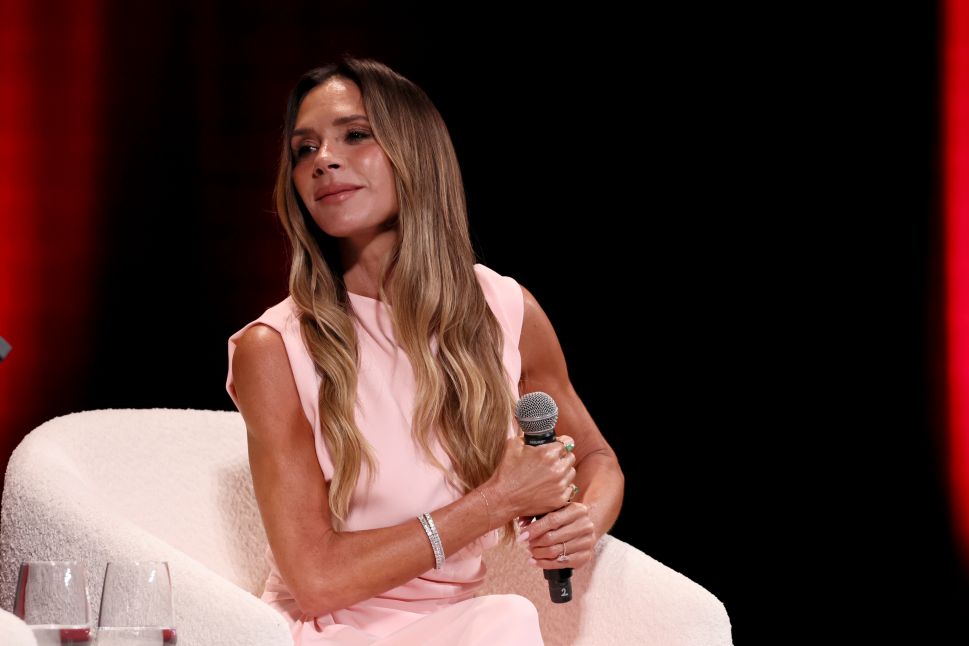
In 2000, Alexander McQueen reportedly refused Victoria Beckham’s request to attend his Voss show. Twenty-four years later, Netflix cameras followed her as she prepared to present her spring 2025 collection at Paris Fashion Week. She no longer had to ask for a seat. She was sending the clothes down the runway.
Making the business behind those clothes profitable took considerably longer.
In 2025, Victoria Beckham Holdings recorded its first operating profit of £7.3 million (about $9.7 million), reversing a £1.6 million operating loss the previous year. Revenue rose 15 percent to £129.8 million. Beauty, which Beckham launched in 2019, accounted for an estimated two-thirds of group revenue, according to industry reporting. The company does not publicly break out the profits of its fashion and beauty divisions.
The former Spice Girl has already won over some formidable skeptics. Anna Wintour, who initially dismissed Beckham’s fashion ambitions as a potential side gig, admitted in the 2025 Netflix documentary Victoria Beckham that she had “totally proved us wrong.” Fashion acceptance, it turns out, wasn’t the same as financial success.
Two faces of Victoria
In 2025, Beckham put her fashion and beauty businesses under separate chief executives.
Lauren Edelman joined Victoria Beckham Beauty as chief marketing officer in 2023 after stints at L’Oréal and Chanel. Promoted to CEO in January 2025, she helped expand the brand into fragrance and foundation while increasing its retail presence from three doors to more than 200 worldwide by the end of that year.
Sybille Darricarrère Lunel came from the opposite end of the luxury industry. Before taking over Beckham’s fashion business in July 2025, she had overseen leather goods at Christian Dior Couture, managing the global product assortment across five collections annually and coordinating creative, production, sales and retail teams. Earlier, she served as general merchandise and buying director at Galeries Lafayette.
Edelman oversees a beauty business whose products drive repeat purchases, from eyeliner to foundation to fragrance. Darricarrère Lunel is responsible for a fashion operation expanding its wholesale reach, leather goods and physical stores.
Fashion has not stood still. The company reported growth in dresses and gowns during 2025, with the category accounting for 32 percent of its retail business. Its bestselling styles remain central to the brand’s identity. But beauty now generates the larger share of group revenue.
The luxury of refusing to fail
Victoria Beckham has spent nearly two decades trying to outgrow the “celebrity-turned-designer” label that followed her into fashion in 2008.
The Beckhams now have an estimated combined fortune of £1.185 billion, according to the 2026 Sunday Times Rich List. Personal wealth was hardly the reason Beckham needed a fashion business. She has recalled entering the industry knowing how people regarded her: “She was a pop star. She’s married to a footballer. Who does she think she is?”
For years, the company gave those critics plenty of ammunition. In her Netflix documentary, investor David Belhassen recalled expenses that included £70,000 a year on office plants and another £15,000 just to water them. Beckham later clarified that these were enormous indoor trees, not a collection of potted ferns.
The business nevertheless attracted serious financial backing. In 2017, Belhassen’s Neo Investment Partners invested £30 million in Beckham’s fashion label in a transaction that market sources valued at £100 million. Investors had assigned a nine-figure valuation to Beckham’s potential long before her company achieved an annual operating profit.
That financial cushion complicates the story of her perseverance. An unknown designer would have struggled to survive so many years of losses. Beckham had considerable resources and name recognition to draw upon. Yet plenty of celebrity fashion ventures have still disappeared. Hers kept going, eventually joining the Paris calendar and hiring executives with experience at some of luxury’s biggest institutions.
The losses persisted. In 2024, the company recorded a £4.8 million pre-tax loss, and shareholders advanced a further £6.2 million loan in 2025. One year of operating profit is a substantial change from that position, though the years of financial support remain part of the story.
The company’s largest revenue stream, meanwhile, emerged from the very asset fashion had once held against Beckham: her celebrity.
What an eyeliner can do that a dress cannot
The irony of Victoria Beckham’s beauty success is difficult to miss. The fame that once made her fashion ambitions so easy to dismiss has become a powerful way to sell makeup.
Beckham regularly demonstrates products in intimate social-media tutorials, letting customers watch her apply the eyeliner or lipstick they can buy themselves. Her Satin Kajal Liner, currently priced at £33, has become a signature product. The company says it sells one every 30 seconds.
The products also benefit from her partnership with Augustinus Bader. The Foundation Drops, launched in September 2025, incorporate the skincare brand’s proprietary TFC8 technology. According to Edelman, the launch more than doubled category sales, although the company has not provided a more detailed category breakdown or underlying sales figures in that report.
The products have helped Beckham establish a beauty business that goes beyond the novelty of celebrity-branded cosmetics. Edelman has expanded distribution while maintaining a selective approach to retail partnerships. Beckham’s name draws attention, but the business depends on persuading shoppers to return for the products themselves.
For a designer who spent years trying to establish an identity apart from Posh Spice, this reversal is interesting. In beauty, her celebrity is an advantage. Customers know the face before they know the product. Fashion demanded a different kind of credibility, one she has spent much of her career earning.
Now the two sides are meeting in the same stores. In September, Beckham opened her first permanent New York boutique at 150 Mercer Street, bringing fashion, beauty and fragrance under one roof. Someone who comes in for an eyeliner might leave having discovered the dresses and handbags that started the business.
Beckham is also extending her name beyond fashion and cosmetics. On Oct. 12, she launched her first homeware collaboration with Westwing, a collection of tableware, glassware and decorative objects. The partnership takes her designs into another corner of the luxury market, though it is too new to judge commercially.
Expansion brings costs as well as opportunities. After years of shareholder support, the company will need to sustain its operating profit while investing in both businesses.
The eyeliner can bring customers through Beckham’s doors. The accounts show that her luxury group is finally turning a profit. What they don’t yet reveal is how much of that profit comes from the clothes she spent so long fighting to make.