
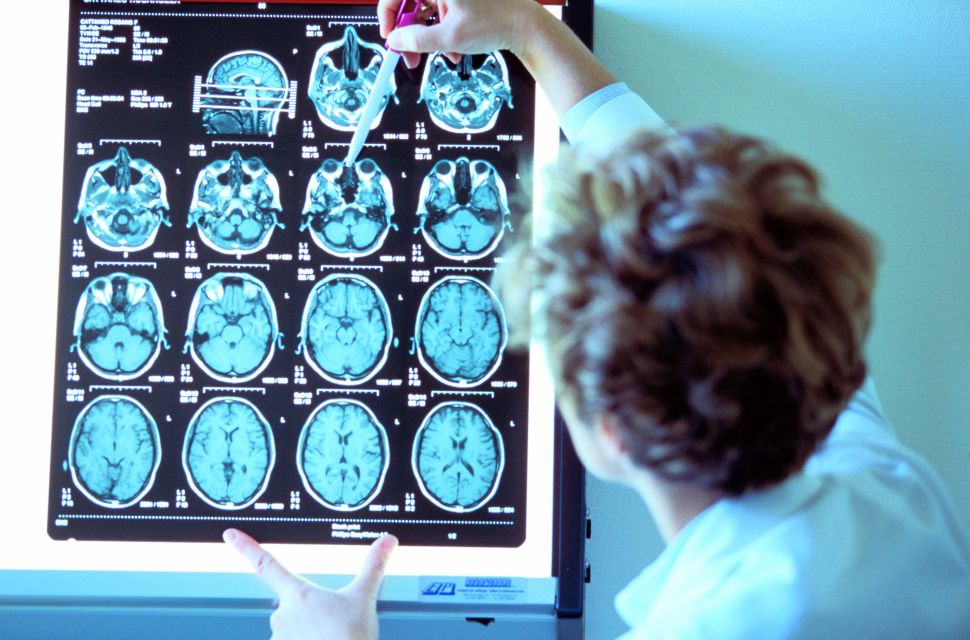
For far too long, Alzheimer’s research has overlooked the differences in how women’s brains are affected by this devastating disease. While science has finally established that women are twice as likely as men to develop Alzheimer’s, we have yet to answer the question of why. Direct investment in research centered on women’s brains can close that gap in our understanding, saving women’s lives while also mitigating the enormous cost of Alzheimer’s, both to households and to the global economy. The potential for philanthropy to step in and help solve one of the world’s greatest health crises cannot be understated.
Private donors and foundations can often move faster than government agencies or commercial funders, giving researchers the time and resources required to pursue questions that have lacked sufficient support. Research investment centered on women would reach the population bearing most of the disease burden and much of the unpaid care. It would also address an economic exposure that runs through household assets, employment, health spending and retirement security.
For many donors, Alzheimer’s giving begins with a poignant and often painful family experience. The disease changes relationships and consumes savings, often reorganizing work and daily life around care. The human case is immediate. The scale of the financial burden also makes Alzheimer’s research a form of economic risk reduction.
In 2026, U.S. health and long-term care costs for people living with Alzheimer’s and other dementias are projected to reach $409 billion. During 2025, nearly 13 million family members and friends provided more than 19 billion hours of unpaid dementia care, valued at $446.3 billion. Almost two-thirds of Americans living with Alzheimer’s are women, and approximately two-thirds of dementia caregivers are women. Women bear the greatest burden of this deadly disease, both in lives lost and in the financial cost of caring for those with the disease.
These costs draw from the same family balance sheet. When a mother develops dementia, assets set aside for her later years may shift rapidly toward care. When her daughter reduces her workload to coordinate appointments or supervise daily needs, the cost grows through lower earnings and a smaller retirement balance. Alzheimer’s can press two generations of women at once.
The financial damage can begin well before care bills arrive. A National Institute on Aging-supported study of nearly 2.5 million older adults found that declining credit scores and missed payments could emerge as early as five years before a dementia diagnosis. Women’s credit scores recovered more slowly after diagnosis than men’s. By the time a family understands the cause, financial losses may already have spread across accounts, debts and other obligations.
At the workforce level, the same burden appears as schedule changes, absenteeism, stalled advancement and early exits from employment. These costs are diffuse, which makes them easy to underestimate. Their concentration among women makes Alzheimer’s a women’s economic-security issue.
The World Economic Forum and McKinsey frame this issue through the concept of “brain capital.” Their analysis estimates that scaling cost-effective brain health interventions could generate up to $6.2 trillion in cumulative global GDP gains by 2050 through higher productivity and greater labor force participation. The estimate covers a wide range of neurological and mental health conditions. For dementia, the relevance is direct: preserving cognition preserves productive capacity.
Government agencies can fund large research programs, and drug developers tend to enter once research offers a credible path toward trials and market adoption. But between those points lies a capital gap where promising questions often require years of preliminary work before larger institutions can justify the risk.
Philanthropy has a distinct advantage during that interval because it can support longitudinal cohorts, shared data systems, biomarker validation and representative clinical-trial recruitment. Funding can also target hormonal transitions and sex-specific biology, with sex-specific analysis made a condition of support, so broader studies produce useful knowledge about women.
The Alzheimer’s Drug Discovery Foundation offers a measure of what this approach can achieve. The foundation reports donor investments exceeding $400 million across at least 792 Alzheimer’s programs. Researchers who received that funding later received more than $3 billion in follow-on commitments from public and private sources. That record illustrates how early philanthropic support can produce evidence that larger funders are willing to back.
Women-focused research should be funded with the same discipline. Donors can ask whether a grant strengthens sex-specific evidence and whether it is designed to attract follow-on capital. They can also ask what success would look like beyond the lab: Could the research reduce the need for intensive care? Preserve women’s ability to remain in the workforce? Delay the financial disruption that can ripple through a family? Those questions keep the science rigorous while recognizing the full value of an advance.
Philanthropy can also shape the research agenda before the market does. Funding decisions determine which hypotheses generate preliminary data and which investigators build durable programs. They influence which trials advance and which discoveries become credible enough for public or commercial support. A field that has underexamined women will continue reproducing its gaps unless capital is deliberately directed toward correcting them. The goal should be to ensure that women’s biomedical research is no longer an underexamined variable in the research that informs prevention, diagnosis and treatment.
The future of Alzheimer’s philanthropy should begin where the disease has placed its greatest burden: with women.
Maria Shriver founded the Women’s Alzheimer’s Movement at Cleveland Clinic and co-founded the Cleveland Clinic Women’s Comprehensive Health and Research Center. She is an award-winning journalist and women’s health advocate.