
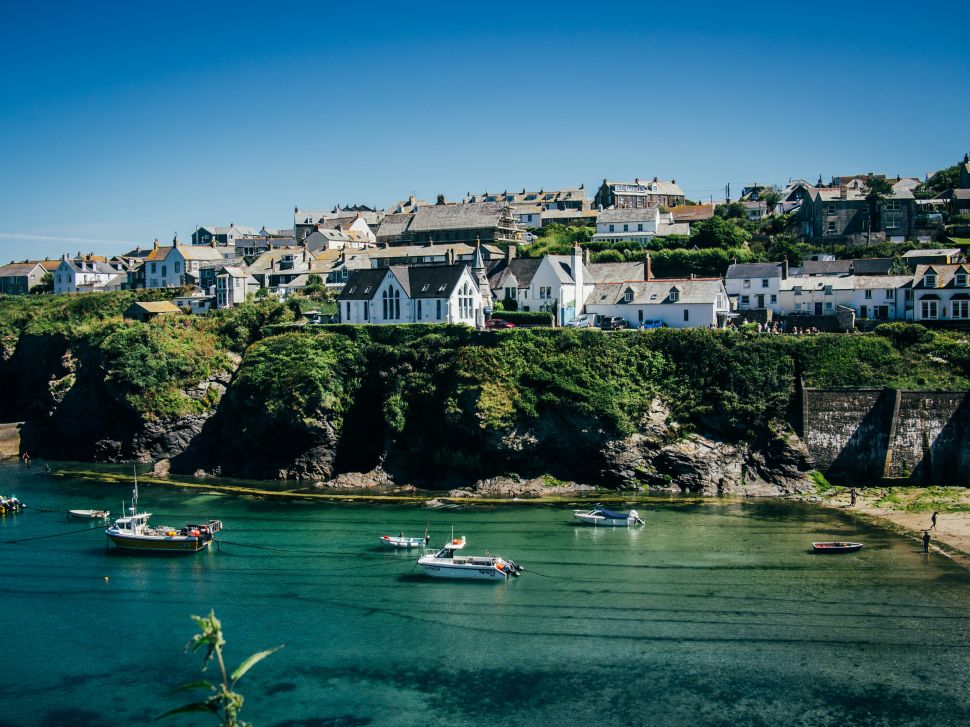
It’s easy to compare Cornwall to other scenic, charming destinations. The sailboat-filled harbors of Falmouth and St. Mawes evoke the shores of Cape Cod. The rugged northern coast, with its sweeping headlands, feels like Northern California. The charming villages and narrow roads could be part of the Cotswolds or Yorkshire. The affluent areas of Mawgan Porth and Rock suggest the Hamptons or Newport. Cornwall’s waters are filled with lobster, like those in Maine.
Trying to liken Cornwall to somewhere else, however, only serves to diminish the varied scope of the picturesque region. The British county, located on the southwesternmost tip of England, spans around 1,375 square miles, stretching 75 miles from the remote point of Land’s End in the south to the border with Devon in the north. It’s known for coastal towns like St. Ives, Newquay, Falmouth and Penzance, but Cornwall also encompasses inland villages, forested nature reserves and swathes of hilly farmland. It is comparable in size to Rhode Island, making it a challenge to explore without months of dedicated time.
But it is not impossible to experience Cornwall in a week, or even over a long weekend, as I did in July. It’s a destination best enjoyed in smaller pockets, where you can more fully explore a specific area or a group of towns over a few days. We spent a night in St. Mawes at the historic Idle Rocks, which offered an opportunity to see Falmouth, and then drove onward to the north coast, where The Pig at Harlyn Bay was the perfect base to eat in the culinary mecca of Padstow and to walk the scenic Trevose Headland. Cottage Orné, in the countryside near Looe, provided easy access to the towns of Fowey and Polperro and to the eco-centric gardens at The Eden Project—a must-see in Cornwall.
“The best thing to do is to find a base and use it,” says Tim Batchelor, hotel director at The Pig at Harlyn Bay, an upscale property set in a historic manor house. “Quite a few people come down to our area for around four days, and then maybe go down to St. Ives for four days.”
Navigating a trip to Cornwall doesn’t need to be overwhelming—there are a few things to know that can help guide you. Here are the best tips for visiting the region, from when to go to what to eat.
Where to go
Cornwall is filled with possibilities. It can feel daunting to determine where to go, but a little research goes a long way. Specific areas in the region are known for certain things. For example, Padstow has a vibrant culinary scene thanks to prominent chefs like Rick Stein, Paul Ainsworth and Rick Toogood. Toogood, who helms Prawn on the Lawn, Little Prawn and Barnaby’s, and his wife, Katie, separately visited Cornwall as children and eventually relocated there from London 11 years ago.
“It’s important to use somewhere as a home base, whether it’s the Padstow and Rock area or St. Ives,” Rick says. “If you’re down for a week, do a couple of days where you pick a second part of Cornwall. They have their own personalities, and the south coast and north coast are very different. It’s a little calmer on the south coast.”
Katie adds that Padstow is a good place to start, especially given its location in north Cornwall. It’s near Devon, and it’s 30 minutes from Bodmin Parkway, where trains arrive from London.
“It has that quintessential harbor town feel,” she says. “You’ve got all the lovely shops and restaurants around the harbor. You can get on the ferry to Rock and then explore that side of the estuary. There are seven beaches that are all along the bay from each other, and they are all stunning. So you can walk from beach to beach.”
India Serlin opened Cottage Orné, a group of upscale cottages and renovated houses set in a former hamlet, in January, following a soft launch last September. The property is within a short drive of Looe, a harbor town with beaches, boat tours and kayak rentals, and Fowey, a particularly charming coastal village where North Street Kitchen serves the best crab sandwich I’ve ever had. A slightly longer drive brings you to The Eden Project and the vast 19th-century garden, The Lost Gardens of Heligan. Everywhere you go feels like a discovery.
“People know Cornwall for the more popular locations,” Serlin says. “Like Newquay and St. Ives, which are known for surfing. This area is a bit more up-and-coming, which I find really interesting. Fowey is already getting pretty trendy. But overall, it feels more real and local, and it has a lot of character. This area has an interesting mix of places, rather than just the surfer towns where people have been coming on holiday for 30 years.”
How to travel there
Although it has always been somewhat popular with Brits, Cornwall has attracted more international visitors in recent years. In 2022, the area welcomed a record five million people, a noteworthy post-pandemic tourism milestone. American travelers tend to focus more on the Cotswolds, Bath or York—all destinations that are easier to access from London by train. Cornwall feels farther away and less accessible, particularly for those flying into Heathrow. In 2024, The Telegraph reported that U.S. visitors seemed to be avoiding Cornwall mainly due to poor transportation links.
The drive from London to Cornwall is about five hours; it’s the same distance as it is to the coast of North Yorkshire. Regularly running trains from London Paddington reach hubs like Truro, Bodmin Parkway and Penzance in about the same amount of time. Taking the train and going carless, however, can be restricting, especially if you plan to explore multiple areas. Taxis are required from the stations and can be hard to find on a whim. Instead of public transport, it’s worth renting a car. Driving in Cornwall can, admittedly, be daunting thanks to its winding country roads, which are surrounded by tall hedges that block incoming cars, but the sense of freedom overcomes any trepidation.
“Take it slowly,” Batchelor recommends. “When there are narrow lanes and high hedges, it’s a lot safer to slow down. You’ll get there faster if you go slower because you won’t crash and end up in a hedge. Driving is the best way to make the most of a day. At The Pig, breakfast starts at 7:30 a.m., and most people are ready to be out the door by 8 a.m. Parking can be tricky in the towns—the earlier you arrive, the better.”
When to go
There’s no right or wrong time of year to visit Cornwall. It has, however, traditionally been a summer destination thanks to the beaches, which attract surfers, swimmers and boaters. That is, of course, when it’s sunniest and hottest. Christmas can also be busy, especially in Padstow, which hosts the annual Padstow Christmas Fayre.
“When we first moved here 11 years ago, it was definitely an Easter to October destination, with a little pocket at Christmas,” Katie Toogood says. “Now, people come during [school holidays] in February and October. And people who don’t have families want to actively avoid those particularly busy times, so those quieter times have started filling up.”
Cottage Orné is open year-round and keeps its sauna huts and outdoor pool available at all times. Serlin is seeing a lot more visitors interested in wellness.
“People are changing what they’re looking for when they go away,” she notes. “So having a sauna and being able to cold-water swim and being able to do something mindful is something they’re looking for now. There’s also something really magical about coming when it’s cold. It feels really cozy.”
Contending with chillier weather and rain during the off-season has its upsides, as it can mean fewer crowds. It can also mean better deals. “You can get a bargain,” Batchelor says of The Pig-at-Harlyn Bay. “And more peace and quiet. You need to be aware of places that are closed on some days of the week and to plan your visit well if you’re looking to dine elsewhere other than us. But we’re open every day, all year.”
What to do
A Cornwall itinerary is best planned based on your particular interests, but there are a few attractions that shouldn’t be missed for first-time visitors. The Eden Project, opened in 2001, showcases biodiversity in two enormous biomes built in a former derelict clay pit. It’s home to more than two million plants, both in the domes and in the outdoor gardens, and it’s as beautiful as it is interesting. For history buffs, Tintagel Castle has connections to the lore of King Arthur and St. Michael’s Mount, located on a tidal island, is a former medieval stronghold.
Sea life abounds in Cornwall. Companies like Padstow Sea Safaris and AK Wildlife Cruise, based in Falmouth, offer opportunities to spot whales, dolphins, seals and birds. Those who want to walk in nature can explore Golitha Falls National Nature Reserve or follow part of the South West Coast Path. For art, the Tate St. Ives showcases modern works, while the Barbara Hepworth Museum & Sculpture Garden is set in the acclaimed artist’s former studio.
Some areas of Cornwall are more remote and require more involved travel. Lizard Point marks the southernmost point of the British mainland. The Minack Theatre, an outdoor theater on the coast south of Penzance, is a very scenic spot to see a play. Even farther are the Isles of Scilly, an archipelago of 140 islands, only five of which are inhabited.
“It’s the most stunning place,” Katie says. “You can get the ferry, or the helicopter or the plane from Penzance. It takes a couple of hours on the boat or 15 minutes on the helicopter, and you can explore all the islands. There are ferries in between them. The beach on a good day looks like the Caribbean, and there are great little beach restaurants and local pubs.”
Serlin encourages visitors to Cornwall to take the long route, wherever they’re going. Stop in the villages, walk through the local woods or pop into a pub along the way. It’s that sense of exploration that is most exciting about Cornwall. She also recommends asking locals for advice.
“It can be hard to find the best pockets,” she says. “And there’s a lot of noise out there in terms of where to go and what’s touristy and what’s worth going to.”
Where to eat
Cornwall is famous for its seafood, particularly crab, lobster, scallops and oysters. But it also has lots of local farms, which means seasonal, fresh produce. There are farm shops in almost every town (and even in between them), and staying somewhere with a kitchen, like Cottage Orné, means you get to make the most of these stores. But foodie visitors shouldn’t miss Padstow. Besides Prawn on the Lawn and Barnaby’s, Michelin-starred eatery Paul Ainsworth at No.6 and the classic Rick Stein’s Café showcase top-notch food. Ainsworth also helms The Mariners in nearby Rock and recently debuted a renovated hotel and restaurant called St. Enodoc.
The Toogoods also recommend St. Ives for its growing culinary scene. St. Eia, a restaurant and wine shop, is a favorite. Batchelor recently enjoyed Mackerel Sky Seafood Bar in Newlyn. Along the south coast, North Street Kitchen and Hidden Hut draw crowds. In Port Isaac, Nathan Outlaw’s Fish Kitchen has held a Michelin star for its seafood dishes since 2014. The area is also becoming a popular outpost for London chefs: Restaurant Story’s Tom Sellers opened fine-dining restaurant Mor in Carbis Bay Estate in July.
No matter where you eat, look for places that focus on Cornwall’s own ingredients. The restaurant in The Pig at Harlyn Bay, which is open to the public, allows diners to experience the sustainable produce grown in the hotel’s own garden, served alongside local meat and fish. Everything on the menu comes from within 25 miles—a genuine taste of the area.
“Cornwall has a great abundance,” Batchelor says. “And it is a very proud county. Some people call it its own nation, and it even has its own flag. When you come to visit, be sure to try what’s grown and caught here.”