
The most audacious act of performance and land-based art kicked off the Great Lakes’ cultural calendar weeks before TIFF or the Toronto Biennial of Art got underway this September, when Donald Trump renamed Lake Ontario “Lake America,” and both Google Maps and Apple Maps followed suit. The President’s diktat, which recharted borders and rechristened waters with less effort or forethought than duct taping a banana to the wall, attempted to upstage the Great Lakes’ season of unveilings and premieres with a feat of neo-nationalist conceptualism that stretches 50 miles wide. If you wish to see what qualifies as Lake Ontario today, you’ll have to look south from Ontario; luckily, there’s so much more to see when you look in the other direction.
Toronto’s summer art season wound down with the closing of “Where Walls Meet Sky,” a group exhibition in the Little Portugal neighborhood, here hidden behind the facade of the former St. Anne’s Anglican church on Gladstone Avenue, which burned down in June 2024. The dome of the church collapsed, destroying century-old murals by The Group of Seven, the Canadian landscape artists who in the 1920s conceived their own signature aesthetic of North American impressionism. The front doors have been cemented over to secure the one remaining wall like a headstone, but tucked around the corner 12 artists transformed the plot into a contemporary memorial, even offering secular communion in the form of a working oven built from salvaged bricks, where fresh bread was baked daily.
The church is just down the block from the Gladstone Hotel, the city’s leading art hotel, where every floor, from lobby to loft suite displays original works by more than 40 regional artists, and features multiple exhibition spaces open daily to the public, not unlike 21c Museum Hotels in the U.S. The current roster of resident artists includes the textile artist Alissa McRonald who has spent the summer crafting a series of abstract puppets that weave kitsch aesthetics with theatrical embellishment, while collage artist Brandy Ryan has been collecting ephemera from hotel guests for a new series of works that explore what guests leave behind after making a home at the Gladstone, if only for a night, and then moving on.
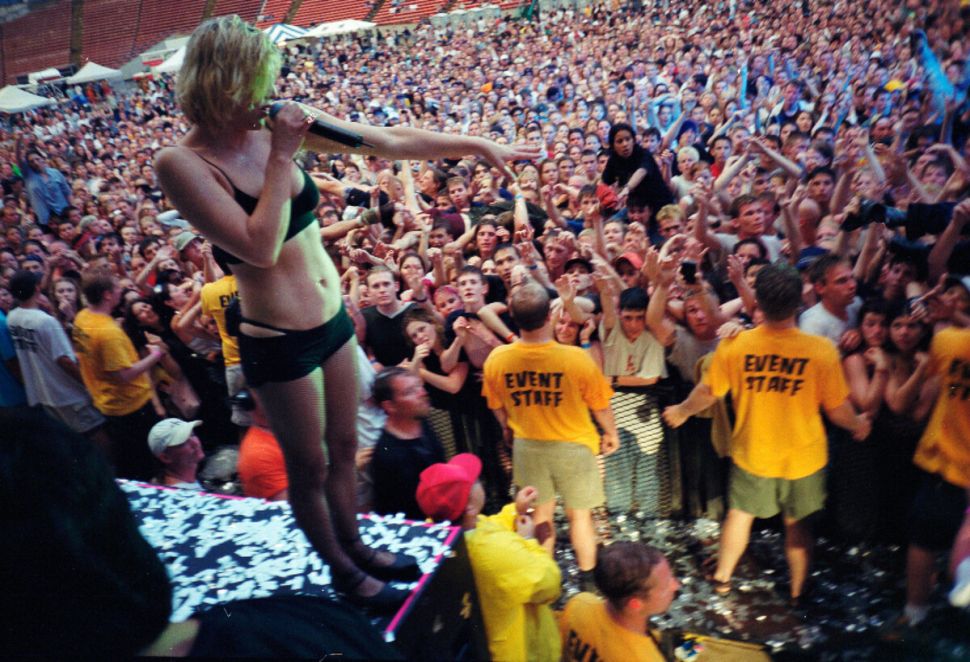
Hotels, ephemera, and the touring life feature heavily in the candid snapshots of the former Hole and Smashing Pumpkins guitarist Melissa Auf der Maur, a Montreal native whose heyday with Courtney Love’s ’90s alt rock band steal the show at the Art Gallery of Ontario through June 2027. “My ’90s Rock Photographs” revisits the musician’s spontaneity as posterity, capturing the highs and lows of her career in real time without the benefit of filters or an editing suite at her fingertips. However, that’s not all the AGO has to offer. Besides one of the largest Group of Seven collections in Canada, the museum currently features contemporary Italian whimsy from filmmaker Diego Macron, and “The Impressionist Revolution: Monet to Matisse” on loan from the Dallas Museum of Art. The water lilies here are scaled down, but there are an abundance of smaller works from the full roster of period artists, and enough Bonnards to remind everyone he really liked painting women in the bathroom.
If that’s not your thing, but you still have a kink you want to pass off as high art, walk your way to the Bata Shoe Museum. Before OnlyFans conceived of a subscription model, the Bata Shoe Museum was charging admission for feet pics, while exploring the long-worn history of human footwear. While it’s all very academic, there’s usually something for fetishists afoot, and the current exhibition “Rough & Ready: A History of the Cowboy Boot” features loaners from the queer country singer Orville Peck, and the granddaughter of legendary rhinestone suitmaker Nudie Cohn. The upcoming show, “Brilliant: The Art of Beaded Footwear Around the World” opens this October with a pair of showstopping Dolce & Gabbana platforms custom made for Madonna.
You can break out your dancing shoes this September at the Power Plant, the free admission waterfront contemporary art space will play host to its Power Ball, reintroducing its arts party fundraiser for the first time since before the Covid pandemic. The theme is apt: “The Seven Year Itch.” New exhibitions kick off one month later, when Los Angeles artist Sharon Lockhart debuts “Fogo” documenting a photo and film journey she made across the eastern island over the past four summers. The show will run alongside “Owner of a Lonely Heart,” a multi-artist film program that follows the passage of raw materials into commerce. The centerpiece of Vancouver-born artist ZADIE XA’s multimedia exhibition, “Moonlit Confessions Across Deep Sea Echoes: Your Ancestors Are Whales, and Earth Remembers Everything” celebrates the earth with an act of acquired resources, as 600 brass bells suspended from the Power Plant’s ceiling take the shape of a conch shell and sing.
One week after the Power Ball, the Art Museum at the University of Toronto hosts the opening party for “Things Fall Apart,” the theme of this year’s Toronto Biennial, which is well-timed to focus on “the geographies of the Great Lakes” and “rupture… as a tool of understanding the world.” Nuit Blanche follows on October 3; the all-night contemporary art celebration encompasses the whole of the city with public and performance art from dusk to dawn.
Finally, come December, “Raptors: Fierce and Feathered” will open on December 9, 2026, at the Royal Ontario Museum. The show coincides not just with the 2027 NBA season (for the uninitiated, the Raptors are Toronto’s professional team) but the Christmas season, as dinosaurs have become a hot commodity for the collector class. In the last six years, dinosaur skeletons have set new auction records, with realized prices rising from $30 million to over $50 million, following a July sale at Sotheby’s for a 12.5-foot T-Rex named Gus. Of course, ROM has something for everyone, including the effective altruist class of tech visionaries, who might be more taken with the museum’s current exhibition “Psychedelics: Art. Culture. Science.” which displays both wild mushrooms and the many rock posters they’ve inspired over the second half of the 20th Century. At least until Hole came along.
And should you want to take the long way home to explore what connects rather than divides the U.S. and Canada, cross Ontario’s newly opened Gordie Howe Bridge from Windsor to Detroit—by car, bicycle, or on foot—and you’ll arrive in time for the best of Detroit Design Month, which this year saw the second annual Season Art Fair, a spinoff of Detroit Art Week helmed by Amani Olu, who also owns local art mag storefront Periodicals. Season relocated this year from the newly revitalized Michigan Central in Corktown to The Shepherd in Detroit’s East Village. The Shepherd, which this summer played host to the Mickalene Thomas show “Beneath the Moonlight” is yet another contemporary arts space occupying a former church, this time the century old Romanesque Church of the Annunciation. Its revitalization has been led by Anthony Curtis, a burgeoning real estate developer who along with his wife JJ, are also behind the downtown gallery Library Street Collective and responsible for renaming the surrounding micro-neighborhood “Little Village.”
Unlike some people, the Curtises didn’t achieve their rebrand with only a social media post, but have been actively rescuing the neighborhood block by block for the past several years, restoring dilapidated houses instead of prioritizing new builds, and, on the grounds of The Shepherd, they’ve opened a Tony Hawk-approved skate park, the Charles McGee Memorial Park honoring the late Detroit sculptor, and ALEO, a bed and breakfast and artist residency.